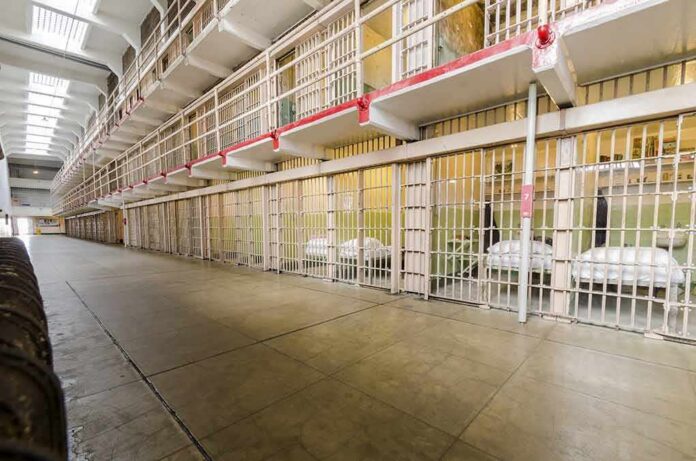
Iran’s Evin Prison has become a symbol of how little independent oversight exists when a state controls both the jail and the narrative.
Quick Take
- Reza Valizadeh, an Iranian American journalist, is heard pleading for medical help for himself and other Americans held in Evin Prison.[4]
- Valizadeh says detainees suffer from diseases without adequate care and describes physical and mental torture inside the prison.[1]
- U.S. officials have designated him wrongfully detained, while advocacy groups say his health has worsened in prison.[1][4]
- The public record is still built mostly on prisoner testimony, family accounts, and advocacy reporting rather than prison medical files.[1][3][4][5]
Valizadeh’s Plea From Inside Evin
CBS News obtained a voice recording from inside Evin Prison in which Valizadeh pleads for medical help for himself and the other Americans held there.[4] In the recording, he says that three American citizens “suffer from various diseases without adequate medical care” and describes detainees as enduring “physical and mental torture,” placing the case squarely in the long-running debate over Iran’s treatment of political prisoners and dual nationals.[1]
The core allegation is not abstract. According to the available reporting, Valizadeh says the prison system is failing to provide basic care, while outside groups say he has asthma, significant dental problems, and worsening health linked to overcrowding and poor air quality.[1] The James Foley Foundation says he has been repeatedly denied proper nutrition and medical care, and that his situation deteriorated further after the June 2025 strike on Evin Prison.[4]
Why The Case Matters Beyond One Prisoner
The case carries political weight because the United States government has formally designated Valizadeh as wrongfully detained.[1] That label does not settle every factual dispute about his treatment, but it does show that Washington sees the detention as more than an ordinary criminal case. CBS also reported that the dispute is unfolding amid stalled U.S.-Iran talks, which increases the likelihood that the prisoner’s welfare will be debated through diplomatic channels instead of transparent prison records.[3][4]
RFE/RL reports that Valizadeh remains in Tehran’s notorious Evin Prison, in a neighborhood that has come under heavy bombardment, increasing the risk to detainees.[2] That detail matters because the prison’s location turns a detention dispute into a broader humanitarian problem: even if medical neglect were not the only issue, bombardment, transfer uncertainty, and restricted access make it harder for families and journalists to verify what is happening inside.[2][3]
The Verification Gap
The strongest claims in the public record come from Valizadeh himself, his family, and advocacy organizations including the Committee to Protect Journalists, the James Foley Foundation, Hostage Aid, and United Against Nuclear Iran.[1][3][4][5] Those sources provide a consistent picture of deteriorating conditions, but they do not replace prison logs, treating physician notes, or an independent medical exam. That gap leaves the central question unresolved: how much care was denied, and how much can be documented beyond testimony?
It was haunting to hear the voice of former @RFERL @RadioFarda_ journalist Reza Valizadeh on @CBSEveningNews tonight. He's speaking to us from Evin Prison and asking for help. We must bring him home @freerezav https://t.co/cEKlLtyUdN
— Deniz Yüksel (@denizyuksel130) June 5, 2026
Iranian authorities have not publicly answered the specific allegations with accessible medical files, intake records, or a detailed facility-level rebuttal in the material provided.[1][3][4][5] That silence matters because it leaves the public depending on a closed system’s prisoners and their advocates to describe the condition of the prison population. For critics of the Iranian state, that is a familiar pattern; for skeptics, it is exactly why the evidence remains persuasive in tone but incomplete in proof.
What Comes Next
The most useful next evidence would be medical records, transfer documents, and independent testimony from doctors or prison staff who saw Valizadeh in custody.[1][3][4][5] Absent that, the case will continue to be interpreted through the lens of hostage diplomacy, where humanitarian claims, intelligence concerns, and negotiations over release all compete for attention. For readers looking past the politics, the larger issue is unchanged: a closed prison system can hide abuse simply by controlling access to the facts.[2][3]
Sources:
[1] Web – Journalist in Iran’s Evin Prison pleads for medical help for him, U.S. …
[2] Web – Iranian-American Journalist on Hunger Strike in Evin Prison
[3] Web – Reza Valizadeh Still in Evin Prison as Conditions Deteriorate
[4] Web – A Q&A with Iranian-American journalist Reza Valizadeh’s brother
[5] Web – Reza Valizadeh – Foley Foundation