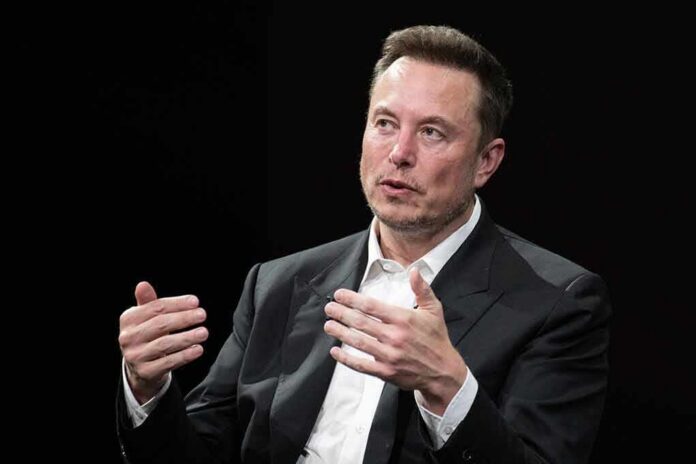
Elon Musk used a high-profile Economist interview to reject the far-right label and recast his politics as “normal people” values.
Quick Take
- Musk said he supports “normal people,” not the far right.
- He pointed to secure borders, safe cities, and sensible spending as his core views.
- He said those ideas were ordinary 10 or 15 years ago.
- The interview also included sharper remarks about Britain, immigration, and civil conflict.
Musk’s Main Message
Musk’s central message was simple: he rejected the claim that he backs the far right. In the exchange with Economist editor-in-chief Zanny Minton Beddoes, he said, “No, I support the normal people. What you call the far right, falsely.” He then challenged the label by listing policies he presented as basic and widely shared: secure borders, safe cities, and sensible spending.
He also argued that those positions were not unusual in the recent past. In the full interview, he said people could go back 10 or 15 years and find those policies “completely normal.” The Hill reported the same line in its coverage, which shows how Musk tried to move the debate away from ideology and toward common-sense governance.
Why The Interview Became A Fight Over Labels
The clash was not only about policy. It was also about how to describe the same policy claims. Beddoes challenged Musk’s broader framing, and the teaser for the interview says she pressed him on some of his more extreme claims, including the idea that civil war in Britain was inevitable. That pushed the conversation beyond borders and budgets into questions about fear, identity, and public order.
Musk also tried to answer the racism charge directly. In the interview, he said, “I’m not racist,” and he linked that denial to his personal life and company leadership. That defense may matter to supporters, but it does not settle the bigger dispute. The sources show that critics still have room to argue that his language about immigration and Western values carries a harder edge than his own summary suggests.
What The Strongest Criticism Says
The most serious criticism is that Musk did more than defend standard policy ideas. The full interview and related coverage show him standing behind a civil-conflict warning about Britain and tying immigration to values he described as hostile to Western beliefs. He also framed the issue as one about “the West collectively,” which gives the exchange a civilizational tone that critics can read as more than ordinary politics.
“[Elon Musk] is an anti-Muslim bigot. And that's not me calling him that. That's him embracing it.”@mehdirhasan calls out Elon Musk for his anti-Muslim comments during his recent controversial interview with The Economist. pic.twitter.com/VKEv9hXav6
— Zeteo (@zeteo_news) July 27, 2026
That is why the reaction split so sharply. Supporters can point to his words on borders, safety, and spending and say he was defending mainstream concerns. Critics can point to the same interview and say he wrapped those concerns in alarmist language and cultural sorting. Both readings are anchored in the record, but the broader context makes the argument larger than one clip or one punchy quote.
What This Means For The Bigger Debate
The interview fits a familiar pattern in modern politics: the fight is often over the label before it is over the facts. A speaker can describe a position as normal, while opponents define the same position by its associations, tone, and allies. That is especially true on immigration, crime, spending, and national identity, where the same words can sound practical to one audience and coded to another.
For readers, the key question is not whether Musk made the statements. He did. The real issue is whether his policy list is best understood as ordinary public concern or as part of a broader hard-right worldview. The supplied record supports both the self-description and the criticism, but it does not provide enough polling or comparative policy evidence to prove that one side has a complete lock on the truth.
Sources:
youtube.com, x.com, blockweeks.com, instagram.com