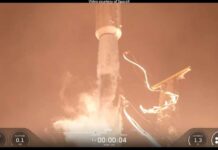
Americans witness the triumphant return to deep space as Artemis II launches four brave astronauts toward the Moon, reclaiming U.S. leadership after over five decades of government mismanagement and foreign distractions.
Story Highlights
- Artemis II blasts off April 1, 2026, from Kennedy Space Center—first crewed mission beyond low Earth orbit since Apollo 17 in 1972.
- Crew sets historic records: oldest astronaut Reid Wiseman, first woman Christina Koch, first person of color Victor Glover, and first non-American Jeremy Hansen.
- 10-day free-return lunar flyby tests SLS rocket and Orion spacecraft, paving way for Artemis III lunar landing in 2028.
- Overcomes heat shield concerns from Artemis I and last-minute technical hurdles, proving American ingenuity endures.
Mission Launch and Crew Milestones
NASA’s Artemis II mission launched successfully on April 1, 2026, from Pad 39B at Kennedy Space Center, Florida. Four astronauts—Commander Reid Wiseman, Pilot Victor Glover, Mission Specialist Christina Koch, and Canadian Space Agency’s Jeremy Hansen—lifted off aboard the Space Launch System Block 1 rocket and Orion spacecraft. This marks the first crewed flight beyond low Earth orbit since Apollo 17 in 1972, a 54-year gap filled with bureaucratic delays and misplaced priorities.
The crew pursues a 10-day free-return trajectory, reaching approximately 4,700 miles beyond the Moon’s far side before reentering Earth’s atmosphere at 25,000 mph. Unlike Apollo orbits, this distant flyby prioritizes safety while gathering critical data on radiation, microgravity, and human factors in deep space. Conservatives cheer this revival of American exceptionalism, unburdened by globalist entanglements that drained resources from core priorities like border security and energy independence.
Pre-Launch Challenges Overcome
Engineers addressed heat shield issues identified during the uncrewed Artemis I in 2022, where Avcoat material chunks detached due to gas buildup. NASA opted not to replace the shield on Artemis II, instead modifying the reentry profile to ensure crew safety. Astronaut Wiseman affirmed confidence in the fix, noting investigators pinpointed the root cause. Technicians also resolved hydrogen leak concerns in the SLS core stage by replacing seals and conducting confidence tests in February 2026.
A last-minute issue with the flight termination system delayed proceedings about an hour before the launch window on April 1, but teams quickly mitigated it, securing liftoff. These hurdles echo past government overreach and inefficiency, yet demonstrate private-sector partnerships like Lockheed Martin delivering under pressure, aligning with demands for fiscal responsibility over endless spending sprees.
Strategic Path to Lunar Dominance
Artemis II validates the SLS and Orion for future missions, enabling Artemis III’s planned 2028 lunar landing and long-term Moon-to-Mars ambitions. The mission includes multi-trans-lunar injection burns, 24-hour high Earth orbit, three-day transit, and lunar far-side observations. International cooperation via Artemis Accords brings Canada’s Hansen aboard, fostering alliances without ceding U.S. primacy—unlike past administrations’ apologies for American strength.
Economic impacts boost Florida’s spaceport communities through billions in contracts, while social milestones inspire STEM pursuits among youth weary of woke indoctrination. Politically, under President Trump’s second term, this asserts U.S. space leadership amid frustrations with high energy costs and foreign wars, redirecting focus to victories that honor founding principles of innovation and self-reliance.
Sources:
Artemis II – Kennedy Space Center