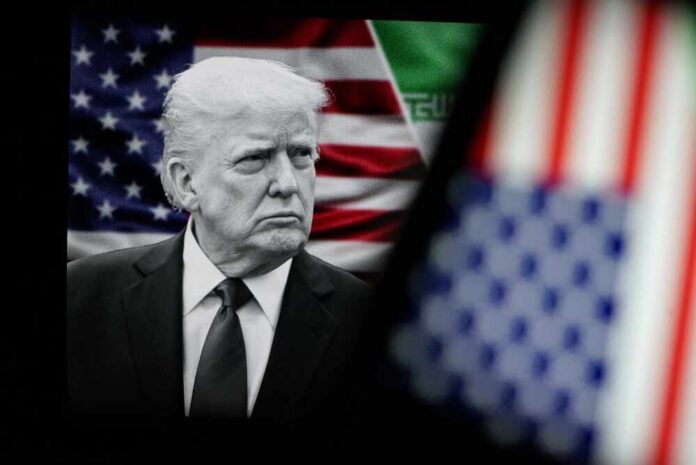
President Trump’s decision to extend a ceasefire with Iran—while keeping a naval blockade in place—shows how quickly a shooting war can turn into a high-stakes test of leverage, credibility, and resolve.
Quick Take
- President Trump extended the U.S.-Iran ceasefire indefinitely just hours before it was set to expire, despite publicly signaling earlier that morning he didn’t want an extension.
- The U.S. kept the naval blockade and military readiness posture intact, aiming to pressure Tehran while allowing time for a unified Iranian proposal.
- Pakistan’s top leadership played a direct mediation role, with Trump citing requests from Pakistan’s Army Chief and Prime Minister.
- Iranian officials downplayed the extension and framed the blockade as an act of war, while internal divisions between civilian leaders and the IRGC reportedly complicated talks.
Trump Extends Ceasefire but Keeps the Pressure Tools On
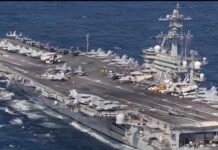
President Trump announced on April 21 that the U.S. would extend the ceasefire with Iran indefinitely, a move that came shortly before the two-week truce was due to lapse. Trump tied the extension to two conditions implied by his messaging: continued American readiness and time for Iran to produce a “unified” negotiating position. The U.S. Navy blockade remained in force, signaling that Washington views economic and maritime control as central leverage, not a concession.
Trump’s extension also landed after a volatile 24-hour news cycle. Earlier on April 21, he publicly threatened renewed attacks and indicated he did not want to prolong the ceasefire, then met with national security advisers before changing course. Vice President JD Vance’s planned travel to Islamabad was postponed after Iran declined further talks, reinforcing how fragile the diplomatic track remains even when active fighting pauses.
Pakistan’s Mediation Becomes a Key Variable in the Standoff
Trump explicitly credited Pakistani mediators for requesting additional time, pointing to outreach from Pakistan’s Army Chief Asim Munir and Prime Minister Shehbaz Sharif. That matters because it places a major regional power—one with its own security and economic stakes—between Washington and Tehran. Sharif publicly expressed hope that another round of talks could move forward in Islamabad, but the timeline appeared uncertain after Iran’s decision to skip further discussions.
Pakistan’s role may offer both sides political cover: Washington can claim it is giving diplomacy a chance without easing pressure, and Tehran can explore talks without appearing to capitulate directly to U.S. demands. Still, the mediation channel is only as strong as the willingness of Iran’s leadership to speak with one voice. In a system where ultimate authority rests with Ayatollah Ali Khamenei, outside facilitators can create space, but they cannot force internal consensus.
“Seriously Fractured”: Iran’s Internal Divide Shapes What Comes Next
Trump described Iran’s regime as “seriously fractured,” and reporting around the talks pointed to tension between Iran’s civilian leadership and the Islamic Revolutionary Guard Corps. Civilian figures linked to negotiations signaled greater openness to extending the ceasefire, while IRGC leadership opposed talks as long as the blockade continues. That split is not just rhetorical; it can slow decision-making, complicate compliance, and increase the odds that one faction attempts to sabotage a deal it dislikes.
Iranian reactions after Trump’s announcement showed deep skepticism. Iranian officials dismissed the extension as having little significance, while statements from Iran’s side continued to frame the blockade as equivalent to military attack. Some Iranian voices suggested the ceasefire extension could be used as a cover for a surprise strike, underscoring how distrust remains baked into the process. With Khamenei’s response anticipated soon after the extension, the next step hinges on whether Iran authorizes negotiators to proceed.
The Blockade-and-Ceasefire Combo Raises High-Stakes Questions for Americans
The immediate effect of extending the ceasefire is to reduce the risk of imminent escalation, but the continued blockade keeps the underlying conflict alive. Reports indicated the U.S. Navy seized an Iranian cargo vessel over the weekend for allegedly attempting to bypass the blockade, a reminder that enforcement actions can trigger retaliation even without airstrikes. Meanwhile, the longer a ceasefire runs without progress, the more both sides may test boundaries to improve leverage.
For Americans watching from home—often frustrated that Washington lurches from crisis to crisis without clear accountability—the episode highlights a familiar problem: foreign-policy decisions can pivot rapidly, yet the public rarely gets a transparent explanation of the strategic end state. Trump’s approach blends deterrence (blockade, readiness) with bargaining time (ceasefire extension), which may prevent immediate conflict. But without a clear, enforceable framework, the risk remains that bureaucratic missteps, factional politics, or regional shocks reignite fighting.
Sources:
Trump extends Iran ceasefire, citing “fractured” Iranian government
Iran-U.S.-Trump war ceasefire talks stalemate