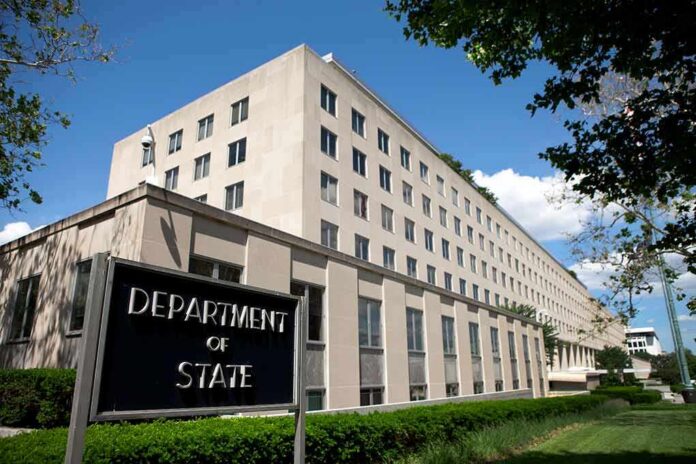
After revoking more than 600 visas in one month, the State Department warned that organized “birth tourism” will bring real consequences for travelers and the networks behind them.
Story Snapshot
- The State Department formed a Birth Tourism Prevention Task Force and revoked 600+ visas.
- The White House backed stronger actions, including visa bans for those engaging in birth tourism.
- Officials say some schemes involve visa fraud; past cases led to guilty pleas.
- Experts say the overall share of such births is small but politically charged.
What the Government Announced and Why It Matters
On August 12, the State Department said a new task force is targeting “birth tourism,” which it frames as a commercialized abuse of U.S. citizenship rules. The department said it has already revoked more than 600 visas tied to suspected activity worldwide. The move aligns with a White House directive that supports blocking entry and revoking visas for travelers who come mainly to give birth for citizenship purposes. The message from officials was blunt: misusing visas will lead to enforcement.
The State Department described the effort as defending the integrity of the visa system. Officials linked some operations to fraudulent claims or coaching designed to evade consular review. Separate federal enforcement also targets networks that sell packages and hide true trip purposes. In April, federal immigration authorities stated they are focusing on fraud tied to such schemes, signaling wider, coordinated pressure across agencies. Together, these actions show the government treating the practice as organized wrongdoing, not a travel niche.
How Enforcement Works and Who Could Be Affected
Visa reviews can examine travel history, finances, and reasons for visiting. If officers find a traveler’s main purpose is to give birth for citizenship, they can deny the visa or revoke it later. The State Department said revocations reached into multiple regions, including a large batch from a North Africa post, highlighting the program’s global reach. The White House guidance describes potential lifetime bars for those who enter for this purpose, which raises the stakes for applicants and facilitators.
Authorities also point to past cases to show where the line becomes criminal. In one high-profile case, a California-based operator pleaded guilty to conspiracy to commit immigration fraud and to visa fraud for running a birth-tourism business. Such prosecutions target deception, false statements, and document fraud. The government’s warning is clear: giving birth in the United States is not itself a crime, but lying to get a visa or running a fraudulent scheme is. That is where officials say enforcement will land hardest.
What Is Legal, What Is Not, and Why Debate Persists
Public records and reporting draw an important line. Travel that results in childbirth can be legal if childbirth was not the main reason for the trip and the traveler was honest about plans when applying and entering. By contrast, the State Department says travel primarily to secure a child’s citizenship is not a valid reason for a visitor visa, and it is now acting on that view with revocations and task force reviews. This legal boundary is the core of current policy.
@statedeptspox The State Department says its Birth Tourism Prevention Task Force is cracking down on birth tourism networks by revoking visas targeting fraud and working with international partners to shut the system down#NYI pic.twitter.com/W25cJACOPl
— NewYork-Insight (@NewYork_Insight) August 18, 2026
Researchers and news outlets note the share of births linked to birth tourism is small compared with total U.S. births, yet the topic draws intense focus because it touches citizenship, fairness, and trust in government systems. That mix fuels anger on both the right and the left. Many see a system that favors those with money or insider help, while regular people face strict rules and rising costs. The government’s crackdown aims to show even well-funded schemes cannot game the process without risk.
Sources:
youtube.com, whitehouse.gov, state.gov, timesofindia.indiatimes.com, business-standard.com, npr.org