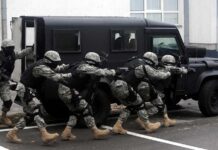
The U.S. Army will end the mission of its new drone-focused battalion after fall exercises in Germany and return the unit to standard airborne infantry duties.
Story Snapshot
- The Army confirmed the dedicated drone battalion will revert to traditional infantry after German exercises.
- Leaders say lessons from the unit will inform changes across the entire force, not one boutique formation.
- Recent war games showed small drones can spot and “kill” armored forces, sharpening urgency to adapt.
- Army doctrine updates point to distributing drone skills and tools to many units, not just one.
Army Ends Dedicated Drone Battalion, Cites Core Infantry Focus
Army officials said the 600-soldier battalion built to learn drone warfare will finish major exercises in Germany in August and September, report what it learned, then drop its drone-assault role and “refocus on its core warfighting tasks as an airborne infantry battalion”. The unit formed earlier this year to study drones and ground robots in real field training. The Army cast the move as a shift in organization, not a retreat from drones as a tool of war.
The decision lands as troops see how cheap, small drones can change combat. In a recent training rotation in Germany, Ukrainian drone teams used first-person-view craft to find and “destroy” U.S. forces in a simulated fight, according to reporting based on officials briefed on the event. Those results echo what war zones have shown for years: drones help spot targets, strike weak points, and confuse slow command systems.
From One Unit To The Whole Force: How The Army Says It Will Adapt
Army leaders say they are updating doctrine and gear across the force, not only inside one test battalion. An official Army release described an “iterative” approach that puts new drone tools in soldiers’ hands, watches how they work, and then quickly updates tactics and field manuals for everyone. That message suggests a common pattern in U.S. military change: test in a pilot unit, harvest lessons, and spread them to divisions, brigades, and companies that will fight.
Supporters of this approach argue that distributing drones to many formations avoids a silo. They say infantry, armor, engineers, and artillery all need small drones for scouting, strike, and defense. They also argue that counter-drone skills must spread fast as low-cost threats grow. Army War College analysis stresses three goals: push capability to units quickly, keep drones tied to other arms, and keep tactics and tech innovation moving together.
Why The Call Hits A Nerve: Readiness, Budgets, And Trust
The timing still stings for many observers. People on the right and left see rising threats abroad and strained budgets at home. They worry leaders delay hard choices while troops face new weapons like loitering munitions. Some fear the government talks big about change but moves slow when it counts. Reports that small drone teams can “wipe out” armored formations in exercises add to that concern, even if such drills are meant to expose gaps so units can fix them.
Families with service members want proof that lessons turn into better training and gear, fast. Taxpayers want to know whether the Army will buy thousands of useful systems rather than fund one special unit that comes and goes. The Army has publicly said it aims for “drone dominance” and is rewriting guidance, creating training pipelines, and testing counter-drone tools in the field, which points to force-wide change over time. But progress will be judged by what line units receive and master this year and next.
What Changes To Watch Next Across The Ranks
Soldiers will watch for concrete signs: more small drones in rifle companies, better jammers and sensors, and simple, fast rules for using and defeating drones. Commanders will track whether maintenance, batteries, spare parts, and training hours keep pace. Analysts note the key is not gadgets alone, but tight links between drones, radios, fires, and maneuver so squads exploit targets quickly without exposing themselves longer than needed.
The U.S. Army is planning to phase out a drone battalion tasked just last year with studying and taking on board lessons on drone warfare, including from the ongoing Ukraine war, an Army official confirmed to CBS News on Thursday. https://t.co/SCG10fTvdb pic.twitter.com/68QCYYpqoy
— CBS Evening News with Tony Dokoupil (@CBSEveningNews) August 20, 2026
Congress will press for timelines and numbers. Voters frustrated with waste and drift will want clear proof that leaders value results over slogans. The Army’s call to end the battalion’s stand-alone drone mission signals a bet: drones will matter more when woven into every unit’s daily work. If doctrine changes and fielding plans match that claim, troops could gain sharper eyes, faster strikes, and stronger defenses. If not, the gap between threats and readiness will only grow.
Sources:
cbsnews.com, wsj.com, ua.news, euromaidanpress.com