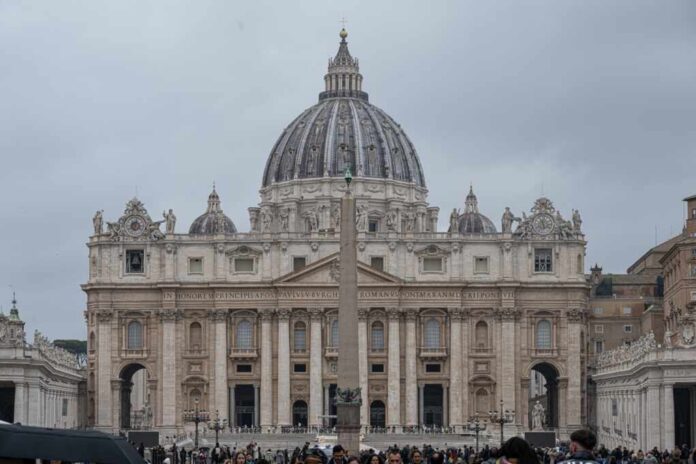
Pope Leo XIV’s first major test is already here: a breakaway Catholic group is openly defying Rome, setting up a July showdown that could harden a Church divide Pope Francis left raw.
Story Snapshot
- The Society of St. Pius X (SSPX) rejected Vatican-proposed talks tied to a demand to stop planned bishop consecrations set for July 1.
- The dispute revives painful parallels to 1988, when illicit consecrations triggered excommunications and deepened the Vatican II-era split.
- Leo XIV is trying to “turn the page” from Francis-era disciplinary tactics while keeping institutional unity and authority intact.
- Leo is also reversing a Francis-era Vatican housing policy that critics said was used as leverage against dissenting prelates.
SSPX Rejection Puts Leo XIV on a Collision Course
Vatican outreach to the SSPX hit a wall in February 2026 after the group rejected an invitation for talks that came with a condition: halt planned bishop consecrations scheduled for July 1. SSPX Superior Fr. Davide Pagliarani argued dialogue cannot happen “under duress,” pointing to the threat of sanctions as proof the offer was not made in good faith. The immediate result is a clearer standoff over authority and obedience.
The Vatican’s position matters because consecrating bishops without papal approval is not a minor procedural dispute—it is the kind of act that historically triggers the Church’s strongest disciplinary responses. The SSPX remains canonically irregular, and the Vatican has long treated unauthorized consecrations as a line that cannot be crossed without consequences. That reality turns a theological and liturgical disagreement into a governance crisis that lands early in Leo XIV’s papacy.
Why 1988 Still Looms Over Today’s Fight
The SSPX story has never been just about preferred liturgy or nostalgia. The movement formed in opposition to the Second Vatican Council’s reforms and entered a decisive rupture in 1988 when Archbishop Marcel Lefebvre consecrated bishops without Rome’s consent, resulting in excommunications. Today’s July 1 plan echoes that history closely enough that Vatican officials and analysts see it as a serious flashpoint, not an online argument among Catholics.
SSPX leaders also cite a longer trail of frustration, including an unreciprocated 2019 proposal for dialogue over Vatican II questions. That grievance helps explain why some traditionalists interpret Rome’s current conditions as another attempt to control the terms rather than address substance. At the same time, the Vatican’s demand to stop consecrations first signals an institutional red line: Rome cannot negotiate effectively while a parallel episcopal structure is being built outside papal authority.
Leo XIV’s Strategy: Stability Over Francis-Era Pressure
Reporting around Leo XIV has emphasized “transition” rather than abrupt rupture, with a preference for lowering internal tensions without directly detonating the Francis legacy. That approach fits the current SSPX moment: Leo can offer dialogue as a path to unity, but if the consecrations proceed, he may be forced into disciplinary action to defend the Church’s chain of command. Either choice carries costs—too much force risks deepening resistance, while too little invites defiance.
For many Catholics watching from the outside, this is where frustration builds: ordinary believers want clarity and order, not endless process. Leo’s challenge is to show that rules still matter while avoiding the perception that enforcement is selectively used as a political weapon inside the Church. The best available reporting does not establish a single, agreed “disastrous pope” verdict; it shows a contested transition where every move is interpreted through the Francis-era culture battles.
Housing Policy Reversal Signals a Break from “Punishment Politics”
One tangible change under Leo XIV is his move to reverse a Vatican housing policy put in place under Pope Francis in 2023. The policy ended certain housing privileges for senior officials, and later controversies tied the issue to internal Vatican disputes and high-profile critics, including Cardinal Raymond Burke. Leo’s reversal is being read as an effort to remove housing from the toolbox of discipline, reducing the sense that dissent is handled through personal pressure rather than transparent governance.
The reversal is not cost-free. Reports have noted that Vatican finances can be affected when rent and housing arrangements shift, especially in a system already stressed by reform efforts. Still, the political meaning inside the Church is clear: Leo appears to be dialing back tactics associated with punishing opponents and re-centering authority through institutional stability. That may calm parts of the Curia even as the SSPX confrontation heats up.
No U.S. Trip in 2026 Keeps Focus on Vatican Crises
Vatican officials have also confirmed Leo XIV will not visit the United States in 2026, tamping down speculation after early interest around possible travel. In practice, the decision keeps Leo closer to Rome while the SSPX timeline advances toward July. It also underscores that the papacy is dealing with immediate internal governance problems—unity, discipline, and credibility—before staging major international events that inevitably become media and political spectacles.
For Americans frustrated by institutions that seem to cave to pressure, the SSPX episode is a reminder that leadership is tested by enforcement, not rhetoric. The sources available show a Pope attempting to de-escalate Francis-era factional warfare while holding the line on core authority. What happens next depends on whether the SSPX backs off July consecrations or forces Leo XIV into a public decision that will define his early papacy.
Sources:
Breakaway Catholic group rejects Vatican talks, indicating collision course for pope
Pope Leo XIV reverses Francis-era Vatican housing policy
Vatican confirms pope will not visit U.S. in 2026
Pope Leo will not visit the USA this year
Pope Leo pulls back on press, signaling a messaging shift