Ukraine’s Zelensky greenlights repairs to the Druzhba pipeline just after Hungary ousts pro-Russian Orbán, resuming flow of Russian oil to Europe—exposing EU energy dependence on Moscow amid endless foreign entanglements.
Story Highlights
- Zelensky announces partial Druzhba pipeline repairs by end of April 2026, enough for functionality despite war damage.
- Timing follows Viktor Orbán’s election defeat, signaling reset in Ukraine-Hungary ties and potential unblocking of €90 billion EU aid to Ukraine.
- Pipeline carries Russian crude to Hungary and Slovakia, highlighting Europe’s ongoing reliance on Moscow’s energy despite sanctions.
- EU funds repairs; Zelensky offers Croatia alternative route previously rejected by Orbán’s government.
Timeline of Druzhba Pipeline Repairs
Ukrainian President Volodymyr Zelensky accepted an EU offer for Druzhba repairs on March 17, 2026, in a letter to European leaders. He targeted full flow restoration within a month and a half, assuming no Russian attacks. The Soviet-era pipeline transports Russian crude to Central Europe, including Hungary and Slovakia. Disruptions began with Russia’s 2022 invasion, as strikes damaged infrastructure. Budapest and Bratislava accused Kyiv of political halts to pressure for EU aid vetoes.
Zelensky’s Berlin Announcement Post-Orbán Defeat
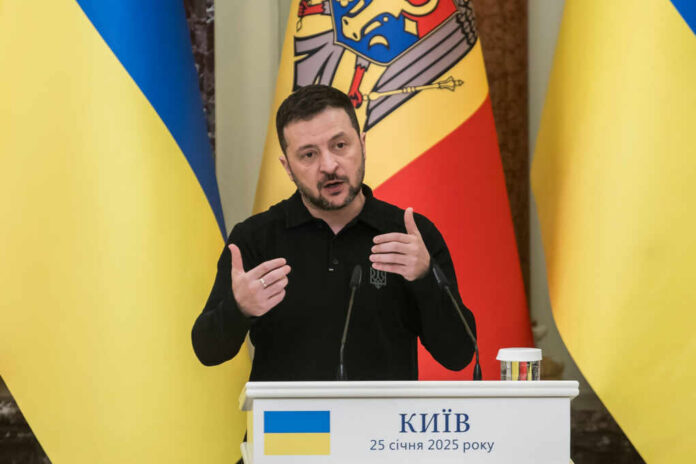
Zelensky met German Chancellor Friedrich Merz in Berlin during early April 2026, confirming partial repairs by month’s end. He stated the fixes would make the pipeline “enough to function,” though tank repairs remain incomplete. This came 48 hours after Orbán’s election loss to new leadership, implied as Péter Magyar’s win. Zelensky framed it as a pragmatic de-escalation, pledging cooperation with Hungary as neighbors. He reiterated a Croatian pipeline alternative, rejected under Orbán.
Stakeholders and Shifting Power Dynamics
Key players include Zelensky, seeking EU aid and transit revenue; former PM Orbán, who enforced vetoes over energy security; and EU leaders like Ursula von der Leyen offering technical aid. New Hungarian leadership appears open to EU decisions. Orbán’s ouster shifts leverage to Kyiv and Brussels. Hungary and Slovakia prioritize Russian oil continuity amid war shortages. Ukraine controls transit, while EU funding advances diversification goals.
Implications for Energy Security and EU Politics
Short-term, partial operations stabilize oil for Hungary and Slovakia, potentially lifting Hungary’s veto on €90 billion in Ukraine aid. Long-term, it reduces Russia’s energy leverage and promotes non-Russian routes. Economic impacts ease Central European shortages; politically, it resets strained ties. This underscores Europe’s fossil fuel dependence, echoing U.S. conservative warnings on globalism and energy independence under President Trump’s America First policies. Both sides lament elite-driven foreign spending over domestic needs.
Now that Orbán Is No Longer Prime Minister, Zelensky Finally Restores the Druzhba Pipeline Flow of Russian Oil to Hungary | The Gateway Pundit | by Paul Serran https://t.co/SdaqMv27q3
— Brian Craig 🇺🇸 (@BrianCraigShow) April 21, 2026
Sources:
Zelenskyy accepts EU offer on Druzhba pipeline: full functionality within a month and a half
Druzhba pipeline partially repaired by end of April — enough to function, Zelenskyy says
Druzhba oil pipeline will be fixed this spring, Zelenskyy says