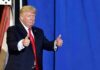
Behind the smiles and red-carpet pageantry in Beijing, the Trump–Xi summit exposed just how hard it will be to shield American security and jobs from a communist regime that wants our markets, our minerals, and our technology on its terms.
Story Snapshot
- Trump and Xi agreed the Strait of Hormuz must stay open and that Iran can never get a nuclear weapon, but enforcement remains murky.
- China leveraged its grip on critical minerals while pushing for softer United States positions on Taiwan and technology controls.
- The summit delivered fragile “stability,” not a reset, as structural conflicts over trade, tech, and security continue.
- Conservatives should see the summit as a tactical pause in great‑power rivalry, not a reason to relax on China or defense.
Security Pledges on Iran and Hormuz: Necessary, but Not Sufficient
The most concrete headline from Beijing was a joint understanding that the Strait of Hormuz must remain open for energy and trade and that Iran can never obtain a nuclear weapon, according to a White House readout of the talks.[1] For Americans who remember the weakness of the Obama–Biden years, that sounds like a welcome return to deterrence. Yet neither side announced an enforcement mechanism, timelines, or specific steps beyond general language. Conservatives should treat such assurances as a starting point, not a finished deal.
United States forces continue to police vital sea lanes while China buys Iranian crude and offers Tehran political cover, creating a built‑in tension.[3][4] Beijing wants guaranteed access to Middle Eastern energy without sharing the burden of confronting the mullahs’ nuclear ambitions. Trump’s team correctly insists Iran must never cross the nuclear line,[1] but unless China is willing to back real pressure—sanctions, interdictions, or intelligence cooperation—these statements risk becoming another set of pretty words that depend largely on American power to make them real.
Trade, Critical Minerals, and the Risk of Symbolic “Wins”
On economics, the summit largely followed a familiar script: promises of “stability,” hints of big commercial deals, and talk of managed trade.[2][3] Analysts expected discussions on continued United States access to rare earth and other critical minerals that underpin our weapons, electronics, and energy systems, alongside potential Chinese purchases of Boeing aircraft and American farm products.[3][4] That kind of headline is tempting for any president facing nervous markets. Yet experts warned that Beijing’s long game is consolidating control over these supply chains, not freeing them.[2][3]
Since Trump returned to the White House, the balance of leverage has shifted from tariffs toward China’s control of critical minerals and magnets that modern militaries depend on.[2][4] Beijing has already tested export restrictions in recent years, briefly squeezing markets before cutting deals.[2][4] The risk going forward is that any “win” on aircraft orders or soybeans could mask deeper dependence on Chinese inputs that cannot be swapped out quickly. For conservatives who want real economic sovereignty, that means keeping the focus on reshoring production and diversifying sources, not just celebrating short‑term export numbers that Wall Street loves.
Taiwan, Technology, and the Limits of Tactical Stabilization
Beneath the warm optics, Taiwan and advanced technology remained the most sensitive—and unresolved—fault lines. Chinese statements have repeatedly signaled that Xi sees Taiwan as the core bilateral issue and wants Washington to move from merely “not supporting” independence to actively opposing it, while also pressing for advance consultations to limit arms sales.[2][4] Reporting indicates the administration has already delayed at least one major Taiwan arms package and discussed these sales directly with Xi.[2] Such moves worry hawks who see any slowdown as an invitation for Chinese aggression.
On technology, Beijing pushed to shield its firms from tighter United States investment and export controls, including in areas like artificial intelligence and advanced chips.[3][4] Washington, for its part, shows little appetite to lift restrictions on frontier semiconductors, though some concessions on mid‑tier technology or joint ventures have been floated as pressure valves.[4] Analysts describe this summit not as a reset, but as “tactical stabilization”—an effort to manage rivalry and avoid open rupture while neither side gives ground on core interests.[4] That means conservatives should not mistake calmer rhetoric for genuine convergence; the strategic contest over who sets the rules for technology and freedom in the twenty‑first century remains very much alive.
Optics, Domestic Politics, and What Conservatives Should Watch Next
Seasoned observers noted that summits like this are often judged more by the images beamed back home than the fine print.[4] Beijing can choreograph lavish ceremonies that let Trump project strength and deal‑making prowess, while Xi showcases stability and continuity to a restless Chinese public.[2][4] Analysts across the spectrum describe this pattern as “headline optimism, documentary thinness”: grand statements about “win‑win cooperation” with few signed, enforceable commitments to back them up.[1][4] That dynamic appeared again in Beijing.
6 key takeaways from historic Trump-Xi China summit https://t.co/9Z10oED6RN pic.twitter.com/MicnkLSu7t
— New York Post (@nypost) May 15, 2026
For conservatives, the lesson is clear. First, welcome any pause in escalation that keeps American troops out of unnecessary conflict and gives United States industry breathing room. Second, refuse to be lulled by pageantry. The Chinese Communist Party still seeks technological self‑sufficiency, leverage over critical resources, and political concessions on Taiwan that would undermine a democratic ally.[2][3][4] The Trump administration can and should press for concrete, verifiable outcomes on minerals, arms sales, and enforcement on Iran. Grassroots pressure will be vital to ensure “stability” does not become a code word for slow‑motion surrender of our economic independence and security.
Sources:
[1] Web – Hormuz should remain open, Iran will not acquire nuclear weapon: Key …
[2] Web – Trump-Xi summit 2026: Key expectations and what markets …
[3] Web – At the Trump-Xi Summit, China Will Have the Upper Hand
[4] Web – Trump-Xi Summit in Beijing: Managing the World’s Most …