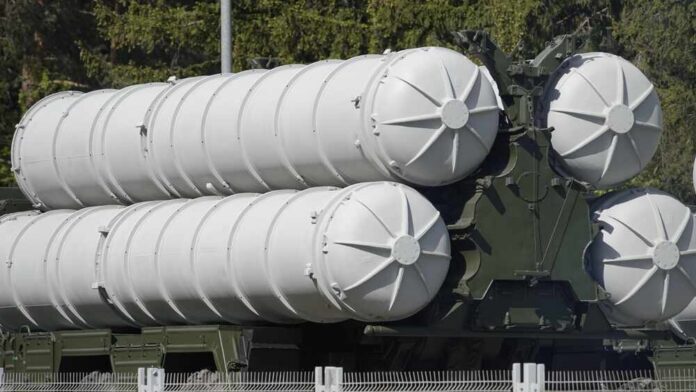
While many Americans struggle to afford groceries and gas, the U.S. Army is quietly asking for nearly $2 billion in 2027 to buy 1,134 new long‑range missiles and a surge of launchers that could lock in years of higher defense spending with limited public debate.
Story Snapshot
- The Army wants 1,134 Precision Strike Missiles in fiscal 2027, nearly quadrupling prior-year spending and signaling a shift to mass, long-range firepower.[2][4]
- The missile buy is part of a broader $36.6 billion Army missile push, much of it dependent on special “reconciliation” funding rather than normal budgeting.[2][5]
- PrSM can hit targets beyond 400–500 kilometers and is meant to replace older Army Tactical Missile System rounds, doubling launcher magazine depth.[3][6]
- Critics across the spectrum question whether Washington is proving real battlefield value or just feeding contractors while ordinary Americans are told to “tighten their belts.”[1][2][6]
What the Army Is Buying and Why It Matters
Trump administration budget documents for fiscal 2027 show the Army requesting funds to buy 1,134 Precision Strike Missiles (PrSM) in a single year, an unprecedented quantity for this new long-range weapon.[2][4] The Army’s Missile Procurement Justification Book details a PrSM funding line of about $1.23 billion in discretionary money plus $692 million in mandatory funding, adding up to nearly $2 billion tied to this one munition.[4] DefenseScoop reports that, if Congress agrees, the request equates to roughly $1.7 million per missile, a huge ramp from earlier years.[2]
Defense trade press coverage notes that this missile surge is part of a much larger plan: the Army’s overall missile procurement account is projected to jump to about $36.6 billion in 2027, a massive increase versus prior budgets.[2][5] The Pentagon’s broader documents describe roughly a 188 percent increase in missile procurement across the services, with PrSM listed alongside hypersonic weapons, guided rockets, and artillery shells as “critical munitions.”[5] The message from the national security establishment is clear: long-range missiles are the new backbone of American power projection.[1][5]
How PrSM Changes the Battlefield – At Least on Paper
Lockheed Martin, the prime contractor, describes PrSM as a next-generation, surface-launched ballistic missile designed to hit targets at ranges beyond 400 kilometers, with official Army requirements citing “greater than 400 km” and public descriptions often pointing to around 500 kilometers.[3][6] Budget and acquisition documents explain that PrSM is meant to replace the aging Army Tactical Missile System, which tops out around 300 kilometers, while also allowing two missiles per launcher pod instead of one, effectively doubling the firepower of existing High Mobility Artillery Rocket System and M270 launchers.[1][3][6]
Modernized Selected Acquisition Reports say PrSM is intended to give joint force commanders a round-the-clock, all-weather tool against high-value, time-sensitive targets such as command centers, air defenses, and logistics hubs deep behind enemy lines.[6] Reporting from Breaking Defense adds that later increments will add seekers to track moving ground or maritime targets, potentially letting Army units strike ships from land and contribute to sea control missions once reserved for the Navy.[3] On paper, that combination of range, precision, and magazine depth supports the Pentagon’s shift toward “multi-domain operations” against sophisticated rivals.[3][6]
The Funding Catch: Reconciliation and the Risk of a Permanent Wartime Budget
Defense industry outlets point out that much of this missile surge does not run through normal, fully debated appropriations channels.[1][2] DefenseScoop reports that $692 million of the PrSM request depends on lawmakers passing another reconciliation package, a special budget maneuver traditionally used for domestic priorities but now increasingly tapped to grease the skids for defense expansions.[1][4] Defense Daily similarly warns that the Army’s $36.6 billion missile plan “places a big bet” on reconciliation, highlighting how much of this program’s future rests on procedural shortcuts rather than transparent trade-offs.[2]
For Americans on both the right and the left who already believe Washington is captured by a permanent “war budget,” this structure reinforces the fear that defense spending is being insulated from the same scrutiny applied to Social Security, Medicare, veterans’ care, or border security.[2][5] The official budget books show the PrSM line clearly, but they do not explain why 1,134 missiles in 2027 is the right number, how often they will realistically be used, or what gets cut elsewhere to pay for them.[4][5] That lack of clarity feeds the sense that the system answers first to lobbyists and contractors, not taxpayers.
Unanswered Questions: Capability, Industry Limits, and Democratic Oversight
Available public documents confirm that PrSM has passed key development milestones, including multiple flight tests and early operational capability contracts, but they stop short of providing detailed data on combat performance, reliability, or cost-effectiveness compared to other strike options.[3][6] Breaking Defense notes that the Army’s acquisition objective is nearly 4,000 missiles and that procurement will span many years, yet there is little open evidence about whether supporting doctrine, training, and logistics can absorb such a large inventory without bottlenecks.[3]
Another unresolved issue involves the industrial base itself: Pentagon overview materials admit that missile procurement across the department is set to soar by nearly 188 percent, raising hard questions about whether factories, skilled workers, and supply chains can actually deliver on schedule.[5] If industry falls short, taxpayers could be left funding empty promises while the Pentagon returns to Congress asking for even more money to “fix” delays and expand capacity. For citizens already skeptical of both “forever wars” and Beltway insiders, the PrSM and High Mobility Artillery Rocket System surge becomes a case study in how a distant defense bureaucracy can commit hundreds of billions long before the public sees clear, independently verified benefits.[1][2][6]
Sources:
[1] Web – U.S. Army Plans Acquisition of 1,134 PrSM and More HIMARS in FY27
[2] Web – Army looks to quadruple procurement for Precision Strike Missile in …
[3] Web – The Army could get its next-gen Precision Strike Missiles in FY27
[4] YouTube – FY27 Missile Defense & Missile Defeat Programs and Activities
[5] Web – Army Plans For Long-Range PrSM Inc. 4 Prototype Deals In Late FY …
[6] Web – [PDF] Missile Procurement Army – Justification Book