Gavin Newsom’s threat to tax California recipients of Donald Trump’s anti-weaponization fund at 100 percent turns a legal dispute into a political stress test for how far states can go when they want to cancel a federal payout before it even lands.
Quick Take
- Newsom said California would seek a 100 percent tax on any payments Californians receive from Trump’s anti-weaponization fund.
- He said the state can take that action, but he also indicated the California Legislature would likely need to act first.
- The Trump administration’s Justice Department created the $1.776 billion fund as part of a settlement tied to claims of weaponization and lawfare.
- Reporters said the move would likely face legal challenges, and the broader fight is already echoing in other states.
Newsom’s Message and the Political Target
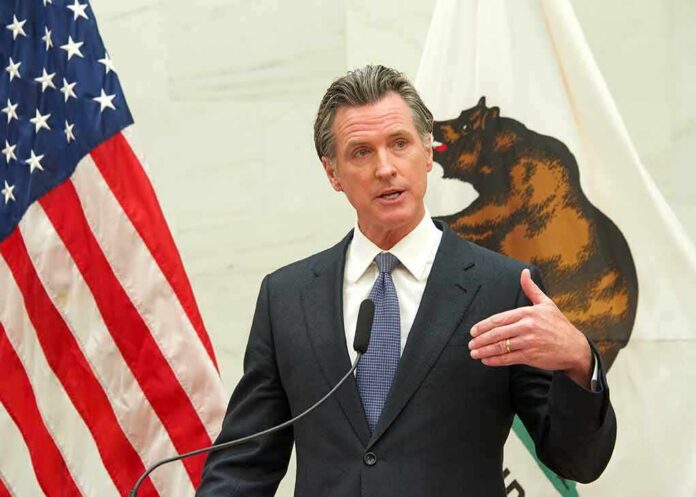
Gov. Gavin Newsom delivered the threat while speaking to reporters after signing separate election-related legislation in Sacramento. He said, “Anyone from California that receives any of those funds, we want to tax 100% of those proceeds,” and added that it was “an action the state of California can take.” The target was Trump’s new fund for allies who say they were harmed by federal “weaponization” under the Biden administration.[1]
The framing matters because it turns a compensation program into a symbolic fight over political loyalty, federal power, and state retaliation. Newsom’s comments were not presented as a narrow tax-policy debate; they were part of a broader clash over Trump, California governance, and the administration’s relationship with federal law enforcement. That political framing has helped drive intense coverage and is likely to shape how voters, lawmakers, and courts view the proposal if it becomes legislation.[1][2]
How the Tax Could Move Forward
Newsom said he would likely need action from the Democratic-led California Legislature to impose the tax, and reporting noted that the mechanics remain unclear. That leaves the proposal in an early stage: a public promise, not yet a finished statute. Even so, the basic premise is straightforward. California already taxes resident income, and Newsom is signaling that the payout would be treated as taxable income if lawmakers write the measure that way.[1][2]
The same reporting says the Trump administration’s Justice Department created the fund last week as a $1.776 billion settlement tied to claims of weaponization and lawfare. Fox News reported that Democratic lawmakers in New York have proposed blocking the fund and that a Connecticut lawmaker has also pushed a 100 percent tax on the proceeds. That suggests Newsom is not alone in using tax policy as a countermeasure, even if the legal durability of the idea remains unsettled.[2]
Legal Risk and Broader Fallout
ABC7 reported that the measure would likely face legal challenges, and the available reporting does not yet include a court ruling testing this exact tax design. That means the legal fight is still hypothetical, not resolved. The unanswered question is whether a state can use an ordinary income tax to neutralize a politically targeted federal payout without running into constitutional problems such as federal preemption or intergovernmental immunity.[1][2]
Gavin Newsom wants 100% revenge tax on people compensated by Trump weaponization fund
PRETTY MUCH MAKING IT CLEAR TAXES ARE A WEAPON OF CHOICE FOR DEMORATShttps://t.co/GzUgX8sJnz— 🇺🇸⭐️OUR-VOICES⭐️🇺🇸 (@iswho) May 29, 2026
The larger significance is bigger than one payout program. This dispute reflects a national pattern in which state leaders use tax rules and legal threats to signal resistance to the other party’s priorities, while critics see that as another example of government serving insiders first and taxpayers last. For supporters, the move is a rebuttal to federal overreach; for opponents, it looks like partisan punishment dressed up as fiscal policy. Either way, the fight now sits at the intersection of law, politics, and public distrust.[1][2][3]
Sources:
[1] Web – Gavin Newsom Says California Will Tax Payouts From Anti-Weaponization …
[2] YouTube – Newsom vows California will impose 100% tax on Trump’s $1.8 …
[3] Web – Newsom vows California will impose 100% tax on Trump’s $1.8 …