An Israeli airstrike near the Gaza City port killed civilians gathered at a seaside café, and Israel offered no immediate explanation — leaving the world to fill in the blanks with competing narratives and mounting outrage.
Story Snapshot
- An Israeli airstrike struck a group near the Gaza City port, killing at least two people and wounding ten or more, according to Shifa Hospital.
- The strike hit a packed café area along the waterfront during what witnesses described as a civilian gathering, with no advance warning reported.
- Israel issued no immediate comment on the specific strike, leaving the targeting rationale publicly unaddressed at the time of reporting.
- A separate but related incident — the al-Baqa Café airstrike — killed at least 41 people at a nearby port-area café, with Wikipedia noting no evacuation warnings were issued.
Strike at the Port: What the Reports Say
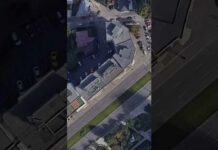
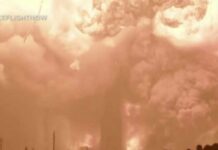
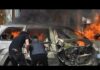
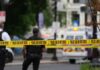
Shifa Hospital reported that two people were killed and at least ten injured when an Israeli airstrike hit an area near the Gaza City port. Medics described the scene as a crowded waterfront location where civilians had gathered. Reuters Connect imagery documented the aftermath, showing the strike site near the port. The Straits Times reported that the strike hit a packed Gaza café during what local sources described as a holiday gathering, with blood visible on the ground near the impact zone. [2][6][7]
The Israel Defense Forces (IDF) issued no immediate comment on the specific port strike, according to contemporaneous reporting. That silence left the public record dominated by hospital statements and on-the-ground imagery rather than any military explanation of the target or the intelligence basis for the strike. In conflicts where information moves faster than accountability, the absence of an official statement becomes its own story — and often shapes public perception before any facts about the intended target are established. [2][6]
The Al-Baqa Café Strike: A Deadlier, Related Incident
A separate but geographically related event adds critical context. On June 30, 2025, the IDF conducted an airstrike on the al-Baqa internet café near the port of Gaza City. According to Wikipedia’s summary of the incident, the strike killed at least 41 people, the majority of them women and children. The IDF stated the target was Hamas operatives and that aerial surveillance was used beforehand to minimize civilian casualties — but the same account notes no warnings or evacuation orders were issued prior to the strike. [1]
The proximity of these two incidents — both involving the Gaza City port area, both striking locations described as civilian-occupied — has led to some conflation in media coverage. It is important to distinguish between them: the port-group strike reported by Shifa Hospital involved a smaller casualty count, while the al-Baqa Café strike produced a far larger death toll with significantly more documentation. Treating them as a single event risks misrepresenting both. The underlying pattern they share, however — strikes on crowded civilian-adjacent locations with disputed targeting rationales — is consistent across both incidents. [1][2]
A Familiar Dispute in an Ongoing War
The Gaza conflict has produced a long and well-documented cycle of competing narratives around Israeli airstrikes. Israel consistently frames its strikes as targeting Hamas military assets and cites intelligence-based targeting and surveillance as evidence of lawful conduct. Palestinian health officials, hospitals, and international media consistently document civilian casualties and describe strikes on populated areas. Britannica’s overview of the Israel-Hamas War describes the conflict as having produced a “humanitarian catastrophe,” while the broader Gaza war record reflects hundreds of similar disputes over attribution, intent, and proportionality. [8][9]
What makes these incidents difficult to assess is not a lack of reporting — it is a lack of verifiable, independent evidence. Hospital records establish that people were harmed. Imagery confirms destruction at civilian-adjacent sites. But without forensic analysis, target dossiers, or independent casualty identification, neither side’s narrative can be fully confirmed or refuted from the public record alone. For Americans watching from abroad, that uncertainty is itself significant: in a conflict this consequential, the gap between what is claimed and what can be proven remains dangerously wide. [1][2][8]
🇮🇱❌🇵🇸 — The Israeli airstrike on a cafe at the port in western Gaza City that was packed with people celebrating public holidays killed at least two Palestinians.
— Geopolitia (@_geopolitic_) June 1, 2026
Whether one views Israel’s military campaign as a necessary response to Hamas terrorism or as disproportionate force against a civilian population, the recurring absence of timely, transparent accountability from all parties ensures that each new strike generates more heat than light. The people caught in the middle — civilians in Gaza with nowhere to go — bear the cost of that information vacuum in the most irreversible way possible. The rest of the world is left watching smoke rise from a port city and waiting for answers that rarely come quickly, and sometimes never come at all. [9][10]
Sources:
[1] YouTube – Israeli airstrike hits group near Gaza City port, Shifa hospital says
[6] Web – Israeli strike kills at least two, wounds 12 at Gaza seaport cafe …
[7] Web – Aftermath Of Israeli Airstrike In Gaza, Palestine – Reuters Connect
[8] Web – Israel-Hamas War (Gaza Conflict) – Britannica
[10] YouTube – Israel hits seaport in Gaza