Washington answered a murky drone strike with fresh blows inside Iran, raising the stakes before the facts are fully known.
Story Snapshot
- U.S. Central Command said it launched “self-defense” strikes in Iran after an Apache was downed near the Strait of Hormuz [2][7].
- Officials framed the action as proportionate retaliation to Iranian violence, echoing past U.S.–Iran flare-ups [1][2][7].
- Reports said an Iranian drone hit the helicopter, but intent and final findings remain unclear in public [3][4].
- The gap between fast claims and slow verification fuels distrust across the political spectrum [1][2][8].
What The U.S. Military Says It Did And Why It Acted
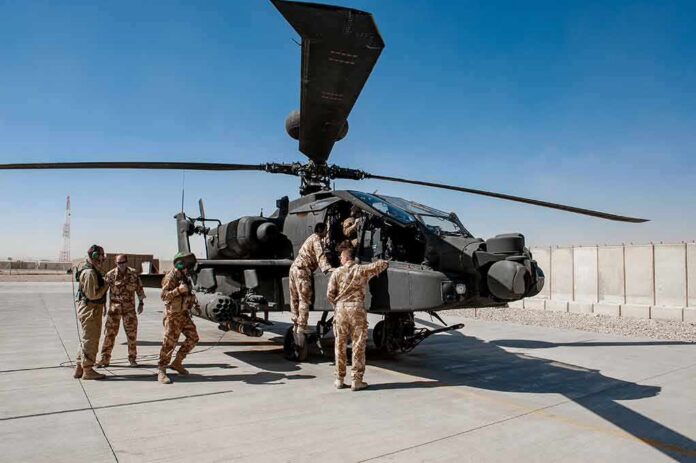
U.S. Central Command said American forces launched new strikes inside Iran after the downing of a U.S. Army Apache helicopter near the Strait of Hormuz [2]. Military officials called the operation a “self-defense” mission and said the response was proportionate to Iranian actions [7]. News coverage reported that the helicopter was hit by an Iranian drone, which set the trigger for the strikes [1][2]. The military framed the timeline as swift and necessary to protect U.S. troops and deter more attacks [7].
Independent outlets and major networks repeated the official description of a limited, proportional response [2][7]. These reports placed the action within a familiar pattern of rapid retaliation during tense maritime encounters near Hormuz [1][2]. The government’s message focused on restoring deterrence and signaling resolve without seeking a wider war [2]. The emphasis on “self-defense” sought to anchor the response within recognized legal and policy boundaries while investigations continue [7].
What We Know, What We Do Not, And Why It Matters
Reports said an Iranian drone downed the Apache, but public accounts did not confirm whether the drone intentionally targeted the helicopter [3][4]. Journalists noted that officials had not released a legal memo or detailed rules-of-engagement analysis supporting the “self-defense” label [3][4]. That leaves room for questions about intent, imminence, and proportionality in the public record [3][4]. In fast-moving crises, those details often emerge later, long after the first strikes and headlines shape public opinion [1][2][8].
This information gap matters because people across the country no longer take early official claims at face value. Many conservatives see a pattern of murky wars and mission creep. Many liberals see secrecy and a lack of accountability. Both groups see elites making choices without clear proof, then asking citizens to trust them. This episode fits that concern: the label is clear, but the evidence available to the public is thin so far [1][2][8].
Risks Of Escalation And The Strait Of Hormuz Factor
The Strait of Hormuz is a chokepoint where small errors can spiral into larger clashes. Close contact between drones, helicopters, and patrol craft raises the chance of misreading intent. Past U.S.–Iran incidents in this zone have moved fast, with tit-for-tat responses before facts are verified [1][2][8]. Each step raises the risk of a wider fight that could hit energy markets, trade routes, and allied bases. That risk grows when official claims outrun public proof [1][2].
#US–#Iran engage in new strikes after #Apache downing near #Hormuz
Addis Abeba – The United States and Iran exchanged fresh military strikes overnight, marking a renewed escalations between the two countries since a fragile ceasefire, following an incident involving a US Army… pic.twitter.com/8vZzaSMzkk
— Addis Standard (@addisstandard) June 10, 2026
Leaders often argue that speed saves lives, while critics argue that speed blurs truth. Both points can be true at once. A careful path here means three things: show evidence when safe to do so, set clear goals for any strikes, and explain how actions lower risk rather than raise it. Without this, Americans who already doubt Washington will see another example of power first and answers later, which deepens the trust gap [1][2][8].
Sources:
[1] Web – U.S. military says it fired new strikes in Iran after downing of …
[2] Web – US launches retaliatory strikes on Iran after Apache helicopter downed …
[3] Web – US launches retaliatory strikes against Iran after downing of …
[4] YouTube – U.S. launches retaliatory strikes after Apache helicopter downed by …
[7] Web – U.S. forces on Tuesday evening launched strikes against Iran “in …
[8] Web – Live Updates: U.S. launches retaliatory strikes after Trump says Iran …