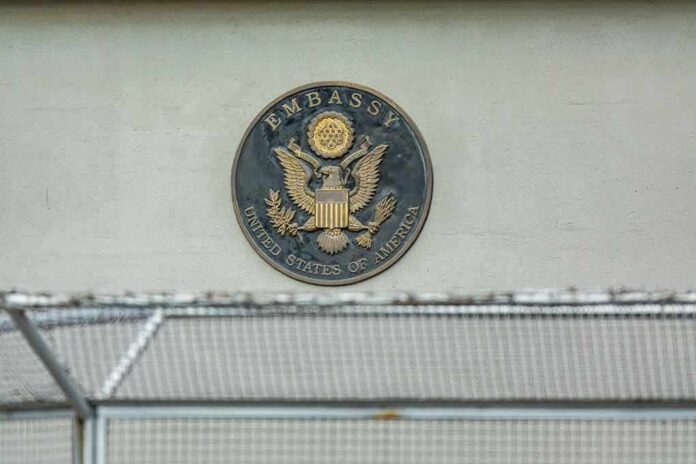
U.S. embassies across the Middle East warned Americans to brace for sudden escalation and possible flight and airspace disruptions.
Story Snapshot
- Multiple U.S. embassies issued near-identical security alerts across the Middle East.
- Alerts warned of possible flight cancellations, airspace closures, and travel delays.
- Posts tied the warning to rising regional tensions, not one country alone.
- At least one embassy published the alert language on its official social account.
Embassies Deliver Region-Wide Warning
U.S. diplomatic posts in several Middle East capitals posted the same core alert language on or around September 1, 2026. The notices said tensions made the security picture complex, with a chance of unforeseen escalation. The U.S. Embassy in Amman and the U.S. Embassy in Abu Dhabi carried matching messages on their official pages. A summary of embassy postings described the effort as region-wide, not focused on a single country.
The alerts told Americans to stay vigilant and plan for travel trouble. The language flagged possible flight cancellations, airspace closures, and other disruptions that could hit without much warning. The U.S. Embassy in Abu Dhabi used those phrases in a formal security alert, anchoring the travel warning in official text. Similar wording appeared across other posts, which signals a coordinated message for citizens across the region.
What The Alerts Actually Said
The shared language tied the warning to tensions in the Middle East and the risk of sudden shifts. The notices urged Americans to monitor local news, follow embassy channels, and review travel plans in case routes closed. The U.S. Embassy in Qatar amplified the alert title and key phrases on its verified social feed, reinforcing the call for heightened vigilance and readiness for disruption. This consistency shows a standard State Department approach when risks span borders.
Coverage that tracked the posts emphasized that multiple embassies moved in step. Reports listed missions in Israel, Saudi Arabia, Iraq, Kuwait, Lebanon, Jordan, Bahrain, the United Arab Emirates, and Qatar issuing similar notices. This framing makes clear the U.S. government viewed the risk as regional. It also helps travelers understand this was not about one city or a single incident but about a broader set of dangers that could spread.
Why The Government Uses Broad Warnings
State Department and embassy teams often use standard, non-specific language when risks rise fast across several countries. This method warns people to adjust plans without exposing intelligence or exact details. Officials can move quickly with approved language, then update as events unfold. In this case, the matching phrases and the timing across posts fit that established pattern of fast, region-wide alerts.
For Americans in the region, the practical takeaway is simple. Check your documents, review exit routes, and prepare for short-notice changes. Watch airline notices and airport updates in case airspace shuts or flights get pulled. Follow your local embassy alerts and enroll in the Smart Traveler Enrollment Program if you have not already. While the alerts did not name a single plot, they pointed to real travel risks that can strand people who are not ready.
What We Know And What Is Limited
The public record contains formal embassy pages and official social posts that carry identical language. The Abu Dhabi and Amman pages anchor the message, while the Qatar embassy’s social post repeats the key lines. Regional coverage mapped similar notices across several countries, underscoring the wide scope. The available alerts do not identify a specific attacker or a time-bound threat, which is common for broad, preventive warnings.
How This Hits Home For Travelers And Families
Families with work or school ties in the region face the hard math of safety, costs, and timing. If flights drop with little notice, prices can spike and routes can vanish. If airspace closes, detours can stretch trips by many hours or days. Americans who depend on steady supply lines or medicine should plan for delays. These steps do not signal panic. They reflect prudent action when the official message says conditions can change fast.
Bottom Line
Multiple U.S. embassies delivered a synchronized alert across the Middle East. The message was clear and consistent: the security climate is tense, and travel can be disrupted without warning. Americans should stay alert and ready to adjust plans. Official embassy pages and feeds back up these points, and regional reporting shows the scope of the warning.
Sources:
njsr.com.ng, yahoo.com, avapress.com, ground.news