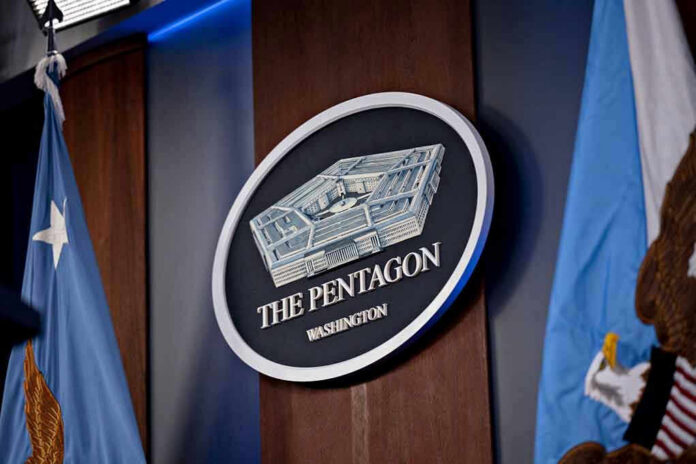
The Pentagon says President Trump approved a firing-squad execution for Fort Hood shooter Nidal Hasan, marking the first U.S. military execution in more than six decades.
Story Highlights
- Pentagon spokesman says Defense Secretary Pete Hegseth recommended, and President Trump approved, a firing squad.
- Army Secretary will set the time and place; no date is announced yet.
- Hasan was convicted in 2013 for the 2009 Fort Hood attack that killed 13 and wounded dozens.
- The decision revives a military death penalty that has been dormant since 1961.
What The Pentagon Announced
Pentagon spokesman Sean Parnell said on Monday that Defense Secretary Pete Hegseth recommended execution by U.S. Army firing squad for Nidal Malik Hasan, and President Trump approved it. Parnell added that the Secretary of the Army will set the time and place. Reports list no date or location. The message was shared publicly and repeated by several outlets the same day and the day after. The announcement focused on the chain of approval and the chosen method, not on logistics yet.
Hasan’s case stems from the 2009 attack at Fort Hood, Texas, where 13 people were killed and more than two dozen were wounded. A military jury convicted Hasan in 2013 and sentenced him to death. News reports emphasize that the conviction and sentence have stood for years, with appeals now exhausted. The Pentagon’s move activates the sentence after a long legal path. Officials framed the step as an execution-method decision inside established military justice.
Why This Decision Is Unusual
The U.S. military has not carried out a death sentence since 1961, making any execution rare. A firing squad adds another historic layer, since that method is more closely tied to wartime discipline and past military law, not modern civilian practice. News accounts note that the last American soldier shot by a U.S. Army firing squad was in 1945, highlighting how far back this history runs. That context sets Hasan’s case apart from state executions that use lethal injection.
Several outlets reported the same approval chain and timeline, strengthening the event’s basic facts. They also agree the Army Secretary controls the schedule. Those details matter for process and for public trust, which has been strained by years of government gridlock and opaque decisions. People across the spectrum often worry that leaders protect their own. Clear lines of authority, dates, and procedures can help reduce that concern once the Army sets them.
How It Fits Today’s Politics And Public Frustration
President Trump’s approval lands in a country split on many issues but tired of delays and mixed signals. Many conservatives see this as delivering long-promised justice after years of appeals. Many liberals focus on human rights and fair process but also want clear rules applied evenly. Both sides share a deeper concern: government systems often move slowly and hide the ball. Publishing the schedule and protocols could answer basic fairness questions without reigniting old fights.
Trump approves death by firing squad for 2009 Fort Hood massacre convict
President Donald Trump has approved the execution by firing squad of Army Maj. Nidal Malik Hasan for the 2009 shooting rampage at Fort Hood, Texas.
Politico, citing the Associated Press, reports that the… pic.twitter.com/lffe5s15BD
— Rifnote (@viarifnote) October 6, 2026
Next steps sit with the Army Secretary, who must choose a site and date. That decision will require detailed planning, trained personnel, and secure conditions. Military leaders also must communicate the process to families of the fallen, survivors, and the public. The Pentagon’s announcement restarted a long-idle part of military justice. The follow-through will test whether leaders can act quickly, honor the law, and explain each step in plain language to a weary public.
Sources:
nampa.org, upi.com, washingtonexaminer.com