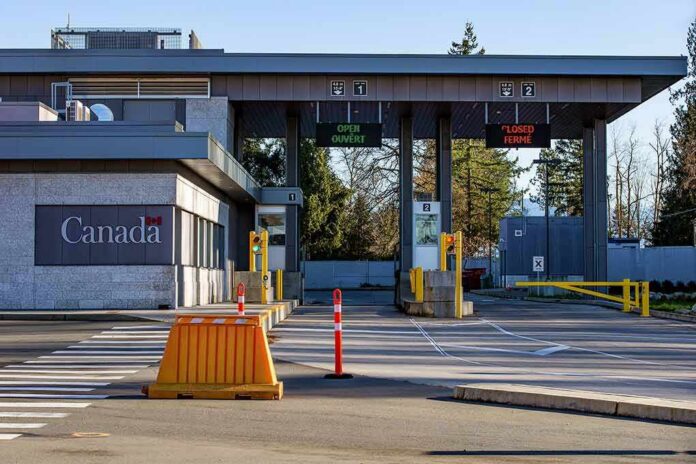
Canada’s new tariffs on about $20 billion in U.S. goods just took effect, raising costs on hundreds of everyday and industrial products to match Washington’s move.
Story Highlights
- Canada began 15%, 25%, and 50% tariffs on roughly $20 billion in U.S. imports.
- The action mirrors U.S. tariffs and targets more than 700 products starting September 8.
- Steel and aluminum face 50% duties, with wider hits across farm, consumer, and factory goods.
- Both sides aim to win leverage, but higher prices and slower growth risk falling on workers and families.
What Canada Implemented and Why It Matters Now
Canada started collecting new tariffs at 12:01 a.m. on September 8 on about $20 billion in American imports. The duties are set at 15 percent, 25 percent, and 50 percent, and they cover more than 700 products. Ottawa says the move matches U.S. tariffs “dollar for dollar” after Washington raised duties on Canadian goods. Canadian officials framed the steps as limited and targeted, but large enough to get attention in trade talks and to answer Washington’s pressure directly.
Steel and aluminum now face 50 percent duties at Canada’s border to mirror U.S. rates. Consumer goods, farm items, and factory inputs also face higher costs. The Canadian list runs to hundreds of tariff lines and is designed to reach sectors with political weight on both sides of the border. News outlets and official postings place the total at about 27.6 billion Canadian dollars, or roughly 20 billion U.S. dollars, with the rates and timing set in public notices.
How We Got Here: Tit-for-Tat Moves With Deep Roots
President Trump raised tariffs on a wide set of Canadian products, citing national interests and leverage in trade policy. Canada replied with “countermeasures” that mirror the size and, in some cases, the rate of U.S. duties. This tit-for-tat has a long history. Studies of U.S.–Canada trade show that when one country hikes tariffs, the other often responds, sometimes for long periods. The aim is not just money. It is to build bargaining power and drive talks toward a change or a deal.
Economists warn that retaliation can raise prices and slow growth even if it helps win talks. Research on past rounds shows that higher border taxes often pass through to buyers. Businesses that rely on cross‑border parts can see costs jump. Some producers gain from protection, but many others lose from pricier inputs. Several analyses of recent and past tariff waves forecast weaker output and higher inflation when both sides escalate in step.
Who Feels It First: Households, Small Shops, and Key Industries
Retailers that import affected goods will likely pass some costs to shoppers. Manufacturers that depend on U.S. inputs face higher bills right away. Steel, aluminum, appliances, paper, farm gear, and some foods are on watch lists in both countries. During earlier tariff fights, data showed export volumes in hit sectors dropped while buyers paid more. That pattern suggests today’s measures could raise prices while also shrinking trade flows in the most exposed lines.
Border communities and integrated supply chains are at special risk. Plants near the Great Lakes that swap parts daily may need to reprice contracts or cut orders. Small firms with thin margins will find it harder to absorb a 15 to 50 percent tariff shock. Some companies will seek new suppliers, but that takes time and money. The pain can spread beyond the target list because logistics, credit terms, and exchange rates all adjust when tariffs climb.
Politics and Leverage: Pressure Points on Both Sides
Trade planners in Ottawa selected products that can raise pressure in U.S. states tied to key industries. That is a common play in disputes, meant to bring lawmakers and business groups to the table. Washington used the same logic in setting its own tariffs on Canadian goods. The risk is clear: both governments can point to a “win,” while families and small businesses pay more and wait for a deal that may take months to land.
In this morning's First Thing Today:
-Crude oil surges as Iran-backed Houthis attack Saudi Arabia.
-Pro Farmer crop consultant lowers average U.S. corn yield.
-Canada hits U.S. with retaliatory tariffs.https://t.co/VGovQNqvnx— Pro Farmer (@profarmer) September 8, 2026
Many Americans across the spectrum see a pattern: big moves made from the top, with costs rolling downhill. Conservatives point to years of bad trade deals and lost factories. Liberals point to rising inequality and price spikes that hit workers hardest. In this case, the facts show a direct hit to items people use and produce every day. The question now is whether the new pain speeds real talks or hardens a standoff that both publics will fund at the register.
Sources:
cbsnews.com, canada.ca, reuters.com, gowlingwlg.com, aljazeera.com, nytimes.com, international.vlex.com, hks.harvard.edu, papers.ssrn.com, cdhowe.org, ubcm.ca, scotiabank.com, ppforum.ca