A rumor turned dinner into a street confrontation, and the people being chased weren’t even the target.
Quick Take
- Three federal air marshals eating at Ten-Raku in Lynwood were mistaken for ICE agents, triggering a fast-moving protest.
- The crowd formed outside Plaza Mexico, used horns and whistles, and harassed the men until deputies intervened.
- Los Angeles County Sheriff’s deputies de-escalated and safely escorted the air marshals away; no injuries or arrests were reported.
- The restaurant owner says Ten-Raku later faced backlash and boycotts despite employing workers from immigrant communities.
The Lynwood dinner that erupted in minutes
Three federal air marshals sat down to eat at Ten-Raku, a Korean BBQ restaurant inside Lynwood’s Plaza Mexico shopping center, on the evening of January 28, 2026. Reports say people inside and around the restaurant misidentified them as ICE agents, and that single mistake mattered more than any facts available at the moment. By the time the men tried to finish a meal, a crowd had gathered outside and the night was no longer about dinner.
Reports place the ignition point around 6:20 p.m., when the rumor took shape and spread quickly through social media and word-of-mouth. People arrived expecting an ICE operation, not off-duty aviation security personnel. That expectation sets the emotional thermostat: fear and anger spike first, verification comes later, if at all. When a community already feels targeted, a mistaken identity becomes a match thrown into a room full of fumes.
LATEST: TSA workers eating dinner were mistaken for ICE agents, drawing dozens of protesters to a Lynwood restaurant.
We tried speaking with an apparent organizer but received little explanation. pic.twitter.com/5Y6HH0ikqQ
— Matthew Seedorff (@MattSeedorff) January 29, 2026
How the crowd built pressure without breaking the law
Witness accounts and reporting describe a loud, tightening scene: protesters blowing horns and whistles, surrounding the area, and heckling the air marshals as they tried to leave. That kind of pressure campaign sits in a gray zone that modern protest movements understand well. A crowd can intimidate without laying hands on someone, punish without throwing a punch, and “enforce” a narrative through volume. The result still feels like a siege to anyone trapped inside it.
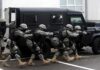
The Los Angeles County Sheriff’s Department responded from nearby stations, formed a skirmish line, and created space for the men to exit. Deputies escorted the air marshals to the sidewalk and into an unmarked van headed to the Century Station, according to multiple reports. The public safety lesson is blunt: local law enforcement often ends up as the referee between federal policy anger and on-the-ground confusion, even when no federal operation exists.
Air marshals are not ICE, and that difference matters
Some early reporting described “TSA officers,” but later accounts clarified these were federal air marshals—TSA personnel under the Department of Homeland Security, trained and tasked with protecting air travel. They are not immigration agents. That distinction isn’t trivia; it goes to competence and credibility. If a movement can’t tell the difference between agencies, uniforms, or roles, it risks attacking the wrong people and weakening its moral standing in the eyes of the public.
DHS condemned the incident in forceful terms and argued that rhetoric from “left-wing politicians” encourages harassment of DHS personnel. The claim may resonate with anyone watching the temperature rise around immigration enforcement, but unnamed culprits make for weak accountability. Conservative common sense says this: leadership has consequences, but accusations need names, facts, and direct links. Otherwise, the public gets another round of political smoke instead of a clear standard against mob harassment.
The quiet victim: a local business caught in the crossfire
Ten-Raku’s owner, Eric Kim, reportedly tried to manage a crisis that his restaurant didn’t create. He showed photos, tried to communicate, and later said it was difficult to identify individuals from images. After the crowd dispersed, the restaurant faced negative reviews and boycott pressure. That backlash reveals the cruelest irony: a business with ties to the local immigrant workforce can still become collateral damage when online outrage needs a place to land.
One customer, Osbaldo Bretado, captured the emotional knot many communities face—sympathy for families terrified by deportations, paired with frustration at indiscriminate targeting. That tension should sound familiar to anyone who values ordered liberty. America can debate immigration enforcement policy, priorities, and humane treatment without endorsing a “wrong place, wrong person” mob standard. When activists punish whoever resembles the enemy, they mimic the very indifference they claim to oppose.
Why misidentification is becoming a recurring American problem
Days before Lynwood, reports described a similar dynamic in Minneapolis, where software engineers were harassed after being misidentified through an anti-ICE Signal chat. The pattern is bigger than one city: decentralized tip networks, group chats, and rapid reposting reward speed over truth. Conservatives have warned for years that social media can become a substitute for evidence, and this is what that looks like in the real world—public accusations with no due process.
Local deputies resolved Lynwood without reported injuries or arrests, but the underlying incentive structure remains. The crowd got a shot of power, the rumor got rewarded with attention, and a non-ICE target still had to be escorted out for his safety. If that feels like a preview, it should. The next misidentification might not involve trained federal personnel, and the next crowd might not stop at noise.
Sources:
LA protesters swarm restaurant after TSA officers reportedly misidentified as ICE agents
Anti-ICE agitators mistake TSA air marshals for ICE agents
LA protesters swarm restaurant after TSA officers reportedly misidentified as ICE agents
Air marshals, mistaken for ICE agents, chased out of Los Angeles restaurant
Federal air marshals mistaken for ICE agents causing chaos at LA restaurant Wednesday, sheriff’s department says
Federal air marshals mistaken for ICE agents causing chaos at LA restaurant Wednesday, sheriff’s department says