A single headline about Trump’s Religious Liberty Commission “booting” a former beauty pageant winner has exploded into claims of death threats—yet the publicly verifiable record is thin, and that gap matters when religious freedom is already under pressure.
Story Snapshot
- No mainstream, independently verifiable reporting confirms a Catholic member was ousted and then publicly detailed death threats; the most direct trace is an AOL item referencing an ousting with limited details.
- President Trump’s Religious Liberty Commission, created by executive order in May 2025, is tasked with documenting threats to religious exercise and recommending protections through July 4, 2026.
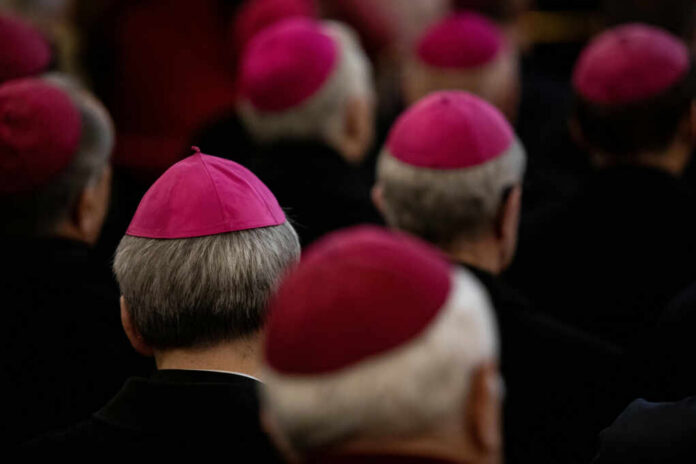
- Catholic leaders on the Commission, including Cardinal Timothy Dolan and Bishop Robert Barron, have publicly said they aim to protect all faiths and will criticize the administration when conscience rights are at stake.
- The U.S. Catholic bishops’ 2026 religious liberty report flags multiple pressure points, including political violence, federal grant uncertainty, school choice conflicts, and coercive gender-ideology mandates.
- A federal judge in February 2026 mostly barred immigration raids at a group of churches, citing a record that included threats and protests—showing the climate around churches is not theoretical.
What’s Verified vs. What’s Claimed in the “Ousted Catholic” Story
Available, English-language source material does not confirm the central allegation that a Catholic who was removed from the Religious Liberty Commission then spoke publicly about receiving death threats. The closest match is an AOL write-up whose headline indicates the Commission “boots” a former beauty pageant winner, but the item—based on what is available from the citation—doesn’t establish the person’s religious affiliation or document threats. With those core facts unverified, responsible analysis has to separate what can be proven from what is circulating online.
The lack of detail is not a minor technicality. Personnel removals can happen for reasons ranging from vetting issues to internal disputes, but the public cannot evaluate claims of political targeting or intimidation without names, dates, direct quotes, and corroboration. Readers should treat sweeping interpretations cautiously until primary documents or on-the-record reporting clarifies who was removed, why, and whether law enforcement was involved regarding any alleged threats.
Why Trump Created the Commission—and What It’s Supposed to Do
President Trump established the Religious Liberty Commission by executive order in May 2025, directing it to examine threats to religious liberty and advise the federal government on protections. The order frames the mission broadly—covering issues that can arise from federal, state, and local policy, including conscience protections, equal access for faith-based groups, and rights involving schools and public life. The Commission’s term, as set in the order, runs through July 4, 2026, unless extended or restructured.
What Catholic Leaders on the Commission Say They’re Working On
Public reporting on the Commission’s Catholic members offers clearer documentation than the “ousted Catholic” storyline. OSV News reported that Cardinal Timothy Dolan and Bishop Robert Barron described their participation as oriented toward protecting religious liberty across faith traditions, not acting as political spokesmen. They emphasized concerns that span ideological lines, including hostility toward religious practice and the need to resist framing religious liberty as a niche “right-wing” issue. Their comments also suggest they intend to disagree with the administration when conscience rights are implicated.
That posture matters to conservatives who want durable constitutional protections rather than partisan talking points. A commission structured to gather testimony, elevate concrete cases, and recommend policy fixes can be valuable—especially when it stays anchored to First Amendment principles and equal treatment. At the same time, credibility depends on transparency: membership decisions and internal governance should be clear enough that major controversies don’t get reduced to rumor-driven narratives that neither side can verify.
The Bigger Picture: Documented Pressure Points on Religious Liberty in 2026
The U.S. Conference of Catholic Bishops’ 2026 annual religious liberty report identifies multiple areas where conflicts are intensifying. The report cites concerns ranging from political violence and attacks on houses of worship to uncertainty surrounding federal grants and participation rules that can exclude faith-based organizations. It also addresses school choice disputes and pressures tied to gender ideology that can collide with religious teaching and conscience protections. Those themes overlap with the Commission’s stated scope, making documentation and follow-through consequential.
Church Security and Immigration Enforcement: A Real-World Flashpoint
Religious-liberty debates are not only policy arguments in Washington; they’re increasingly felt at the local level where churches operate. In February 2026, Religion News Service reported that a federal judge mostly barred immigration raids at a group of churches, citing a record that included threats and protests connected to the churches involved. That legal development underscores why many Americans—especially those wary of government overreach—watch enforcement tactics near houses of worship closely, even while still supporting lawful immigration controls.
Where does that leave the “ousted Catholic” claim? The provable facts support a narrower conclusion: Trump’s Commission exists, it has prominent Catholic members, and religious-liberty conflicts are active in multiple arenas. The specific narrative—an ousted Catholic speaking out about death threats—needs stronger, independently verifiable documentation before it can be treated as established news. Until then, the most prudent takeaway is to focus on the measurable work: whether the Commission produces recommendations that strengthen First Amendment protections without expanding federal power beyond constitutional limits.
Sources:
CatholicCulture.org — USCCB religious liberty concerns for 2026 (headlines index)
Catholic Review — House hearing examines rising global religious freedom threats, policy challenges
AOL — Religious Liberty Commission boots former beauty pageant winner
The White House — Establishment of the Religious Liberty Commission
USCCB — Annual Report on the State of Religious Liberty in the United States (2026)
Religion News Service — Judge mostly bars immigration raids at a group of churches