A court just gave a former U.S. ally’s president 30 years in prison for a secret drone push that judges say was used to tilt domestic power—proof that even “national security” can be a tool for the elites.
Story Snapshot
- A Seoul court sentenced ex-President Yoon Suk Yeol to 30 years over 2024 drone flights into North Korea [13][14].
- Judges found Yoon ordered the missions to provoke tension and aid a martial law bid [13].
- Prosecutors had earlier asked for the same term and argued the plan “fabricated wartime conditions” [4][1].
- Yoon’s lawyers deny any order and plan to appeal, calling the actions self-defense [1][6].
Court Ruling Finds Top-Level Authorization And Political Motive
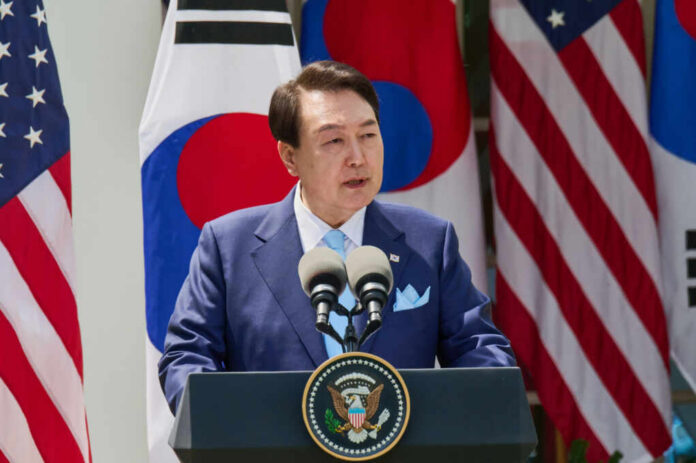
Seoul judges ruled that former President Yoon Suk Yeol ordered drones into North Korean airspace in October 2024. The court said the flights sought to provoke Pyongyang and then use the crisis to support a martial law push at home [13]. The ruling imposed a 30-year prison term. International coverage also reported the sentence and tied it to drone incursions over Pyongyang [14]. The judgment centers on authorization, intent, and risk to national security, not only on whether flights happened.
Special prosecutors had already sketched this theory in April. They told the court that Yoon aimed to “fabricate wartime conditions” and benefit from the unrest. They asked for 30 years then, matching the term now imposed [4][1]. Their case linked the alleged flights to a domestic power play rather than a normal military response. That frame matters because it moves the dispute from tactics to accountability at the very top of government.
Defense Denial And Appeal Signal A Long Legal Fight
Yoon’s legal team denies he gave any order or approval for the drone missions. His lawyers said there was “no prior order or subsequent approval,” squarely rejecting the claim of top-level direction [1][6]. They argue the flights were a lawful response to North Korea’s trash balloons, which have crossed the border before. They plan to appeal the ruling and push back on the finding of intent to game domestic politics [1][6]. The appeals process could narrow or overturn parts of the case.
Reports describe North Korea accusing the South of drone incursions over central Pyongyang during October 2024, including leaflet drops [3][6]. Those details shape both sides’ narratives. Prosecutors say the flights were staged to spark a reaction. The defense says they were reactive and protective. The court sided with prosecutors for now, but an appeal could test the record, standards of proof, and how far a leader’s implied control extends over covert missions.
Why This Case Hits Nerves About Power, Secrecy, And Public Trust
This fight echoes a wider pattern in security cases: prosecutors claim leaders bent force to shape politics, while defenders say there is no clear order or paper trail tying the leader to the act [4][6]. Courts must decide who authorized what, when, and why. The core lesson travels well beyond Korea. When leaders hide actions behind classified walls, citizens fear the system serves the powerful, not the public. That fear grows when courts describe plots to stir crises for domestic gain [13].
Yoon Suk Yeol was already handed a life sentence for insurrection in February.
Now they’ve added an extra 30 years for the drone stunt.
At 65 years old, South Korea’s judiciary isn't just sentencing him; they are testing the limits of human longevity and reincarnation.
He’s…
— Kenya Data Index (@KenyaDataIndex) June 12, 2026
Americans on both right and left can see the warning. Conservatives wary of global elites see another case where insiders used “security” to protect their jobs. Liberals upset by strongman politics see courts trying to hold a leader to account. Both camps agree on this part: secrecy lets bad choices hide, and regular people pay the price. This ruling shows that checks can still bite, but also that truth often arrives late, after damage and deeper division.
Key Questions To Watch As Appeals Begin
Appeals will test the strength of proof that Yoon personally ordered the flights and sought martial law. Review judges will weigh any records, witness accounts, and chain-of-command steps used to show intent [13]. They will also consider the defense claim of self-defense after trash-balloon incidents and whether that claim fits the facts [1]. Outside observers should watch for any fresh evidence and for how the court handles state secrecy in judging a leader’s role.
What This Means For Allies, Deterrence, And Democratic Norms
Allies will note that a trusted partner can face deep internal rifts over how force is used. Deterrence against North Korea depends on steady, lawful choices. Actions seen as political stunts can backfire, raise risk, and erode trust. At home and abroad, the message is simple: democracies need bright lines between defense and domestic power games. When those lines blur, courts, the press, and the public must press for daylight, documents, and real accountability [14][4].
⚖️ SOUTH KOREA SENTENCING
Ousted ex-President Yoon Suk Yeol sentenced to 30 years in prison over drone flights into North Korea and martial law plot.#SouthKorea #News #Politics
— The Current Feed (@thecurrentfeed) June 12, 2026
Sources:
[1] Web – Ousted South Korean President Yoon Given Prison Term for Drone Flights …
[3] Web – Prosecutors seek 30-year sentence for ex-South Korean President …
[6] Web – S. Korea’s ex-president gets 30 years over North Korea drone incident
[13] Web – Former South Korean President Yoon Suk Yeol has been sentenced …
[14] Web – (2nd LD) Ex-President Yoon sentenced to 30 yrs in prison in drone …