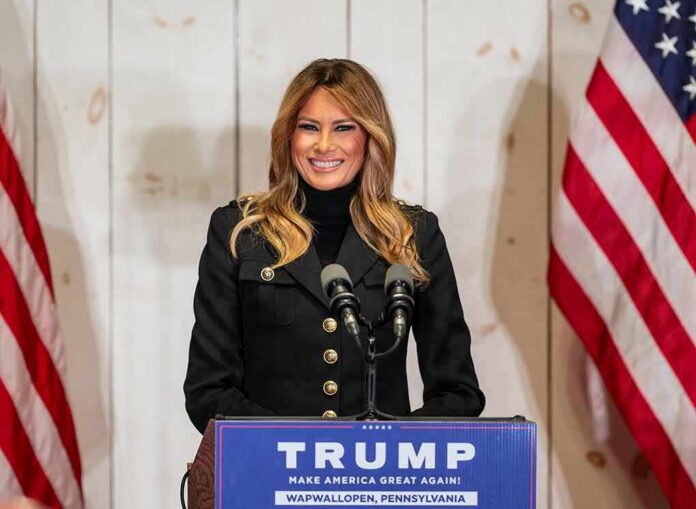
First Lady Melania Trump and Louisiana State University said they secured $5 million to fund permanent scholarships for students who came through foster care, turning game-day attention into long-term aid for overlooked young people.
Story Highlights
- The White House said $5 million will endow “Fostering the Future” scholarships at LSU.
- Scholarships will support LSU students with lived experience in foster care.
- The announcement was tied to an LSU campus event before the LSU–Alabama game.
- Later White House material cited a larger $7.2 million figure for the endowment.
What Was Announced And Who Benefits
The White House said Melania Trump and Louisiana State University established a $5 million permanent endowment for “Fostering the Future” scholarships. The aid targets LSU students who experienced foster care, a group that faces steep hurdles in college. The stated mission is to help these students gain the skills and stability to reach entry-level jobs and steady incomes. The Associated Press also described a partnership between LSU and Fostering the Future aimed at scholarships for students who came through the foster system.
Local television reported that the First Lady planned to make the announcement at LSU ahead of the Alabama game, using a high-profile moment to spotlight students who often lack support. The White House communications described Fostering the Future as part of the First Lady’s work focused on practical help for foster youth. The release framed the fund as permanent, which means the principal is meant to be invested while yearly payouts fund scholarships.
Why A Permanent Endowment Matters
Endowments are designed to last. Universities invest the principal and spend only a share of the yearly returns to fund the donor’s purpose. That model aims to protect the core gift and create a stream of support across many years. University guidance explains that only the payout, not the principal, is used, which helps keep the program going for future students who meet the criteria. For foster youth, steady aid can help them stay enrolled to graduation.
Students who grew up in foster care often deal with gaps in schooling, limited family help, and housing instability. Money for tuition and fees can close one big gap, but students also need advising, housing, transport, and mental health support to stay on track. Scholarship endowments can be a pillar in that mix by lowering direct costs. When stable funds exist, financial aid offices can plan awards and help students map a path from admission to a degree.
Event Timing And The Scale Question
KPLC and WAFB reported the planned LSU campus ceremony and described the initiative as a $5 million permanent endowment. The event timing, ahead of a marquee football game, ensured large attention on campus and statewide. The Associated Press coverage matched the core description: a scholarship plan for students who had been in foster care, tied to the First Lady’s initiative and LSU’s platform. Those reports reinforced the basic facts set out by the White House.
Later, a separate White House communication referenced a larger, $7.2 million figure for the endowment, including a significant commitment from a named corporate donor and additional LSU Foundation supporters. That later update raises a simple scale point: the initial $5 million announcement marked a launch moment, and later fundraising appears to have expanded the total pool. Both numbers point in the same direction—building durable scholarship aid for this group.
How This Fits A Larger Trend
Colleges now rely more on donor-restricted gifts to target access and success problems that public budgets do not fully cover. Endowed scholarships are a common tool to improve affordability for students with special barriers. Sector guidance describes how endowments are structured to protect principal while funding the stated purpose through annual payouts, reinforcing programs that need multi-year stability. This move at LSU follows that pattern by setting a dedicated fund for a defined student population.
For readers who worry that politics swallows policy, this story shows a concrete program with a narrow aim. A permanent scholarship endowment does not fix every challenge that foster youth face, but it can reduce one of the biggest ones: cost. The practical test now shifts from the podium to the financial aid office. Schools will need to identify eligible students, set award rules, and align mentoring and support so dollars translate into degrees.
FLOTUS pool report #5: Fostering the Future ceremony
Melania Trump announced a $7.2 million permanent endowment for Fostering the Future scholarships for LSU students who experienced foster care.
That is $2.2 million more than in the original announcement.
“This achievement…
— White House Press Pool Reports (@WHPressPool) November 7, 2026
One detail not fully spelled out in the initial announcement was the original source of the $5 million. Later material named donors and showed a larger total, which suggests the campaign broadened beyond the launch. The core takeaway remains clear. LSU and the First Lady’s initiative moved to lock in long-term help for students with foster care backgrounds. If the fund operates as described, more students can stay enrolled, graduate, and step into stable work with less debt pressure.
Sources:
facebook.com, whitehouse.gov, kutv.com, foxla.com