President Trump announced an immediate White House ban on CNN, MS NOW, and Politico, citing “fake news.”
Story Highlights
- Trump said the ban is “effective immediately” and warned others could follow.
- He argued reporters should not be allowed to write “fake” or “purposely negative” stories.
- Critics called the move unconstitutional and pledged legal challenges.
- Reports noted unclear enforcement steps right after the announcement.
What The President Announced And Why It Matters
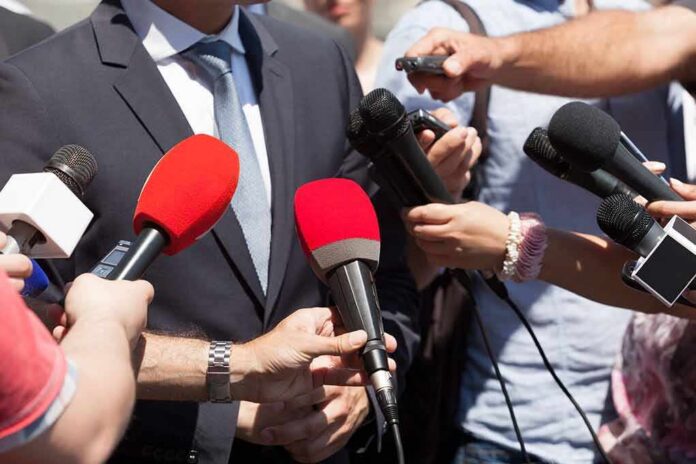
President Trump posted that CNN, MS NOW, and Politico are banned from the White House “effective immediately,” accusing them of spreading “fake news.” He warned that other outlets could be next if they keep, in his words, misleading the public. The announcement named the outlets directly and framed the action as a defense against dishonest reporting. Major outlets confirmed the statement and timing, underscoring that the order targeted specific newsrooms by name on the same day.
Trump also said reporters should not be allowed to write “fake stories,” and he defined “fake” to include “purposely negative stories.” That definition ties the ban to coverage he views as hostile, not to a catalog of proven errors. He also highlighted Politico, alleging it received an “illegal” eight million dollar government subscription under the prior administration. The public record provided here does not include the contract that would prove that claim.
How This Fits The Ongoing Fight Over Press Access
Trump has long pushed back against outlets he says mislead the public. This ban tracks with past fights over access and credentials from earlier years. During those disputes, courts stressed that when the White House opens events to some journalists, it cannot shut the door to others because of their viewpoint. Judges warned that selective bans tied to coverage risk crossing the First Amendment line, even in spaces that have tighter control than public forums.
Press-freedom groups and media organizations moved fast to object. The White House Correspondents’ Association said the action amounts to banning the free press. Free speech advocates called it viewpoint discrimination that would not survive in court. Reporters noted that critics do not claim the president lacks security authority; they argue that punishing coverage is different from enforcing neutral rules on access and conduct in secure spaces.
Enforcement Questions And What Comes Next
Some reports said there was no clear sign, immediately after the post, that physical access had changed. Other coverage said reporters from the named outlets were still on site that day. Without a formal directive, credential revocation, or a Secret Service memo, it is unclear how the ban will work. That gap leaves room for fast court filings, since judges often ask for the exact standard the government is using to decide who gets in and who gets kept out.
I do trust other media will walk out? “Trump bans CNN, MS Now and Politico from the White House”https://t.co/iuiprqIIgE
— Colleen Murrell 🦘🇪🇺🇮🇪🇬🇧 🇫🇷 😎 (@ivorytowerjourn) September 19, 2026
Expect a legal track and a policy track. On the legal side, outlets signaled they will defend their rights, and free speech experts predicted challenges. On the policy side, the administration can publish a clear access rule that focuses on conduct, security, and accuracy standards tied to corrections, not viewpoints. A written, even-handed standard is more defensible than a broad label like “fake news,” which can look subjective in court and to the public.
What Conservatives Should Watch For
Conservatives want fair coverage, not fawning coverage. They also want the government to follow the Constitution. Readers should watch whether the White House issues a written rule that targets proven falsehoods and serious misconduct, with due process to contest mistakes. That approach can push media to be accurate without giving judges a reason to strike it down. It can also keep focus on accountability for errors, not on punishing a viewpoint about policy.
Bottom Line: Seek Accountability And Constitutional Ground
Trump framed the ban as a stand against misinformation and bias. The outlets and press groups framed it as censorship. The facts show a real, immediate announcement and strong pushback. The legal footing will turn on whether the policy uses clear, viewpoint-neutral standards and real evidence, backed by documents. If the administration releases that record, it strengthens its hand. If not, courts may call it retaliation and roll it back fast.
Sources:
cbsnews.com, english.news.cn, axios.com, kesq.com, uk.news.yahoo.com, globalnation.inquirer.net