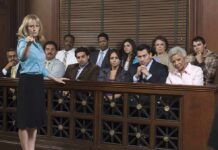


A grieving mother told Congress she is ashamed of her party after her newlywed son and his bride were killed by a truck driver she says should never have been licensed.
Story Snapshot
- A mother and other families testified that state licensing and sanctuary policies failed them.
- Witnesses tied a deadly crash and a separate severe-injury crash to a California-issued commercial license.
- California says it paused non-domiciled commercial licenses after a federal order and canceled thousands.
- One expert told Congress that immigrants with temporary work permits had lower crash rates in California data.
What Congress Heard Under Oath
House lawmakers held a hearing on sanctuary policies and commercial driver licensing on September 1, 2026. The agenda included sworn testimony from families harmed in truck crashes. The record shows Marcus Coleman testified about his daughter’s catastrophic injuries and linked the crash to a California-issued commercial license for an undocumented driver. He urged Congress to fix gaps before trucks roll, not after families bury loved ones.
Committee materials framed the session around whether states issued non‑domiciled commercial licenses to people who were not legally eligible. The official event page lists Coleman’s testimony, underscoring that this was not only a media story but a matter of record. Lawmakers examined how identity checks, domicile rules, and immigration status steps work in practice, and where they break down when states and the federal government disagree.
The Crashes Driving The Debate
The family accounts tied two tragedies to licensing failures. In one case, a lifelong Democrat told Congress she is ashamed of her party after her newlywed son and his bride were killed by a truck driver licensed in California, who she believes was in the country illegally. In a separate case, Marcus Coleman said an undocumented driver in an 18‑wheeler left his young daughter with a fractured skull and brain injury.
Reporting on the Coleman crash cited police statements that the driver, identified as Partap Singh, drove too fast and failed to stop for traffic in a construction zone. That detail shows ordinary safety rules also matter and can compound harm. But Coleman argued the core failure came earlier, at the license counter and employer checks, where the system should have screened out an ineligible commercial driver before the wreck.
California’s Response And A Federal Squeeze
California’s Department of Motor Vehicles says the federal government ordered a halt to non‑domiciled commercial licenses. The state says it canceled about 13,000 such licenses and is only issuing domiciled ones while a federal pause remains in force. Notices to affected drivers went out, and pending applications can sit on hold for up to a year as rules get sorted.
‘Lifelong Democrat’ admits she is ‘ashamed’ of party after son killed in illegal immigrant crash | Fox News, New York Post
In testimony before Congress this morning, self-identified “lifelong Democrat” Elizabeth Carter admitted that she is “ashamed” of her party’s handling of… pic.twitter.com/RFTUHBENNo
— Owen Gregorian (@OwenGregorian) September 16, 2026
Federal transportation officials issued a “substantial noncompliance” finding for California’s licensing program, raising pressure on the state to tighten checks. The dispute centers on who qualifies and how states verify legal status and domicile. California maintains that citizenship alone does not decide eligibility, but it acknowledges the federal pause and related cancellations while agencies work through new limits and verification steps.
Competing Claims About Safety And Policy
Not all testimony pointed one way. David J. Bier told the House Judiciary Committee that, in California data, immigrants with temporary work authorization were less likely to be in crashes and fatal crashes than others. He also said large‑truck fatal crashes per miles driven fell sharply over three decades. He argued that sweeping license bans could target far more drivers than the small set linked to deadly wrecks in the records he reviewed.
Families counter that even one preventable death is too many, and that weak verification invites abuse. The record here has limits. It does not include the full police files, the driver’s California license application, or a public audit of the issuing office. Those gaps make it hard to pinpoint whether the core failure was state law, an administrative miss, or fraud. Congress signaled it wants those answers on the record.
Why This Matters Beyond One Hearing
These cases tap into a broader fear shared by many Americans: systems meant to keep people safe feel broken. Conservatives see proof that sanctuary rules and loose licensing put lives at risk. Liberals who want fair rules also worry when agencies talk past each other and families pay the price. Both sides see officials more focused on process than outcomes. That is how trust erodes, and why this hearing struck a nerve across the aisle.
Two things can be true. The country needs enough truck drivers to move food and goods. The country also needs every commercial driver to meet strict, verified standards before they touch a rig. Congress and states can act on both. They can require real‑time federal status checks, tighter domicile proof, employer audits, and fast data‑sharing after violations. They can do this without demonizing lawful workers who follow the rules.
Sources:
presidentialwire.com, redstate.com, courts.oregon.gov, foxnews.com, opb.org, dmv.ca.gov, transportation.gov, calmatters.org