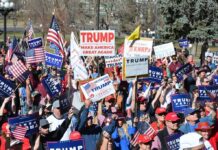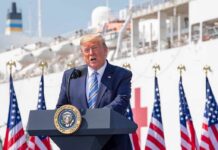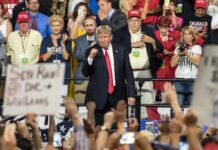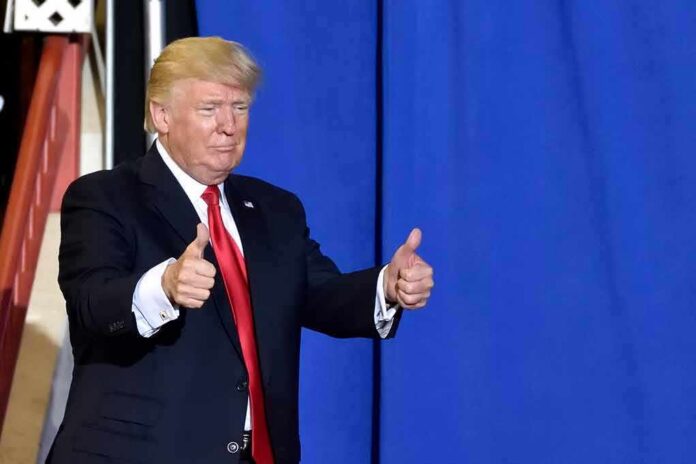
President Trump danced to “YMCA” after urging a packed Gastonia crowd to elect Michael Whatley to the United States Senate.
Story Snapshot
- Trump campaigned in Gastonia, North Carolina, to boost Michael Whatley’s Senate bid.
- Trump framed the race as vital and personally vouched for Whatley’s record and loyalty.
- Pre-event notices set the rally at Gastonia Municipal Airport with a 7 p.m. start.
- The stop fits a long pattern of Trump acting as party validator in key races.
Trump Puts His Brand Behind Whatley In Gastonia
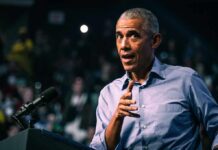
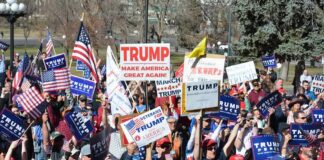
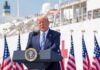
President Trump returned to North Carolina on Wednesday and took the stage at Gastonia Municipal Airport. Trump told supporters they should send Republican Michael Whatley to the United States Senate and called him one of the strongest partners he has worked with in government. Local outlets described a full rally atmosphere, with Trump leaning on his endorsement to energize voters in Whatley’s hometown of Gastonia. The event capped with Trump’s familiar “YMCA” dance as the crowd filed out.
The rally had been on public calendars for days. Outlets told drivers to expect traffic delays and soft closures near the airport. Schedules listed a 7 p.m. speaking time at the municipal airfield, underscoring the campaign-style planning around a federal officeholder’s visit. The clear goal was turnout and attention in a high-stakes race that could decide control of the chamber this fall, with Republicans seeking to hold the North Carolina seat.
Why This Stop Matters In A Tight Senate Map
North Carolina’s race pits Whatley, a former national party chair, against former Democratic Governor Roy Cooper in a contest both parties treat as pivotal. Trump pushed Whatley to run and endorsed him early, making the Senate fight part of his broader political coalition. That kind of early backing often signals to donors, volunteers, and local officials where to focus time and money, which can tighten a campaign’s message and speed up fundraising in the final stretch.
Trump’s rallies also serve as media engines. One trip can fill local news for days, boost small-dollar donations, and help down-ballot turnout operations. Republicans hope that attention offsets Democratic advantages with urban voters and aligns rural and suburban conservatives under one banner. Reports from the scene described Trump crediting Whatley’s past work and urging voters to treat the Senate race as a must-win for the party’s agenda in Washington.
Shared Frustrations Both Parties Hear On The Trail
Campaigns in North Carolina now revolve around concrete kitchen-table issues. Voters raise concerns about prices, energy costs, border security, and crime. Others focus on health care, wages, and the gap between the rich and the rest. Both sides also hear a bigger complaint: many believe leaders in Washington protect their own jobs first and dodge hard choices. Rallies like Gastonia tap that anger by promising action and accountability if the party’s candidate wins.
During a campaign rally in Gastonia, North Carolina, President Donald Trump remarked that he would withhold additional Federal Emergency Management Agency (FEMA) disaster-relief funds from the state if Republican U.S. Senate candidate Michael Whatley loses the upcoming November…
— BlackInformant (@BlackInformant) September 17, 2026
That shared frustration explains why a presidential visit can punch above its weight. Supporters see it as proof their concerns are being heard. Skeptics see a chance to press for firm plans, not slogans. Trump’s closing “YMCA” dance was a familiar show note, but the lasting piece was the message: the White House wants Michael Whatley in the Senate, and the party is investing time and attention to make that happen in November.
Sources:
facebook.com, abc11.com, hoodline.com, wral.com, yahoo.com