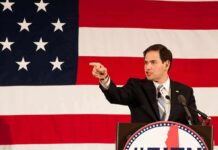


Secretary of State Marco Rubio told reporters the left wing has “basically destroyed every country” it has ever run in the Western Hemisphere, tying that claim directly to alleged ties between socialist governments and drug cartels.
Story Snapshot
- Rubio named Venezuela, Cuba and Nicaragua as examples of left-wing governance he says caused collapse.
- He claimed some left-wing groups work directly with narco-trafficking organizations.
- The State Department is expanding security ties with right-leaning governments like Ecuador and Colombia.
- Critics say the U.S. coalition against cartels leaves out major left-led nations like Mexico, Brazil and Colombia.
- Independent researchers find no strong evidence that left-wing rule causes cartel alliances on its own.
Rubio’s Blunt Assessment of Regional Governments
Rubio made his comments while discussing security threats across Latin America. He said, “The left wing destroyed Venezuela, the left wing destroyed Cuba, the left wing destroyed Nicaragua.” He added that some of these left-wing groups are “in alliance with these criminal narcotrafficking organizations.” The remarks came as Rubio pushed for tighter cooperation with countries fighting drug cartels.
Rubio has repeated versions of this claim in multiple settings this year. During a joint press event with Ecuador’s foreign minister, he laid out plans for new security assistance tied to drug routes, money laundering and illegal mining. He has also called regional cartels “narco terrorists” who “terrorize the nations in which they operate,” language that frames the issue as a security war rather than ordinary crime.
Specific Policy Fights Back the Broader Claim
One concrete example anchors Rubio’s argument. He and Senator Chuck Grassley criticized Colombian President Gustavo Petro for suspending arrest warrants and extraditions tied to the National Liberation Army, a left-wing group listed as a foreign terrorist organization. Rubio said the move would “hurt regional counter-narcotics investigations.” That case shows one specific policy dispute, but it does not by itself prove that every left-wing government in the hemisphere has caused the kind of destruction Rubio describes.
Rubio has praised Ecuador as the most “aggressive” partner in the administration’s fight against cartels. The United States is working with allied nations under their own laws and says it will act against smuggling vessels when needed. That cooperation model relies on right-leaning governments choosing to work closely with Washington, which raises questions about how the approach would apply to nations run by left-wing leaders who reject that partnership.
Who Gets Left Out of the Coalition
Critics point to a pattern in the Trump administration’s regional anti-cartel coalition. Seventeen countries, mostly led by right-wing or center-right governments, have joined the effort. Mexico, Colombia and Brazil, three nations hit hardest by drug trafficking, were left out of that alliance despite having left-leaning leadership. That gap fuels arguments that Washington’s security partnerships track political alignment as much as actual cartel activity on the ground.
Marco Rubio is pushing for a tougher U.S. campaign against drug cartels, calling Mexico’s efforts insufficient while expanding security cooperation with Ecuador, including military operations and $45 million in proposed support. https://t.co/VT2CSoVUcY
— Sahby Mehalla | مهالة صحبي (@sahbymehalla) September 10, 2026
Academic researchers who study Latin American politics push back on treating “the left” as one bloc. A 2013 analysis found that critics often exaggerate failures of left-leaning governments while ignoring differences between them. A more recent study on drug policy across the region also found little consistent link between progressive governments and any single approach to organized crime, showing wide variation instead of one clear pattern.
What This Means for Voters on Both Sides
This dispute lands squarely inside a wider frustration many Americans share, regardless of party. Conservatives see confirmation that socialist policies wreck economies and invite lawlessness. Liberals see a security strategy that rewards friendly governments while ignoring cartel activity in countries the administration prefers politically. Both camps have reason to ask whether Washington’s foreign policy decisions track actual threats or simply reward political allies, a question that outlasts any single administration.
No public intelligence file, court record or sanctions document released so far spells out a direct organizational alliance between named left-wing governments and specific cartel groups across the entire hemisphere. Rubio’s broader claim rests on his own public statements and a handful of individual policy disputes, not a released comparative record covering every country he named.
Sources:
ianslive.in, abcnews.com, youtube.com, state.gov, pbs.org, rubio.senate.gov