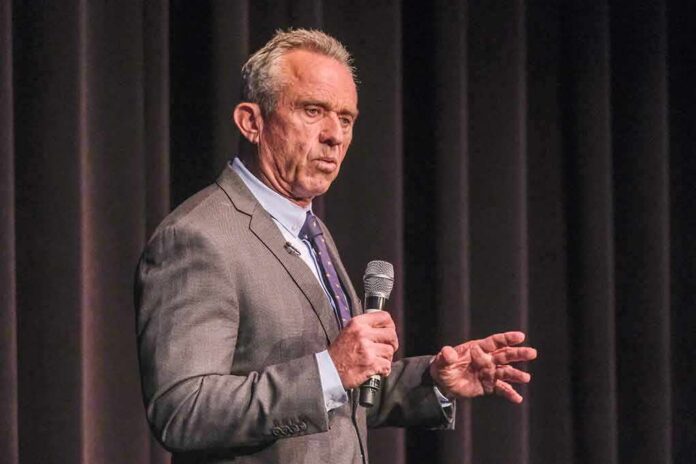
Robert F. Kennedy Jr. took the stage at the Republican midterm convention in Dallas and accused Democratic leaders of abandoning voters and stacking the rules.
Story Snapshot
- Kennedy spoke at the GOP’s Dallas midterm convention alongside top Republican figures.
- He said Democrats lost their roots and focused on hating President Trump.
- He argued party leaders sidelined voters and reshaped primary rules in 2024.
- His sharp lines about Vice President Harris drew strong cheers in the hall.
Kennedy’s Rare Turn on a Republican Stage
Robert F. Kennedy Jr. told the Dallas crowd he never expected to address a Republican convention, underscoring his public split with Democrats and his new alignment with parts of the GOP base. He spoke during the Republican National Committee’s first midterm convention, a high-profile event that featured President Trump, Vice President JD Vance, and party leaders over two days in Texas. His appearance marked a symbolic bridge between populist concerns on both sides.
Kennedy framed his remarks around trust, free speech, and institutional power. He said the Democratic Party had “lost its way” and now centered on hostility to a single person: President Trump. He cast this as a warning about what happens when parties serve insiders over voters. That line landed in a hall where many share concerns about government elites, insider deals, and rules that feel rigged against ordinary people.
The Harris Flashpoint and 2024 Rule Fight
Kennedy drew loud applause when he claimed no voter cast a primary ballot for Vice President Kamala Harris and said party leaders “anointed a queen,” a line reported from the hall with a strong reaction. He also said Democrats changed rules in 2024 to block him and others from winning, pointing to canceled debates and primary shifts. His earlier July 2024 remarks previewed this theme, warning Democrats might elevate Harris despite low support inside the party.
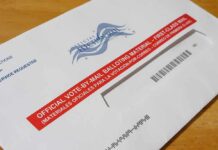
Context matters here. Party nominations are governed by party rules, not a direct national vote. In 2024, Democrats used an expedited process after President Biden exited the race. Delegates were directed into a virtual or electronic path, with candidates needing hundreds of delegate signatures to qualify before a vote. That structure made rapid consolidation possible and fueled claims that elites, not voters, controlled the outcome.
What Was Confirmed at Dallas
Major outlets and organizers confirmed Kennedy as a featured speaker in Dallas on September 9–10, 2026, placing him alongside Republican headliners in a “Trump-a-palooza” branded setting. Live coverage quoted Kennedy stressing the irony of his presence and arguing Democrats offered only anger toward President Trump. Local and national reports framed the event as a showcase for the party’s agenda heading into the midterms, with Kennedy’s cross-party critique adding a notable moment.
Some of the most colorful lines about Harris appeared in proponent coverage that included a transcript and reported crowd reaction. That outlet’s account adds texture on what the room heard and how it responded. The central facts remain consistent across sources: Kennedy spoke at the GOP convention, he criticized Democratic leadership and process, and he cast the dispute as a fight over who holds power in a party—leaders or voters.
Why This Resonates Across the Spectrum
Many Americans, right and left, think elites run the system for themselves. Kennedy’s message hit that shared nerve. He argued that insiders set rules that silence debate and limit choice. That echoes long-running complaints from conservatives about media bias and “deep state” power, and from liberals about big donors and closed-door deals. Party rulebooks often allow fast decisions when time is short, but that speed can look like exclusion to people outside the room.
The stakes go beyond one speech. If voters believe parties can change rules on the fly, trust falls. When trust falls, people tune out, or they lash out. Both parties have faced this cycle in recent years. Clear, public rules and transparent steps help. So do open debates. Kennedy’s Dallas moment was not just a partisan jab. It was a sign that many feel locked out by leaders who seem more focused on control than consent.
Sources:
thegatewaypundit.com, facebook.com, youtube.com, gop.com, audacy.com, washingtonexaminer.com, fox4news.com, pbs.org, cnn.com