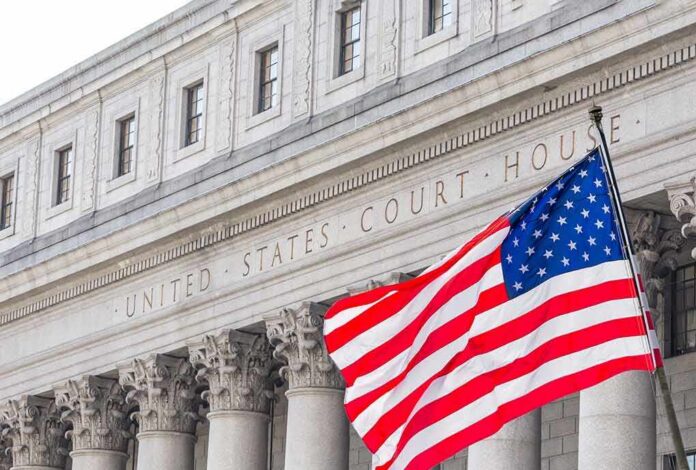
The Supreme Court blocked the Postal Service’s new mail-ballot rule for November, while warning the legal fight is far from over.
Story Snapshot
- The Court kept key parts of the Postal Service’s mail-ballot rule on hold for the midterms.
- Justices said they were not deciding if President Trump’s order or the rule is legal.
- The rule stems from Executive Order 14399, which seeks barcodes and verified mail-voter lists.
- Supporters cite election security; critics warn of disenfranchisement and federal overreach.
What the Supreme Court Actually Did
On emergency review, the Supreme Court declined to let the Postal Service enforce parts of its new mail-ballot rule for November. The majority stressed the decision was not a final ruling on legality. It said the order itself did not force states to change election methods and that future actions might still be unlawful, depending on details. One opinion also emphasized timing concerns, noting election officials lacked time to roll out major changes before voting.
Separate lower-court orders remain in place against portions of the rule, leaving a patchwork as the calendar advances. The bottom line for voters is stability for this cycle: most mail processes stay the same as before. However, the justices left open whether the administration can later defend a finalized rule. The Court’s framing signals more litigation after the midterms, when timing pressures fade and judges can review a full record on the merits.
What the Rule Would Change
President Trump’s Executive Order 14399 directed the Postal Service to set uniform standards for federal ballot mail. The order cites unique envelope identifiers and barcodes to confirm that only citizens receive and return ballots, as an election-integrity safeguard. Subsequent descriptions of the draft and final rule say states would upload verified mail-voter lists to a federal portal, and ballot envelopes would carry standardized barcodes and data fields to aid tracking and validation.
Supporters argue these steps deter fraud and standardize confusing ballot designs across states. They say better identifiers cut duplicate mailings and help trace lost ballots, giving voters clearer status updates. Critics answer that the plan shifts power from states to the federal government and the Postal Service. They warn of rejected deliveries if a voter’s name is not on a federal list, which could block eligible voters through data errors or late updates. This clash mirrors long debates over who sets election rules.
Why Both Sides Are Alarmed
Security advocates see a chance to tighten a system they believe is too loose. They point to barcodes and uniform envelopes as common-sense tools that private shippers use every day. Voting-rights groups and several state officials see a different risk. They say asking a mail carrier to screen who may receive a ballot breaks with past practice and could cause mass confusion close to an election, especially if databases lag or conflict with local rolls.
For many Americans, the bigger worry is trust. People on the right doubt lax rules and fear illegal voting. People on the left doubt new hurdles and fear lost votes. Both worry that powerful institutions change rules late and leave citizens to pick up the pieces. The Court’s message—slow down, follow the law, and come back with a full record—tracks that concern. It aims to keep this election steady while the deeper fight moves to regular briefing after November.
Sources:
abcnews.com, congress.gov, cnbc.com, thegatewaypundit.com, scotusblog.com, jurist.org, cnn.com