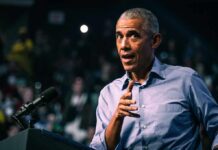

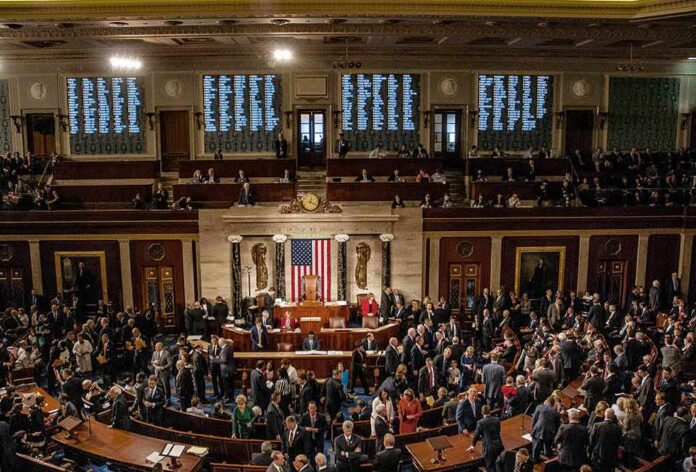
House Democratic Leader Hakeem Jeffries escalated the voting-rights fight by labeling President Trump’s redistricting push “Jim Crow-like” and urging public resistance, sharpening a clash over who controls political power and how.
Story Snapshot
- Jeffries says Republican maps attack Black representation and echo Jim Crow tactics.
- Republicans reply that maps follow population and politics, not race.
- Supreme Court rulings narrowed racial gerrymandering claims while keeping some limits.
- Debate reflects a long pattern: parties in power shape maps to lock in seats.
What Jeffries Alleged And Why It Matters
House Democratic Leader Hakeem Jeffries accused President Trump and Republicans of using “Jim Crow-like” tactics to weaken Black political power. Jeffries argued that new redistricting plans in the South, and especially Texas, double down on racial gerrymandering and suppress fair representation. He urged public pressure and even boycotts tied to the issue, framing the moment as an “unprecedented attack” on Black representation. His claim raises the stakes for upcoming elections and for court fights over district lines.
Jeffries’s charge taps a deep fear on left and right that powerful insiders rig the rules. Voters across the spectrum see politicians protecting their jobs first, not serving the people. They worry the system rewards the well-connected and punishes everyone else. That shared frustration gives Jeffries’s words extra punch. The push to redraw maps mid-decade fuels the belief that the game is fixed, no matter who lives in a growing city or pays the rising bills.
How Republicans Defend Their Maps
Republican lawmakers reject the Jim Crow label and say they follow “population and politics” when drawing lines, not race. In Tennessee, party leaders described changes as a lawful response to court rulings and normal partisan competition. Supporters argue removing race as a factor “levels the playing field.” They also note that both parties have long drawn maps to gain seats. The goal, they say, is fair elections, not voter suppression.
Conservative commentators further argue that modern conditions are not Jim Crow. They point to strong Black voter turnout and the lack of formal racial barriers seen in the past. They call the analogy “plainly ridiculous” and say the fight today is over partisan advantage, not legal disenfranchisement by race. This view frames the clash as politics as usual, driven by incentives to maximize seats, not to suppress a race.
What The Courts Have Changed
Recent Supreme Court decisions have reshaped the legal ground under these fights. The Court struck down a Louisiana map that created a second majority-Black district, finding it an unconstitutional racial gerrymander. The ruling left Section 2 of the Voting Rights Act on the books but narrowed how race can guide mapmakers. That standard makes it harder to prove racial intent when politics and race overlap in voter geography.
Earlier cases already set a tough test: if race predominates over traditional map rules, courts apply strict scrutiny. States must show a compelling reason and tight tailoring to survive. That line between race and politics is hard to draw in practice, because many minority voters cluster in cities, and partisanship often tracks with race. The result is a legal maze where similar maps can rise or fall on fine-grained evidence.
Why This Fits A Familiar Pattern
Political science shows that parties in power tend to “pack and crack” voters to lock in seats. Mapmakers pack opponents into a few safe districts and crack the rest across many, flipping close races their way. This is not new, and neither party is immune. Independent or court-led maps aim for fairness, but partisan actors seek advantage. That is why every redistricting cycle brings a wave of lawsuits and claims of betrayal.
The deeper issue is trust. Many Americans think elites change rules to protect themselves. When leaders redraw maps midstream, or when courts quietly shift standards, trust erodes more. People want clear rules, open data, and a fair shot to choose their leaders. That is a basic promise of the country. Until both parties embrace transparent mapmaking, the cries of “rigging” will grow, and faith in elections will keep slipping.
Sources:
twitchy.com, youtube.com, jeffries.house.gov, washingtonexaminer.com, nypost.com, democracydocket.com, cbc.house.gov, nber.org