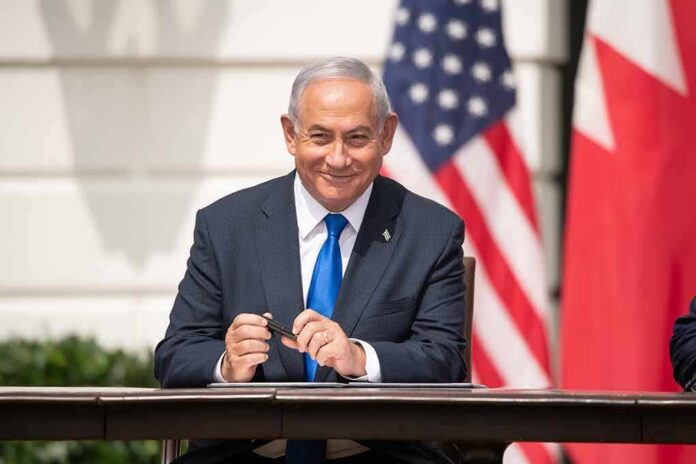
Israel’s leader says the country will be the Middle East’s strongest power and a “global force,” and he is building a new alliance network to make it real.
Story Snapshot
- Netanyahu vows Israel will be the region’s strongest power and a “global force”.
- He is pushing a hub‑and‑spoke alliance linking Israel with partners from India to the Mediterranean.
- Supporters call it a defensive arc against Iran and other threats; critics see a bid for primacy.
- The plan raises big questions about stability, oil routes, and U.S. strategy in a tense region.
What Netanyahu Said And Why It Matters
Prime Minister Benjamin Netanyahu said Israel aims to forge a new coalition to counter what he called radical threats in and near the Middle East. He also said Israel would be the region’s strongest power and become a “global force,” tying this to the ongoing fight with Iran and its allies. These remarks set an ambitious goal: combine military strength with a wide alliance to change regional power balances in Israel’s favor.
Netanyahu’s message comes as Washington debates its own role. President Trump backs a harder line on Iran and leans on regional partners to share burdens. This gives space for Israel to lead local coalitions while the United States supplies key support. Many Americans on both left and right worry about long wars and elite decision‑making. They see bold talk of regional redesign as risky and far from everyday concerns at home.
The Alliance Architecture Netanyahu Envisions
Reports describe a “hexagon” or axis of cooperation linking Israel with India, Arab states, select African partners, and Mediterranean countries. Al Jazeera summarized his pitch as a broad framework against radical axes, with India named as a key partner. The concept blends security, technology, and energy ties. Advocates frame it as a defensive shield that shares intelligence, deters attacks, and reduces reliance on single chokepoints for trade and fuel flows.
Analysts who track Netanyahu’s strategy say his goals include stopping Iran’s regional reach, deepening normalization with Arab states, and preventing a Palestinian state from taking shape. The Istituto Affari Internazionali analysis argues the approach seeks to neutralize regional threats while expanding cooperation from a position of strength. Supporters say this is classic deterrence: build overwhelming power, line up partners, and keep enemies off balance for decades.
Debate: Defensive Arc Or Bid For Regional Primacy?
Critics counter that the language about being the region’s “strongest power” and a future “global force” signals a push for primacy that goes beyond defense. They argue that war‑time strikes and hard red lines on Palestine align with a broader reordering effort. Al Jazeera’s account focuses on the “rival axes” framing, which critics say can mask power grabs under a security banner. The core dispute turns on intent: stability through deterrence, or dominance through sustained coercion.
The record has limits. Much of what we know comes from speeches, interviews, and analysis, not a single official strategy paper. That lack of public documentation fuels mistrust across audiences. People who fear endless conflict hear a plan to keep the region on a war footing. Others, focused on security, hear a plan to finally deter Iran and reduce terror threats. Both camps can point to real quotes and real actions to support their views.
What To Watch Next For U.S. Readers
Energy routes could shift if Israel and partners push overland links that bypass chokepoints. That affects prices at the pump and supply chain costs that hit family budgets. Defense ties may deepen, pulling the United States into more training, sales, and crisis support even if troops stay limited. Congress will face choices on aid, arms, and conditions. Voters will judge whether this strategy lowers threats or risks a wider war that elites manage while households pay the tab.
Trump and Netanyahu’s Strategic Partnership:
Can Washington and Jerusalem sustain a common strategic vision as the Middle East enters a new phase of geopolitical realignment?
Despite differing tactical priorities, the partnership between President Donald Trump and Prime…
— Saurav Dutt (@sd_saurav) August 1, 2026
Sources:
mondediplo.com, youtube.com, aljazeera.com, israel.com