Japan just proved it can hit faraway targets from the sea, and China sees that as one more sign the region is sliding toward a dangerous new arms race.
Story Snapshot
- Japan’s destroyer JS Chokai fired a Tomahawk cruise missile for the first time, proving real long-range strike capability from a Japanese warship.
- The test, run at a United States range with U.S. Navy support, confirmed the ship’s systems and the Japanese crew can carry out a full Tomahawk launch sequence.
- This marks a major step in Japan’s new “stand-off” and counterstrike strategy, aimed at reaching bases in countries like China and North Korea before those forces hit Japan.
- China’s state media is already warning about the move, feeding fears on both left and right that the Pacific is being turned into a playground for great-power confrontation.
Japan’s First Ship-Launched Tomahawk Test
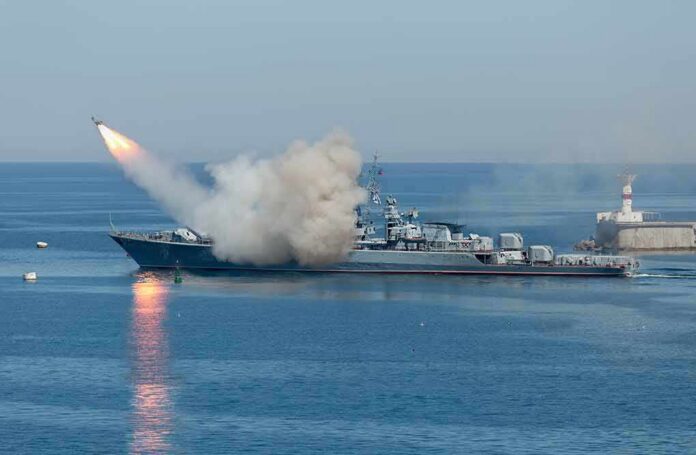
Japan’s Defense Ministry says the Maritime Self-Defense Force destroyer JS Chokai fired a U.S.-made Tomahawk land-attack cruise missile in a live test on July 29 in the Pacific Ocean off the U.S. coast. Officials explain that the test confirmed both the ship’s ability to launch the weapon and the crew’s skill in following all required steps. The missile reportedly flew to its intended target, turning years of planning and upgrades into a proven strike option rather than just a future promise.
Reports from defense outlets note that Chokai is the first Japanese warship equipped with Tomahawk missiles, after modifications at U.S. shipyards starting in 2025. The test took place at a United States-controlled range, with the U.S. Navy providing the test area, controlling nearby air and sea traffic, and monitoring the launch, while Japanese sailors carried out the firing itself. Japan is now one of only a handful of countries outside the United States—along with Australia, the Netherlands, and the United Kingdom—that have fired Tomahawks in live conditions.
From “Self-Defense” to Long-Range Counterstrike
Japan’s government has framed the Tomahawk program as part of a “stand-off defense” and counterstrike strategy adopted after 2022, meant to let Japanese forces hit enemy bases that are preparing attacks on Japan. The Chokai test supports that plan by showing Japan can now launch a long-range land-attack missile from the sea, not just rely on home soil defenses or U.S. help. Analysts point out that such missiles can reach targets deep inside China or North Korea, changing how military planners in Beijing, Pyongyang, and Washington think about any future crisis.
Japan’s Acquisition, Technology and Logistics Agency says this first firing was enough to prove the system works, and that more live tests from every ship are not needed because the Tomahawk and the Mk 41 launcher already have a long track record in the U.S. Navy. That statement matters for taxpayers and skeptics in every country who worry that governments spend billions on weapons while everyday people face rising costs, weak wages, and a shrinking middle class. It shows how one successful “proof shot” can unlock full deployment without repeated expensive tests.
China’s Reaction and Rising Regional Tension
Chinese state outlet China Global Television Network quickly highlighted the test, stressing that a Japanese destroyer had fired a Tomahawk off the United States coast and warning that this shift could threaten China’s security. Chinese and regional commentary ties the launch to growing U.S.–Japan military cooperation and to broader moves by President Trump’s administration to push allies to take on more of the front-line burden in Asia. For people who already believe a small group of elites drive foreign and defense policy, this looks like one more step toward a larger confrontation.
JS CHOKAI conducted the Tomahawk flight test with support from the U.S. Navy, and the test confirmed its capability to conduct an actual missile launch and the proficiency of the ship’s crew.
— Japan Ministry of Defense/Self-Defense Forces (@ModJapan_en) August 3, 2026
For many conservative and liberal Americans alike, the test raises familiar worries. On one hand, some see a necessary show of strength against China’s rapid military buildup and its pressure on Taiwan and its neighbors. On the other hand, many fear that every new missile, exercise, and “historic” launch nudges the region closer to a conflict ordinary families would pay for in blood and treasure. Both sides often feel that decisions like arming allies with Tomahawks are made far above their heads, with little open debate about costs, risks, or long-term goals.
What This Means for Ordinary People
Japan’s leaders say these long-range weapons are about deterring war, not starting one, by convincing potential enemies that any attack on Japan would bring a swift reply against their own bases. Supporters argue that stronger Japanese forces can share the load with the United States, easing pressure on American troops and budgets while still defending key trade routes and allies. Critics counter that every new missile system gives defense industries more money and power while doing little to fix problems like inflation, high energy prices, and a widening gap between rich and poor.
The Chokai Tomahawk test is not just a technical event for military insiders. It is a visible sign that Asia’s security map is being redrawn while regular citizens in Japan, China, and the United States wrestle with daily economic stress and deep mistrust of their own governments. Whether people lean right or left, many see moves like this as driven by a tight circle of political and corporate leaders, not by open public choice. That shared frustration is likely to grow as more countries in the region follow Japan’s lead and field their own long-range strike tools.
Sources:
19fortyfive.com, businessinsider.com, chosun.com, youtube.com, navalnews.com, theaviationist.com, facebook.com, migflug.com, stripes.com