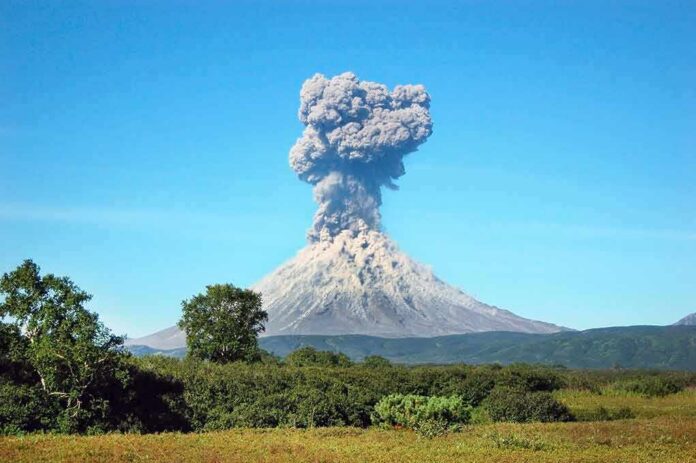
Guatemala’s “Volcano of Fire” is erupting again, and this time officials say the danger is high enough to move families out of their homes before disaster strikes.
Story Snapshot
- Guatemala has raised an orange “danger” alert as Fuego volcano erupts, spewing ash, lava, and hot gases.
- Authorities have ordered preventive evacuations for hundreds of residents in nearby communities and opened shelters.
- Past deadly eruptions at Fuego push officials to act early, even while global agencies still rate the need for outside aid as low.
- The crisis shows how regular people depend on local action, not distant elites, when nature turns violent.
What Guatemala’s Orange ‘Danger’ Alert Really Means
Guatemalan emergency officials raised an orange alert after new explosive eruptions at Fuego and nearby volcanoes sent ash and frequent blasts over central Guatemala. The National Coordinator for Disaster Reduction, known locally as CONRED, kept an orange alert in Sacatepéquez department as Fuego’s behavior intensified, triggering emergency protocols and tighter monitoring around affected towns. Under Guatemala’s four-color alert system, orange means a stronger eruption is likely in hours or days, and that an active danger zone has been defined around the volcano. This level falls just one step below red, which is reserved for the most extreme, life-threatening events like the catastrophic 2018 eruption.
The United States Embassy in Guatemala echoed that sense of risk in a formal alert, citing the country’s National Institute of Seismology, Volcanology, Meteorology, and Hydrology. Monitors reported that Fuego was “spewing a mix of ash, rocks, and hot gases,” with lava flowing from the summit and running about 600 meters down the Santa Teresa ravine. Ash was already falling on nearby municipalities, and a key highway, RN-14, was closed to keep evacuation routes clear and reduce danger to drivers. This kind of foreign embassy alert usually reflects serious, verified technical data, not social media panic.
Evacuations: Moving Families Before the Worst Hits
As the eruption grew more intense, CONRED ordered preventive evacuations for communities on Fuego’s flanks, including Panimache and El Porvenir in the municipality of San Pedro Yepocapa. Reports from Guatemalan officials and international media describe hundreds of residents leaving their homes for shelters in Chimaltenango, Escuintla, and Sacatepéquez as ash, hot gases, and volcanic debris spread up to seven kilometers from the volcano. One detailed account cites at least 594 people relocated from five communities and notes that classes were suspended in dozens of schools and a main road to the colonial city of Antigua was closed. Another report says more than 500 people were moved to four shelters once the orange alert was declared and ash and lava clouds reached 6,000 meters into the sky.
Over the next day, the number of evacuees grew as officials tracked activity and tried to stay ahead of the hazard. Reuters reporting notes that more than 700 residents were ultimately evacuated as a precaution while ash soared miles into the atmosphere and lava burst from the summit. Relief agencies describe similar patterns in earlier 2025 activity at Fuego, where hundreds were moved and more than 30,000 people were warned to be ready to evacuate if the situation worsened. At the same time, the Global Disaster Alert and Coordination System rated the situation as a “green” event, meaning the eruption was unlikely to require outside humanitarian aid because local capacity was judged strong enough to cope. That gap between global labels and local fear will sound familiar to many Americans who feel distant leaders often understate real risk on the ground.
Why Officials Act Quickly Around Fuego’s Eruptions
Fuego is not just another mountain; it is one of Central America’s most active volcanoes and has a deadly history that shapes every new emergency decision. In 2018, a powerful eruption there killed scores of people and forced about 3,100 residents to flee, with more than 1.7 million affected across three central departments. Many victims lived in communities that were hit by sudden pyroclastic flows—fast-moving clouds of super-hot gas and debris that can burn or bury whole neighborhoods in minutes. Because of that memory, later orange alerts around Fuego, like those in 2025 and now, are treated with extra caution by both technical agencies and local leaders.
GUATEMALA CITY (AP) — Authorities in Guatemala have ordered evacuations in some southern communities around the Fuego volcano, which is erupting. Claudinne Ogaldes, executive secretary of the Guate… https://t.co/UbOHJ7s8YX
— KSAN News (@ksannews) August 4, 2026
Guatemala’s four-level system—green, yellow, orange, and red—is supposed to give regular people a clear sense of rising risk. For most of 2023–2026, Fuego sat at yellow, meaning elevated unrest but not yet full crisis. Orange is different: tours pause, routes are restricted, and emergency teams prepare or launch evacuations in the danger zone. Residents are told to stay informed through official channels, pack emergency kits, and be ready to leave quickly if the alert jumps to red. In other words, orange is a warning that the government believes nature may soon outrun any slow, bureaucratic response—and that human lives come before tourist dollars or comfortable routines.
Local Action, Global Systems, and Public Trust
What is happening around Fuego speaks to a wider worry shared by many Americans on both the left and right: can ordinary families trust big institutions to protect them when crisis hits? In Guatemala, real safety still depends on local alerts, closed roads, and hurried trips to nearby shelters, even while international systems mark the episode as “green” and far-off travelers keep booking trips to watch the lava. For people who already feel that elites—from global agencies to national governments—too often downplay risk while they stay safe, the gap between those messages feels like more proof that the system serves itself first.
At the same time, the Fuego eruption shows why strong local science and emergency networks matter. Technical monitors at the National Institute of Seismology, Volcanology, Meteorology, and Hydrology provide data, but CONRED must decide when to move people, shut roads, and halt classes. Those decisions can look costly in the moment, especially if the eruption cools after a few days, yet history shows that waiting too long can be fatal around a volcano with Fuego’s record. Whether in Guatemala or the United States, many citizens now see these choices as a test of whether government exists to shield regular people from obvious danger—or to protect tourism, budgets, and political careers until it is too late.
Sources:
aljazeera.com, yahoo.com, english.news.cn, pbs.org, volcano.si.edu, youtube.com, reuters.com