

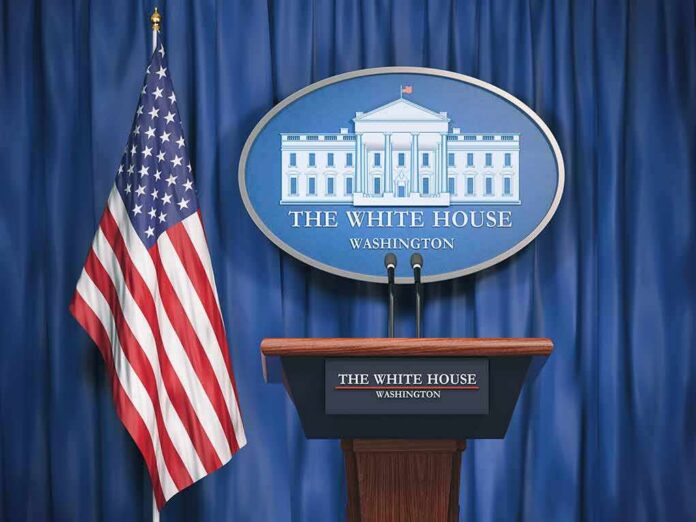
Washington invoked a long-dormant trade law to slap 50% tariffs on many Canadian goods after talks broke down, risking higher prices and tit-for-tat retaliation.
Story Highlights
- The White House used Section 338 to justify tariffs up to 50% after alleging Canadian discrimination against U.S. goods.
- Products span beyond dairy and alcohol to items like wine, cement, furniture, and hockey gear, according to reporting.
- Canada’s leaders call the move unjustified and warn of dollar-for-dollar retaliation if talks fail.
- The law is rarely used, adding legal and economic uncertainty to an already tense cross-border trade fight.
What Triggered the New Tariffs
The White House announced on July 20, 2026 that the United States would impose new tariffs on Canadian goods under Section 338 of the Tariff Act of 1930. The orders said Canada discriminated against U.S. commerce in alcoholic beverages and dairy, with references to motor vehicles as well. Section 338 allows duties up to 50% when a foreign country discriminates in fact against U.S. trade, according to the proclamations themselves. Reuters reported a 30-day window before the duties took effect.
Reuters and administration documents framed the action as targeted, not blanket. The orders named alcoholic beverages and dairy, while reporting listed products from wine and cement to hockey gear, furniture, and other goods. The White House argued the step was needed to offset barriers and restore fair market access. The proclamations set rates up to 50%, which is the ceiling in Section 338 as summarized in the White House notice itself.
Why This Law Matters Now
Section 338 is a rarely used tool from the 1930 era. Analysts and Congressional research describe it as dormant for decades, with little modern precedent to guide how far a President can go and how courts might react. That novelty invites legal risk and confusion for businesses that ship across the border. It also raises the stakes for politics, since unfamiliar tools are easier to cast as overreach or escalation by either side.
The public record so far shows the legal authority and the announced product scope. But it does not show the detailed evidence behind the discrimination finding. The White House proclamations assert Canada’s measures are unfair, yet they do not list the exact Canadian laws or rules. That gap feeds a broader concern many Americans share: big moves are made with thin public proof, and families and small firms bear the cost either way.
Canada’s Pushback and Retaliation Risk
Canada’s leaders dispute the U.S. case and call the tariffs unjustified. Prime Minister Mark Carney said the United States intends to impose a new 50% tariff on many Canadian goods and signaled continued talks alongside preparations to hit back if needed. Past Canadian statements underlined a willingness to match U.S. tariffs dollar for dollar, framing the dispute as harmful to consumers in both countries and urging negotiation over escalation.
Escalation would follow a familiar pattern. Canada has responded to prior U.S. tariffs with its own countermeasures targeting selected sectors to maximize pressure. Analysts warn that this tit-for-tat raises prices, blurs the original dispute, and pushes firms to rework supply chains. Small businesses, farmers, truckers, and families near the border feel the pinch first, even as larger players with lobbyists and lawyers find ways to adapt or shift costs.
What Consumers and Businesses Should Watch
Importers should check tariff lines tied to alcoholic beverages and dairy, plus the broader list identified in reporting, and prepare for higher landed costs. Retailers may face price spikes on goods like wine, furniture, or sports gear if coverage is confirmed. Manufacturers that rely on Canadian inputs should seek second-source options and consider renegotiating contracts. Households may see higher prices in the coming weeks if duties flow through, especially where few substitutes exist.
Policy watchers should look for three things. First, any publication of the administration’s evidence that details the specific Canadian measures at issue. Second, new offers in talks that could pause or narrow duties. Third, Canadian counter-tariff lists and timing. Transparency on all three would calm markets and help citizens judge the trade-offs. Without it, frustration grows that the system serves insiders while ordinary people pay at checkout.
Why This Fight Feels Bigger Than Tariffs
Many Americans on the right and left feel the government is not working for them. A sudden 50% tariff, defended with an old law and sparse public detail, fits that worry. Supporters see a needed defense against unfair trade. Critics see a tax that lands on consumers and smaller firms. Both can agree on this: opaque decisions and political fights add cost and confusion to daily life. Clear facts and open records would help rebuild trust across the aisle.
Sources:
youtube.com, whitehouse.gov, hklaw.com, zonos.com, canada.ca, tax.thomsonreuters.com