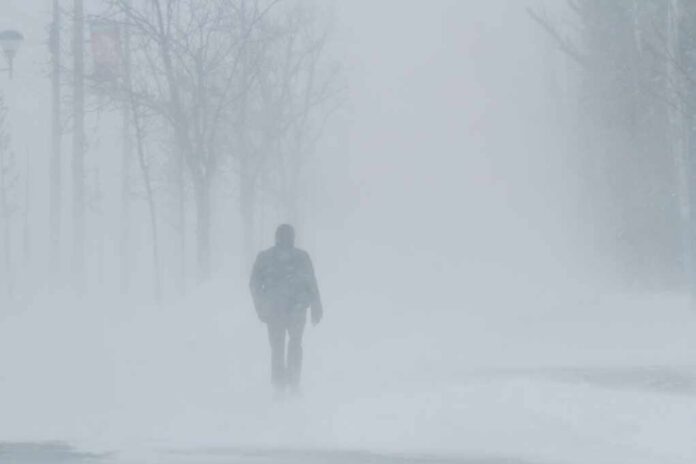
A massive winter storm has exposed critical vulnerabilities in America’s energy infrastructure, wiping out 2 million barrels per day of crude oil production and reminding us why energy independence remains a national security imperative.
Story Snapshot
- Winter storm knocked out 2 million barrels per day of U.S. crude production, representing 15% of national output
- Permian Basin suffered the worst hit with peak outages of 1.5 million bpd, while North Dakota lost up to 110,000 bpd
- Natural gas prices surged 15.2% as production dropped and demand spiked during extreme cold
- Infrastructure proved more resilient than 2021 storm with faster recovery timeline projected by January 30
Storm Devastates Critical Production Infrastructure
The severe winter storm that swept across the United States over January 25-26, 2026, delivered a harsh reminder of energy sector fragility. Oil producers lost up to 2 million barrels per day, with the Permian Basin in Texas bearing the brunt of disruptions at approximately 1.5 million bpd in peak outages. Major operators ConocoPhillips, Chevron, and Exxon Mobil all reported significant operational setbacks, with frozen equipment and shuttered facilities across the nation’s most productive oil region. This represents exactly the kind of supply vulnerability that underscores why America must prioritize infrastructure hardening and operational resilience.
Severe winter storm knocks out up to two million barrels a day of US oil production as extreme cold hits Permian Basin and strains power grids pic.twitter.com/TRf4YvUyNs
— TRT World Now (@TRTWorldNow) January 27, 2026
Major Producers Report Widespread Operational Shutdowns
ConocoPhillips reported Permian crude production down by 175,000 bpd by Sunday, while Chevron documented frozen hatches in Midland, Texas. Exxon Mobil shut down units at its Baytown petrochemical complex as freezing temperatures paralyzed operations. North Dakota, the nation’s third-largest producing state, saw output decline by 80,000 to 110,000 bpd. Multiple refineries along the Gulf Coast experienced freezing-related issues, with around two dozen upsets reported at natural gas processing plants and compressor stations in Texas. These disruptions demonstrate the cascading effects when critical energy infrastructure faces extreme weather without adequate weatherization.
Natural Gas Markets Surge While Crude Remains Stable
Natural gas futures jumped 15.2% to $6.075 per million British thermal units, reaching the highest close since December 2022. Lower 48 states gas output dropped to 106.9 billion cubic feet per day in January, down from December’s record of 109.7 bcfd. Meanwhile, West Texas Intermediate crude traded around $60.60 per barrel, down roughly 50 cents despite the massive supply disruption. The minimal crude price movement suggests market confidence in rapid recovery, but also reflects broader oversupply concerns. Rystad Energy warned that if prices dip to $40 per barrel, U.S. shale production could fall by 400,000 bpd, threatening energy security.
Infrastructure Shows Improvement Over 2021 Disaster
By Monday, January 27, Permian Basin shut-ins had eased to approximately 700,000 bpd from the peak of 1.5 million bpd, with full production restoration projected by January 30. This represents a significantly faster recovery than the 2021 winter storm that caused more than 200 reported upsets at Texas facilities. The current storm generated only around two dozen such reports, suggesting improved operational protocols and infrastructure hardening since that earlier disaster. Energy Aspects and other consultancies confirmed confidence in producers’ ability to restore operations quickly, demonstrating that lessons from past failures have strengthened American energy resilience.
Long-Term Energy Security Questions Remain Unresolved
The disruption occurs within a complex market context where major forecasting agencies hold wildly divergent views on 2026 supply-demand dynamics. The International Energy Agency projects a surplus exceeding 4 million bpd in the first half of 2026, while OPEC estimates only a 600,000 bpd average surplus. This gap between forecasts has widened from 200,000 bpd in 2023 to 1.5 million bpd for 2026, reflecting fundamental disagreements about economic growth and consumption patterns. For American producers and consumers, this uncertainty reinforces the critical importance of domestic production capacity and infrastructure that can withstand both market volatility and extreme weather events.
Sources:
US shale production could fall by 400,000 barrels per day if prices dip to $40 a barrel, analyst says
US energy sector reels after winter storm knocks out 2 million bpd of crude output
Oil markets watchmen are at loggerheads over 2026 outlook
US winter storm oil power outages
Oil prices fall despite US winter storm disrupting production