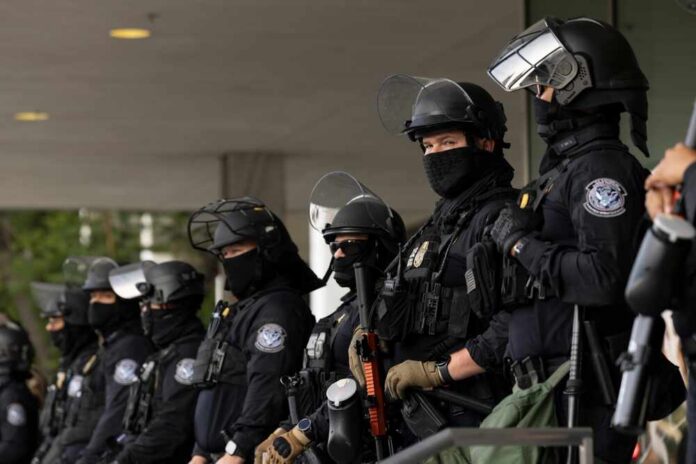
Federal agents say a World Cup safety sweep in Kansas City led to arrests, child rescues, and a large counterfeit goods seizure.
Quick Take
- Federal agents said they arrested 14 people during the World Cup sweep.
- Officials said they recovered eight missing children and identified nine trafficking victims.
- Agents also seized more than $435,000 in counterfeit World Cup merchandise.
- The case sits inside a wider push to tie major sports events to trafficking enforcement.
What the Sweep Reportedly Found
KMBC reported that federal agents arrested 14 people, recovered eight missing children, and seized more than $435,000 in counterfeit World Cup merchandise during the Kansas City tournament operation. The same report said agents identified nine victims of human trafficking. Those numbers make the sweep sound large and serious. They also leave one basic question open: why the count of recovered children does not match the count of trafficking victims.
Officials said Homeland Security Investigations had spent about a year preparing for the tournament and kept an increased presence at places such as the FIFA Fan Festival and other World Cup venues. The reports say the work focused on finding people at risk and cutting off crime near the games. That matters because major events often bring both crowds and criminal opportunity, which is why security planning tends to start long before the first match.
Why World Cup Security Became the Bigger Story
Kansas City and federal partners had already built a broad security plan around the tournament. Public pages for the event and Federal Emergency Management Agency materials describe the World Cup as a major safety and security challenge that required early coordination and added federal support. That backdrop helps explain why the trafficking sweep drew attention. It was not a random police action. It was part of a larger effort to manage risk around a global event.
The counterpoint is that the strongest public evidence still comes from news reports and local coverage, not from a detailed federal case file. The available material does not name the arrested people, give case numbers, or publish charging papers. That does not make the reports false. It does mean the public has to rely on limited reporting for now. In a climate where many Americans already distrust large institutions, that gap matters.
Why the Story Resonates Beyond Kansas City
Human trafficking cases draw broad concern because they touch children, crime, and public safety at once. They also fit a familiar pattern in American politics: major events become symbols for larger fears about government failure, border control, and organized crime. Supporters of aggressive enforcement see this sweep as proof that federal agents can still act decisively. Skeptics will want more documents before treating every number as settled fact.
Children Saved From Sex Trafficking During Homeland Security Sweep at Kansas City World Cup Events https://t.co/kULE7xdSKe pic.twitter.com/zDEncR8L13
— FutureTrump2️⃣⏺2️⃣4⃣🍊 (@RealTrump2020_) July 10, 2026
That tension is why the Kansas City operation matters beyond one stadium or one city. If the federal account holds up, it shows that coordinated enforcement can still find missing children and disrupt trafficking-related crime in plain sight. If the record stays thin, the story will keep feeding distrust on both the right and the left. Either way, the episode adds to a growing debate over whether federal agencies explain these high-profile operations clearly enough.
Sources:
redstate.com, kmbc.com, alford.house.gov, youtube.com