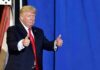
President Trump’s order renaming Lake Ontario to “Lake America” is now binding across all federal maps and documents.
Story Highlights
- Trump signed an executive order renaming Lake Ontario to “Lake America” for U.S. government use.
- The order directs Interior and the Board on Geographic Names to update federal systems and references.
- The White House tied the move to America’s economic interests in the Great Lakes.
- Democrats mocked the action instead of engaging on trade or energy costs.
What The Order Actually Does Inside Government
President Trump signed a formal executive order that renames Lake Ontario as “Lake America” for federal use. The order tells the Secretary of the Interior and the United States Board on Geographic Names to update the federal naming database and to make sure every federal reference uses the new name. That means maps, contracts, and federal documents will say “Lake America.” This is a real administrative change, not a speech line or a rally sign.
The order uses the standard federal naming process and cites the law that governs geographic names. It gives agencies a clear deadline to complete updates and to keep usage consistent. Federal agencies often follow this system, so the change will move fast across maps and websites. That is how a signal becomes policy in the records that matter for navigation, permits, and cross-agency work.
Why The White House Says It Matters
The White House frames the rename around the Great Lakes’ role in jobs, trade, and energy shipping. The order says the lake is a “flourishing economic resource” that is critical to the Nation’s economy. That message puts focus on American industry, ports, and workers who depend on fair trade rules. It also asserts a clear American identity across a major waterway that drives cross-border commerce and supports Midwest families.
Reports linked the timing to the trade fight with Canada. Coverage noted the idea surfaced as Canada rolled out retaliatory tariffs on about $20 billion of American goods. That linked the symbolism to an active dispute. Even if the order itself does not set tariffs, it plants a flag in a high-profile place and tells voters the administration is not backing down on trade fairness.
Limits, Scope, And What Critics Miss
Because the lake is shared with Canada, the order governs only U.S. government usage. It does not force Canada, states, or private mapmakers to change their labels. That limit is real and was widely reported. But inside the federal system, the order has teeth. It changes the name in the government’s records and signals a tighter focus on American interests along the border and across Great Lakes shipping routes.
Democratic leaders rushed to mock the move. Senate Democratic Leader Chuck Schumer called it “juvenile” and said President Trump should cancel tariffs. That is a talking point, not a policy answer. Tariffs answer bad-faith trade moves; they are not canceled by snark. Mockery dodges the core issue: how to shield U.S. workers and seniors from foreign pressure on prices and supply chains. Voters deserve solutions, not social media jabs.
What Changes Next For Agencies And Maps
Agencies will update the federal names database and base maps, then cascade changes into permits, contracts, and public-facing tools. Shippers, anglers, and local governments who use federal charts and forms will see “Lake America.” That brings consistent naming across the Coast Guard, Interior, and other offices. It also sets a clear U.S. position in future cross-border talks tied to shipping, energy flows, and environmental coordination.
Supporters will see this as common sense branding that centers American identity in a vital region. Critics will say it is symbolic. Both can be true: symbols inside government shape priorities and set the tone for policy. In a global market where narratives move investment and leverage, clear American naming is one more way to remind partners and rivals that our workers and our waters come first. That is a message many families want to hear.
Sources:
nypost.com, whitehouse.gov, cnn.com, motherjones.com, abcnews.com