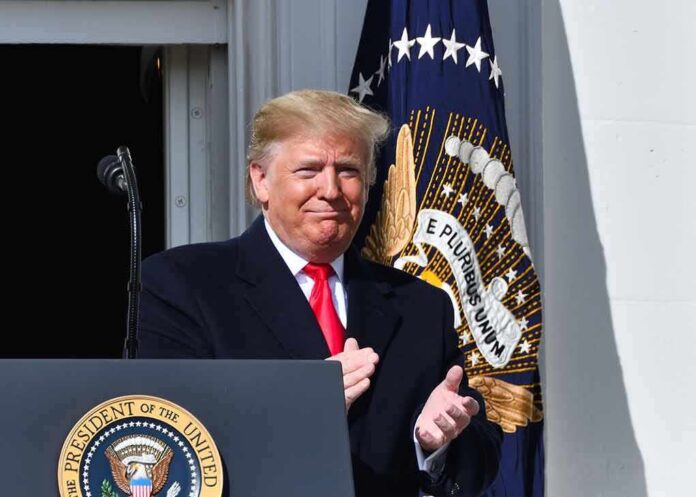
Canada and the European Union moved to lock in a “future” alliance even as President Trump threatened new tariffs on Europe and mocked the plan as “laughable.”
Story Highlights
- Canada and the European Union announced a deeper partnership spanning trade, security, and digital policy.
- European Union leaders floated an unprecedented “associate member” pathway for Canada, while Canada seeks a “unique alliance”.
- President Trump warned of tough tariffs on Europe as talks advanced, raising pressure on both sides.
- The deal builds on strong Canada–European Union trade growth under the existing free trade pact.
What Canada and the European Union Formally Announced
Prime Minister Mark Carney and European Union leaders unveiled a new push to tighten ties on June 23, 2025. The Canadian government said the partnership is rooted in shared values and the rules-based system, and will drive work on trade, supply chains, digital policy, and climate action. Canada and the European Union also signed a Security and Defence Partnership to guide talks on defense priorities. Officials framed the effort as a strategic, future-oriented alliance to move faster together.
Government statements outlined broad areas for negotiation. They highlighted cooperation from energy to technology, and efforts to harden supply chains. The releases did not list firm budgets or deadlines. They did set a direction to deepen ties across agencies and sectors. The security text was presented as a framework for dialogue rather than a binding force plan. That means next steps will come through follow-on talks, work programs, and potential legal texts.
Why “Associate Member” Talk Matters — and Its Limits
European Commission President Ursula von der Leyen said she wants the relationship “at the highest level possible” and raised an “associate member” model for Canada. That idea has no clear legal basis in current European Union treaties and would need wide approval across Europe. Carney said Canada is not seeking membership, and instead wants a “unique alliance.” The two messages point to a closer bond, but not to Canada joining European Union institutions.
Reports show the alliance pitch focuses on the Arctic, energy, critical minerals, and batteries. Leaders also pointed to artificial intelligence, digital rules, and defense as shared areas of interest. This mix reflects real policy needs. It also reflects pressure in a sharper world economy. Both sides said they want to protect supply chains and set standards before rivals do. The path forward will likely start with sector projects and then grow.
The Trump Tariff Threat Looming Over the Talks
President Trump warned of strong tariffs on Europe as the associate-member idea surfaced. He described the plan as “laughable” and threatened broader trade action if Europe moved ahead. His comments added political heat and raised the cost of missteps for Brussels and Ottawa. The warning also showed how fast White House trade tools can shape allies’ choices, even when the issue is a Canada–European Union deal.
This pressure campaign echoes past tariff fights. It pushes Canada and the European Union to either slow down or to lock in their plans. It also feeds a shared worry on the right and the left. Many citizens see global rules tilted by elites and sudden power moves. Leaders in Ottawa and Brussels argue the alliance will secure jobs and supply chains. The proof will be whether energy, minerals, and tech projects deliver clear wins at home.
What Is Already Real: Trade Ties and Growth
The Canada–European Union trade pact known as the Comprehensive Economic and Trade Agreement cut most tariffs. Trade in goods and services reached about 130 billion euros in 2025. That was up about 80 percent from 2016. This base gives the new talks traction. It shows companies already buy and sell at scale across the Atlantic. It also suggests that rule updates on data, clean tech, and minerals could move quickly if politics allow.
Officials will still have to solve nuts-and-bolts problems. Different rules for drugs, food, and devices can slow sales. Business leaders have asked Canada and the European Union to align standards better to speed up approvals. Defense cooperation also needs clear paths for joint work. The security partnership sets a table, but partners must add budgets, schedules, and programs. Without that detail, critics will say the “future” alliance is only words.
Why This Matters for Americans Watching From Home
These moves affect U.S. workers and prices. If tariffs rise, supply chains can shift and costs can go up. If Canada and Europe lock in energy and mineral deals, U.S. buyers may face fewer options. If they align tech rules, U.S. firms may need to adapt. Many Americans feel Washington talks tough but misses the basics. This story shows how other partners hedge when the White House swings fast on trade. The stakes are jobs, bills, and national leverage.
Sources:
cnn.com, cbc.ca, pm.gc.ca, reuters.com, dw.com, globalnews.ca