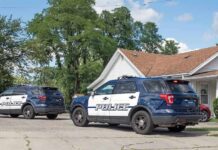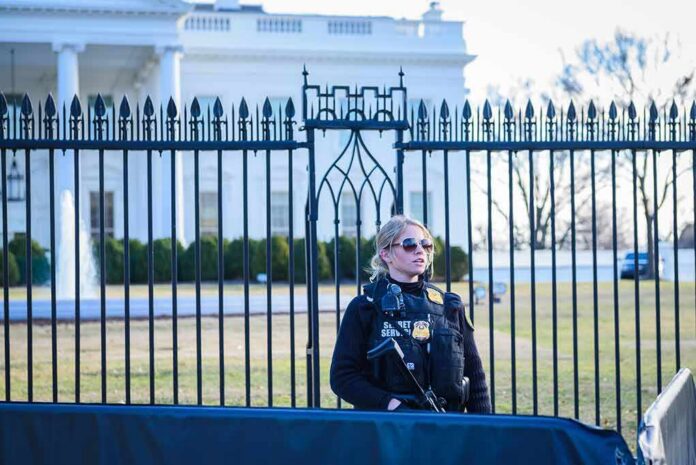
A car jumped the sidewalk by the White House at midday, triggering road closures and a swift security sweep that found no threats.
Story Snapshot
- Secret Service detained a driver after a car went onto the sidewalk near Lafayette Square.
- The incident happened around 12:15 p.m. at 16th and H Streets NW in Washington, D.C..
- Roads closed out of caution; a vehicle search found no suspicious items.
- The man was taken to a hospital for a mental health evaluation, and was not publicly identified.
What Happened At The White House Perimeter
United States Secret Service personnel detained a man after his car went onto the sidewalk at 16th Street and H Street Northwest, by Lafayette Square, just north of the White House. The event occurred shortly after 12:15 p.m. on Saturday, September 19, 2026. Agents and officers from multiple agencies responded fast and set a perimeter. The Secret Service said nearby roads closed out of an abundance of caution. A search of the vehicle found no suspicious items.
Local reporting from Washington, D.C., matched those details on time and location and described a large law enforcement presence at the scene. Metropolitan Police Department units assisted near the park and street grid, while federal officers led the vehicle sweep and on-site checks. The man was taken into custody without reports of injuries to bystanders or responders. He was then transported to a hospital for a mental health evaluation, according to the agency’s statement shared with reporters.
How Officials Managed Risk In A Sensitive Zone
Secret Service practice near the White House relies on layers of security and quick action at the first sign of a breach. When a vehicle mounts a sidewalk near the complex, protocol calls for an immediate response, temporary closures, and a careful search. That approach aims to buy time and space to rule out explosives or other threats. In this case, officials framed the steps as precautionary and reported a negative vehicle sweep before clearing the scene.
History shows that even minor or unclear perimeter events draw a strong reaction because of the site’s value and risk profile. Reviews of presidential protection explain that local police and federal officers train to lock down roads and expand the buffer when something crosses a line near the grounds. That is why passersby often see heavy gear and many units arrive at once, even when the end result is a calm scene and no device found.
Why This Matters To Readers Across The Aisle
People on the right and the left worry that leaders and agencies do not level with them, or react too slowly when danger rises. This episode cuts the other way: officers moved fast, shut streets, and checked the car, then reported no threat found. The public did not get a name, motive, or charges. That gap reflects privacy limits and ongoing review, but it can also fuel questions about process and outcomes when incidents happen in the nation’s most guarded space.
The balance between safety and openness is hard in this zone. The White House area must stay secure, yet it also sits on busy city blocks that tourists and workers use every day. Rapid closures disrupt life and invite headlines that can scare people. Clear, timely facts from officials help lower the temperature. In this case, the stated timeline, the location, the negative search, and the hospital evaluation provide a basic picture without hype or guesswork.
Sources:
nypost.com, themirror.com, oglobo.globo.com