President Trump set a 100% tariff on select foreign drones that the White House says pose security risks, with rollout dates that will reshape a market many U.S. users rely on.
Story Snapshot
- The United States will levy 100% tariffs on larger and “sensitive” drones starting September 3, 2026.
- Smaller models face a 25% rate, with some component duties delayed into February 2027.
- The White House says the goal is to cut security risks and boost U.S. production.
- The move follows China’s tighter export controls on drones and parts bound for the U.S..
What the new tariffs do and when they start
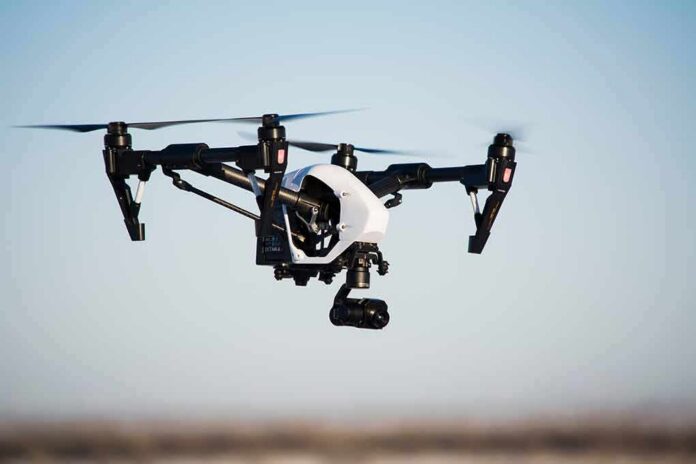
The White House said the United States will impose a 100% tariff on certain unmanned aircraft systems. The policy targets larger drones, including those over 25 kilograms, and models with thermal cameras or docking stations. Smaller drones face a 25% rate. The main tariffs start September 3, 2026, with some component duties delayed about six months to February 9, 2027. These steps create a clear schedule for importers and buyers planning fall and winter orders.
Officials framed the action as a national security measure that also supports domestic industry. The White House said higher duties will reduce reliance on foreign supply chains and encourage more U.S. manufacturing of drones and parts. The administration presented the changes as part of a larger effort to protect key technologies and to keep sensitive data, sensors, and networks safe from hostile actors that could exploit commercial devices for surveillance or disruption.
How this fits into the U.S.–China tech fight
News outlets described the tariffs as another step to separate U.S. drone supply chains from China. Reports noted that many consumer and commercial models in the U.S. market come from China-linked producers. The timing also follows China’s August 5 move to tighten export reviews on drones, parts, and related technology bound for the United States, which raised the stakes on both sides of the trade. Together, these actions deepen the technology standoff.
Trade tools rooted in national security law have become a common way to control critical imports. Section 232 of the Trade Expansion Act lets a president adjust imports when they threaten to impair national security, which can include risks to infrastructure, defense supply, or data systems. Courts have upheld broad presidential latitude under this statute, which is why it often appears in high-stakes industrial and security disputes that cross over into economic policy.
Who could feel the impact in the field
Public safety agencies, farmers, and utilities use drones for search and rescue, crop spraying, line inspection, and mapping. Many rely on models with thermal imaging and long flight times, which can fall into the “sensitive” category. A 100% tariff can double the landed cost of affected models, and the 25% rate still lifts prices for smaller units. Agencies with tight budgets may delay upgrades, stretch old fleets, or switch vendors if domestic options rise to meet demand.
🇺🇸Trump imposed steep new tariffs on imported drones and their components to protect national security and rebuild American manufacturing.
Larger and more advanced drones face a 100% tariff, while smaller ones face 25%, with lower rates for trusted allies.
The move targets… pic.twitter.com/WeEKEwo3HD
— NewsForce (@Newsforce) August 14, 2026
If U.S. makers scale up, the policy could speed domestic innovation and reduce exposure to foreign choke points. If they cannot, users could see fewer choices and higher costs in the near term. The administration staggered some component duties until early 2027, which may give assemblers and parts suppliers time to adjust. But the market effect will depend on how fast factories, certifications, and service networks can grow inside the United States.
Sources:
thegatewaypundit.com, hongkongfp.com, finance.yahoo.com, indoneo.com, abcnews.com, latimes.com, investing.com, x.com, cfr.org, supremecourt.gov, congress.gov