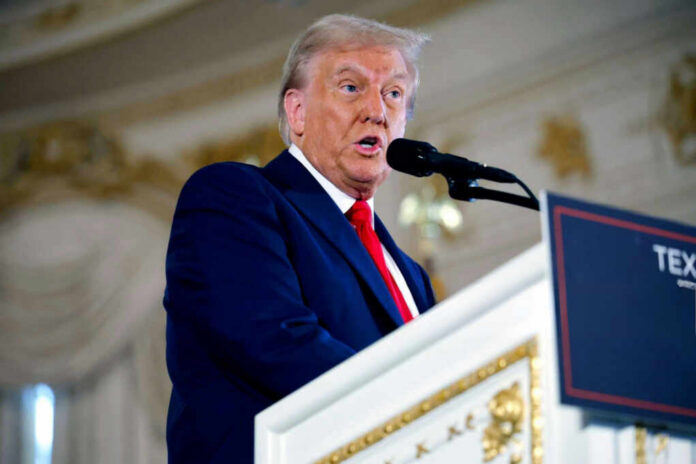
President Trump delivered his 2026 State of the Union address boasting about economic victories while hard data reveals manufacturing job losses, broken affordability promises, and rising costs crushing American families—exposing a troubling disconnect between White House rhetoric and Main Street reality.
Story Snapshot
- Manufacturing employment declined every month since Trump’s April 2025 “Liberation Day” tariffs, with 72,000 factory jobs lost by January 2026
- Electricity costs jumped over 6 percent in 2025—double the inflation rate—contradicting Trump’s campaign pledge to slash energy prices in half
- Supreme Court ruled Trump’s tariff policy illegal without congressional approval just one day before the State of the Union address
- Mainstream economists attribute manufacturing decline to aggressive tariff policies that have backfired on blue-collar workers
The Manufacturing Promise That Went Backward
Trump’s April 2025 “Liberation Day” tariffs were supposed to trigger a manufacturing renaissance, creating blue-collar job opportunities across America’s heartland. Instead, U.S. factories employed 12.7 million people by January 2026—72,000 fewer workers than when the tariff policy launched. The Wall Street Journal reported that manufacturers shed workers in each of the eight months following the tariff implementation, with over 200,000 manufacturing roles disappearing since 2023. Industries relying on manual labor cut jobs rather than adding them, according to CNN, contradicting everything the administration promised hardworking Americans about bringing factory jobs home.
Affordability Crisis Deepens Despite Campaign Pledges
American families face mounting financial pressure as costs for groceries, housing, healthcare, and electricity continue climbing despite Trump’s campaign promises to make life more affordable. Electricity costs rose more than 6 percent in 2025 alone—double the overall inflation rate—while the U.S. Energy Information Administration projects retail electricity prices will increase 13 percent from 2022 to 2025. This reality stands in stark contrast to Trump’s campaign pledge to cut energy costs in half. Economists anticipate Americans will spend even more on electricity bills over the next decade due to AI data center expansion and the rollback of clean energy tax credits that conservatives rightly questioned but that nonetheless kept some costs lower.
Tariff Policy Faces Legal and Economic Setbacks
The Supreme Court delivered a significant blow to Trump’s trade agenda just one day before the State of the Union, ruling that his preferred tariffs policy requires congressional approval—a constitutional check on executive overreach that should be welcomed. House Speaker Mike Johnson acknowledged the challenge ahead, stating it would be “a challenge to find consensus on any path forward on the tariffs, on the legislative side.” Trump indicated his intention to impose new tariffs through alternative methods, potentially circumventing both the Supreme Court ruling and congressional approval requirements. This approach raises constitutional concerns about executive authority, though the frustration with globalist trade policies that hurt American workers remains entirely justified. The question becomes whether tariffs are the right tool or if alternative strategies would better serve working families.
Farmers and Workers Bear the Brunt
American farmers struggle with lost export markets and rising input costs stemming from retaliatory tariffs, while manufacturing workers face job insecurity despite promises of a blue-collar boom. Reuters documented that U.S. manufacturing jobs continued an eight-month decline that began after Trump rolled out aggressive import taxes pledged to create blue-collar job resurgence. The Washington Post reported that trade measures designed to spur manufacturing have instead hampered it, according to most mainstream economists. While unemployment remains relatively low and inflation has slowed, economic gains have largely benefited wealthy individuals rather than the working-class families who supported Trump’s America First agenda. This concentration of benefits among the already-wealthy undermines the populist promise to restore prosperity to forgotten Americans.
Political Fallout and Midterm Implications
More than 30 congressional Democrats boycotted the State of the Union address, citing concerns about Trump’s economic record and unfulfilled campaign promises. The event occurred amid deepening partisan divisions and fractures within the Republican Party over tariff policy effectiveness. With 2026 midterm elections approaching, Republicans face pressure to maintain congressional control while explaining economic outcomes that fall short of campaign promises. Some administration officials are pushing Trump to refocus on domestic agenda items rather than foreign conflicts that could undermine his “America First” messaging to voters who expected reduced foreign entanglement. The challenge for conservatives is advocating for policies that genuinely deliver prosperity to working families rather than just sounding good in speeches—substance over style matters when family budgets are squeezed.
Sources:
Trump State of the Union – Los Angeles Times
What Trump Does and Doesn’t Say in State of the Union Could Influence the Midterms – Politico