A new policy threatens Venezuelan sovereignty, sparking discussions about American intervention.
Story Overview
- President Trump asserts U.S. control over Venezuela after Maduro’s capture.
- Tensions rise as the U.S. promises to oversee Venezuela’s transition.
- Maduro’s capture marks a shift from sanctions to direct intervention.
- U.S. policy in Latin America faces both support and criticism.
U.S. Intervention in Venezuela: A Decisive Move
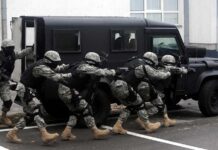
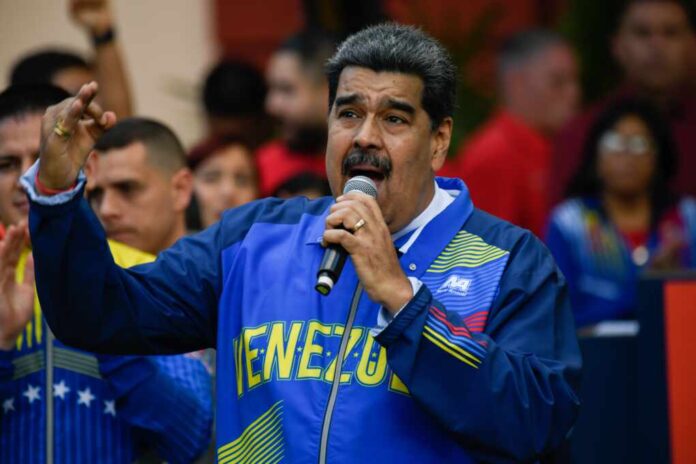
In early January 2026, U.S. forces successfully captured Venezuelan President Nicolás Maduro, following a series of strategic military interventions. President Donald Trump announced that the United States would oversee Venezuela’s transition, a move that reflects a significant escalation from previous diplomatic and economic sanctions. This intervention aims to stabilize the region and counter the influence of authoritarian regimes in Latin America.
The capture of Maduro has been a turning point, signaling a shift in U.S. foreign policy. The Trump administration has taken a more aggressive stance, moving beyond sanctions to direct military involvement. This approach underscores America’s commitment to promoting democracy and freedom in regions plagued by autocratic leadership and election fraud. The U.S. has pledged to ensure a peaceful transition of power in Venezuela, highlighting its role as a global leader in defending democratic values.
Reactions and Global Implications
The U.S.’s decision to intervene militarily in Venezuela has sparked a range of reactions globally. Supporters praise the move as a necessary step to dismantle Maduro’s oppressive regime and restore order. However, critics argue that such actions may lead to prolonged U.S. presence in the region, raising concerns about potential anti-American sentiments and insurgency risks. The situation remains complex, with geopolitical tensions involving countries like Russia and China, who have historically backed Maduro’s regime.
Economically, the intervention could open doors for the revival of Venezuela’s oil sector, which has been under restrictive sanctions. The lifting of these sanctions could stimulate the economy, benefiting both Venezuela and the global energy market. However, the initial phase of transition may bring chaos and uncertainty as the new government stabilizes.
NEVER FORGET that Trump DECLINED Venezuelan president Nicolas Maduro’s offer of a dominant stake in Venezuela’s oil, gold, and mineral wealth along with agreeing to cut ties with Russia and China.
Trump instead sent 10,000+ troops and 10% of the entire U.S. Navy to the region. pic.twitter.com/9AnOVWtoef
— Stew Peters (@realstewpeters) December 3, 2025
Future Prospects for Venezuela
As the U.S. takes control of Venezuela’s transition, questions linger about the long-term implications for both countries. Short-term, there is an influx of humanitarian aid, but the risk of insurgency remains a concern. In the long-term, the hope is for a U.S.-style democracy to take root, potentially reshaping regional politics by weakening leftist regimes and bolstering U.S. influence in Latin America.
The Venezuelan opposition, bolstered by this development, seeks to establish legitimate elections and governance. Meanwhile, the U.S. taxpayers are likely to bear the cost of this occupation, prompting debates about the financial and ethical implications of such foreign interventions.
Sources:
U.S. Attacks Venezuela and Maduro Captured: Early Analysis – Chatham House Experts
Nicolás Maduro Moros – U.S. Department of State