
Amid dueling claims and scarce independent verification, a deadly drone strike on a dormitory in Russian-occupied Luhansk is fast becoming another flashpoint where propaganda races ahead of facts—and where leaders promise retaliation before the public sees clear evidence.
Story Snapshot
- Russia alleges a Ukrainian drone hit a dormitory in occupied Starobilsk, killing at least four and injuring dozens [3][11].
- Moscow labels the incident a terrorist act and signals military retaliation, escalating a cycle of tit-for-tat strikes [3].
- Ukraine has not issued a specific on-record admission for this strike in the provided material [3][4].
- Independent confirmation of casualties and attribution remains limited under “fog of war” conditions [11].
Competing Claims About Casualties and Responsibility
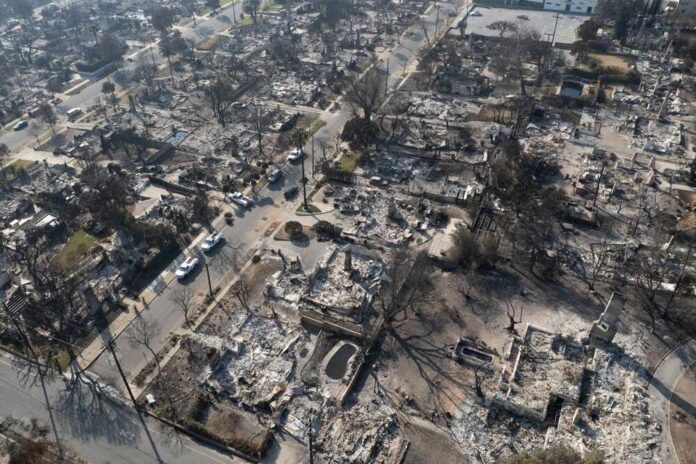
Russian-installed officials in occupied Luhansk said a drone struck a student dormitory in Starobilsk, causing fatalities and dozens of injuries. Russian statements cited at least four dead and 35 to 39 injured, with claims that students were inside when the structure collapsed and that investigators opened a terrorism case [3][11]. Video reports amplified those figures, but they originated from Russian-aligned authorities. Ukrainian officials did not offer a specific admission of responsibility for this incident in the supplied record, leaving attribution contested [3][4].
Ukrainian forces have conducted drone attacks against Russian and occupation targets elsewhere, and Russian forces have struck residential areas in Ukraine, demonstrating a pattern of reciprocal long-range attacks that frequently hit civilian infrastructure [1][2][8]. However, the presence of a broader pattern does not, by itself, resolve the facts of this dormitory strike. In conflict zones with limited access, first reports often mix accurate details with uncertainty, making early casualty numbers and attributions provisional until independently verified [11].
Why Verification Is So Difficult in Occupied Territory
Occupation authorities typically control the scene, narratives, and initial evidence, which can tilt early reporting toward one side’s claims. Independent journalists and aid groups face restricted access, limiting external confirmation. Ukrainian and Russian outlets each present incidents that highlight the other side’s alleged attacks on civilians, reinforcing domestic support for military responses. The Starobilsk case mirrors this pattern: claims of a “terrorist act” and immediate calls for retaliation arrived faster than neutral assessments or on-the-ground verification [3][11].
This information environment complicates public understanding and policymaking. Civilian sites in wartime sometimes host or neighbor military functions, and both sides accuse the other of misuse to shape international opinion. Without transparent investigations and verifiable evidence, casualty counts and attributions become tools in a larger contest of narratives. That dynamic raises the risk of escalation driven by rhetoric rather than facts, particularly when leaders promise “never-before” responses before external confirmation emerges [3][11].
Escalation Risks and Wider Strategic Signals
Kremlin messaging framed the dormitory incident as justification for increased strikes, a familiar pattern in the conflict where each side cites the other’s actions to validate further attacks. Reports show Ukraine launching larger drone operations against targets in Russia, including high-profile areas, while Russia continues barrages against Ukrainian cities, sustaining a destructive cycle [8][2]. Each event becomes both cause and consequence, undermining prospects for de-escalation and heightening risks to civilians far from front lines [8][2].
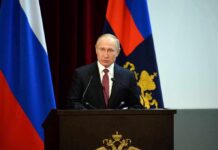
Putin: Russia will investigate Kyiv strike on college
Russian President Vladimir Putin said on Friday that the death toll in a Ukrainian drone strike on a college dormitory had risen to six, with 15 people missing, calling it a "terrorist strike".
"At the moment, it is known… pic.twitter.com/s2yEzsCYzt
— CGTN Europe (@CGTNEurope) May 22, 2026
For Americans watching from afar, the episode reflects a deeper frustration: institutions worldwide often move faster to assign blame than to provide proof. Citizens on both the right and the left see how quick official narratives can harden, while transparent investigations lag. That gap fuels distrust—of foreign governments, yes, but also of our own leaders when they invoke distant conflicts to justify spending, secrecy, or policies that squeeze ordinary families already dealing with inflation, energy uncertainty, and a sense that elites play by different rules.
What To Watch Next
First, monitor whether independent organizations or third-party media gain access to the Starobilsk site, providing confirmations of the strike’s impact, victim identities, and any possible military use of the facility. Second, track whether casualty figures converge across outlets or continue to diverge, a signal of either improving clarity or sustained narrative warfare. Third, watch for concrete evidence regarding the weapon used and its origin. Finally, assess whether announced retaliations expand target sets in ways that increase civilian harm [11][8][2].
The most responsible posture is cautious reporting paired with pressure for transparency. That means separating what is claimed from what is confirmed, recognizing the human cost on both sides, and resisting efforts—foreign or domestic—to rush the public into conclusions that later unravel. In a media climate saturated with sensational clips and instant outrage, patience and verification remain the best tools citizens have to hold power to account.
Sources:
[1] YouTube – Ukraine war: College dormitory in Kharkiv hit in drone attack
[2] Web – As ceasefire ends, Russian drone strikes residential …
[3] YouTube – Four killed, 39 injured after Ukrainian drone strike on …
[4] YouTube – Kyiv claims deadly strike on Russian FSB and drone …
[8] YouTube – Massive drone strike breaches Moscow’s air defenses | Ukraine Brief
[11] Web – Russia claims Ukrainian drone strike killed 4, wounded 35 in …