Mexico has agreed to base Iran’s national soccer team in Tijuana during the 2026 FIFA World Cup — a direct workaround after the United States refused to host the Iranian squad — raising fresh questions about geopolitics colliding with America’s own backyard tournament.
Story Snapshot
- Mexican President Claudia Sheinbaum confirmed Iran’s national team will be based in Tijuana, just across the U.S. border, after the U.S. refused to host the Iranian squad.
- FIFA approached Mexico about the arrangement after the U.S. rejection, with Iran’s players expected to cross the border only for their actual match days.
- FIFA publicly stated it expects all teams to compete under the schedule announced in December 2025, stopping short of confirming any formal venue relocation.
- The episode illustrates how geopolitical tensions between Washington and Tehran are now directly reshaping the logistics of a tournament the U.S. is co-hosting.
How the Tijuana Arrangement Came Together
Mexican President Claudia Sheinbaum confirmed at a press conference that Iran’s national soccer team will use Tijuana as its base camp during the 2026 FIFA World Cup (Fédération Internationale de Football Association). When asked directly whether Mexico was open to hosting the matches, Sheinbaum answered simply, “Yes.” She added that the matter remained under review with FIFA and that an update would follow, signaling the arrangement was responsive to an active discussion between Iran’s soccer federation and FIFA rather than a unilateral Mexican initiative.
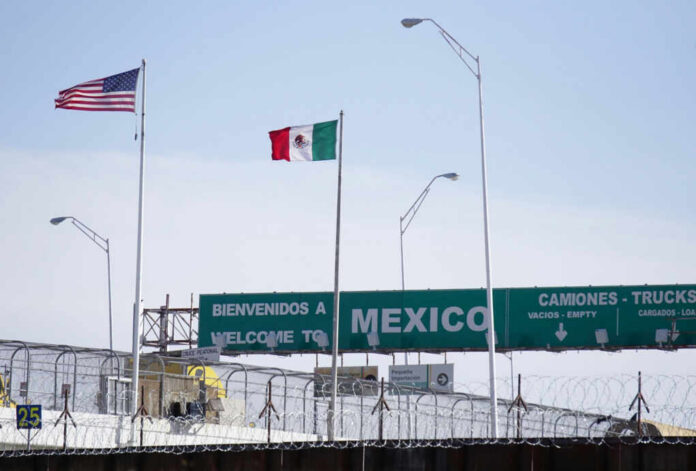
According to reporting, FIFA approached Mexico’s government after the United States indicated it did not want Iran’s squad staying inside the country. [2] The practical solution that emerged has Iran’s players residing in Tijuana and traveling across the border specifically for match days. Tijuana sits directly adjacent to San Diego, one of the tournament’s host cities, making the cross-border commute logistically feasible even if diplomatically awkward for a tournament the U.S. is co-hosting alongside Mexico and Canada.
Washington’s Refusal and What It Signals
The United States’ decision to block Iran’s team from staying on American soil reflects the broader state of U.S.-Iran relations, which have remained deeply strained over Iran’s nuclear program, its support for regional proxy forces, and longstanding sanctions. While the U.S. government has not publicly detailed the precise legal or security grounds for the refusal, the effect is clear: a team that qualified for the world’s most-watched sporting event cannot sleep in the country where it is scheduled to compete.
That outcome puts the Trump administration in an unusual position — the U.S. is a proud co-host of the 2026 tournament, yet one of the 48 participating nations cannot receive standard hospitality on American soil. For Americans on both the left and the right who believe the federal government often creates problems it then fails to solve cleanly, the spectacle of Iran’s squad commuting from Mexico for World Cup games is precisely the kind of awkward, unresolved situation that reinforces that skepticism.
FIFA’s Position and the Gap Between Diplomacy and Decision
FIFA responded to the reports by stating it was “looking forward to all participating teams competing as per the match schedule announced on 6 December 2025,” a carefully worded statement that neither confirmed nor denied a formal venue change. [1] That institutional caution is typical when diplomatic signaling outruns formal administrative process. FIFA holds the authority over venue assignments, and no official relocation of Iran’s group-stage matches from U.S. cities to Mexico has been announced.
Separation of sports & politics?
🇺🇸⚽️🇮🇷:
No, the USA was unwilling to host Iran.Mexico's President Claudia Sheinbaum has agreed to allow Iran to be based in the country during the World Cup.
World Cup 2026 🇲🇽https://t.co/K4oBGHN8yZ
— 𝕵𝖔𝖍𝖓 𝕵𝖆𝖈𝖔𝖇𝖘 🇬🇧 (@johnjljacobs) May 26, 2026
The distinction matters. Sheinbaum’s statement represents openness and logistical preparedness, not a completed intergovernmental agreement or a FIFA ruling. No specific venue, security protocol, visa arrangement, or broadcasting plan for Iran matches on Mexican soil has been publicly detailed. [1] What exists is a confirmed base-camp arrangement in Tijuana, a willing Mexican government, and a FIFA that has so far declined to say anything beyond its original schedule — leaving the full picture unresolved as the tournament approaches.
A Tournament Already Tangled in Politics
The 2026 World Cup was sold to the world as a celebration of North American unity, with the United States, Mexico, and Canada sharing hosting duties across 16 cities. The Iran situation is an early indicator of how difficult it is to keep elite international sport insulated from foreign policy. Iran’s team earned its place on the field through competition. Whether its players can exercise that right without being treated as a security problem by one of the host governments is a question tournament organizers and diplomats are now managing simultaneously — and visibly.
Sources:
[1] Web – Mexico’s president offers to host Iran’s 2026 World Cup matches …
[2] Web – Mexico to host Iran’s World Cup team after US refusal, president says