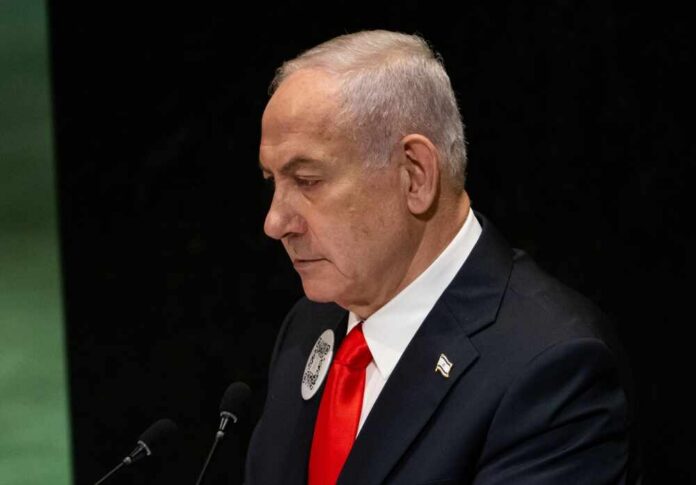
When a United Nations member state declares it will no longer engage with the world body’s leader, it signals a breakdown in rules that are supposed to keep powerful institutions accountable to the people they serve.
Story Snapshot
- Israel’s Foreign Ministry ordered an immediate cut-off from multiple United Nations agencies and related bodies, escalating a months-long rupture. [1][2][4]
- Officials tied the move to alleged anti-Israel bias and bureaucratic failure, alongside criticism of Israel’s Gaza war. [2][3][4]
- Israel’s ambassador demanded Secretary-General António Guterres resign, sharpening the confrontation at the very top. [5]
- Public UN remarks include unequivocal condemnation of Hamas’s October 7 attacks, complicating claims of uniform anti-Israel hostility. [8]
Foreign Ministry Order Marks Formal Policy Shift
Israel’s Foreign Ministry announced the immediate severing of contact with several United Nations agencies and related international organizations, making the diplomatic rift a stated government policy rather than a rumor. Reports identify Foreign Minister Gideon Sa’ar as ordering the suspension and withdrawal actions, with ministry statements referencing an “immediate” cut-off. Coverage describes a widening list that included earlier breaks with United Nations Women, the United Nations Conference on Trade and Development, the Economic and Social Commission for Western Asia, and the Office of the Special Representative for Children and Armed Conflict. [1][2][4]
The ministry’s decision followed months of escalating friction between Israel and multiple United Nations organs during the Gaza war. Outlets tie the broadened disengagement to rising international criticism of Israel’s military campaign and to charges that United Nations bodies adopted biased or selective framings. While foreign ministries regularly protest language or votes, severing operational contact with a cluster of agencies is rarer and signals a preference for political isolation over engagement inside multilateral channels. That shift raises questions about practical consequences for humanitarian coordination and diplomacy. [3][4]
Accusations of Bias and Inefficiency Drive the Break
Israeli officials cited anti-Israel bias and ineffective bureaucracy as core reasons for severing ties, framing the United Nations system as structurally unfair and slow to correct. Reports summarize Israel’s case but do not present documentary proof inside the articles for each allegation, which leaves the evidentiary record in public view thin and contested. Without the full foreign-ministry directive or internal legal memos, the exact scope of “all contact” remains partly unclear, including which offices or liaison mechanisms are suspended and for how long. [2][4]
The government’s framing aligns with a broader pattern in which states under scrutiny portray United Nations criticism as prejudice rather than neutral application of humanitarian standards. That narrative often resonates with citizens who see large institutions as unaccountable elites. However, secondary reporting alone cannot establish whether specific United Nations organs acted improperly in a way that justifies blanket disengagement. The absence of primary documents—such as the signed order, correspondence, or detailed case studies—limits outside assessment of proportionality and effectiveness. [1][2][3][4]
Confrontation With the Secretary-General Intensifies
Israel’s ambassador publicly called for Secretary-General António Guterres to resign after remarks he made regarding the Israel-Hamas war, escalating the conflict from agency-by-agency disputes to a direct challenge to United Nations leadership. The ambassador’s demand places political pressure at the top of the system and reinforces Israel’s view that institutional framing—rather than isolated staff behavior—is the problem. The step also risks hardening positions on both sides, complicating any near-term reset of working relations. [5]
The Secretary-General’s own record complicates a simple narrative of hostility. In public Security Council remarks, Guterres condemned “the horrifying and unprecedented 7 October acts of terror by Hamas in Israel” and affirmed that “nothing can justify” deliberate attacks on civilians. That language underscores a documented baseline of condemning terrorism while simultaneously criticizing conduct of hostilities and calling for civilian protection. The existence of both strands makes the bias debate hinge on specific wording, context, and perceived selectivity rather than outright denial of Israeli victimization. [8]
Implications for Diplomacy, Aid, and Public Trust
Breaking contact with United Nations leaders and agencies can deliver short-term political clarity but introduces operational risks. Humanitarian access, conflict de-escalation channels, and reporting mechanisms often rely on United Nations platforms; reduced coordination may limit the flow of aid and information even when states disagree with reports or resolutions. The reporting set offers no evidence that severing contact improved Israel’s security, diplomatic leverage, or humanitarian outcomes to date, leaving the policy’s real-world efficacy an open question for citizens and lawmakers. [1][2][4]
For Americans and allies watching from afar, the episode reflects a deeper concern: when trust collapses between governments and global institutions, ordinary people pay the price in confusion, slower aid, and fewer guardrails on power. Conservatives see bias and bloated bureaucracy; liberals see selective outrage and impunity. Both see elites playing by their own rules. Clearer documentation—from Israel and from the United Nations—would help voters judge whether this rupture protects civilians and the rule of law, or merely hardens a failing status quo. [1][2][3][4][8]
Israel has broken all contact with the UN secretary-general Antonio Guterres, its ambassador says.
🔴 More on https://t.co/5H0QqpfIYw pic.twitter.com/FgUWffOGXw
— Al Jazeera Breaking News (@AJENews) May 28, 2026
Sources:
[1] Web – Israel breaks all contact with UN secretary-general: ambassador
[2] Web – Israel cuts contact with UN bodies, prompted by US withdrawals
[3] Web – Israel severs ties with UN agencies over bias, inefficiency
[4] Web – Israel severs ties with UN agencies over criticism of Gaza war
[5] Web – Jerusalem severs ties with 7 UN agencies, citing anti-Israel bias
[8] YouTube – UN Secretary-General remarks on Israel/Palestine Crisis