When 10 jurors say the government’s arson case isn’t proven but Washington still locks the suspect up and schedules a retrial, it feels less like justice and more like a system desperate to protect itself.
Story Snapshot
- Ten of twelve jurors favored acquitting Jonathan Rinderknecht, yet a mistrial was declared and a retrial ordered.
- Federal prosecutors rely on digital diary entries, location data, and motive theories instead of direct evidence he lit the fire.
- Defense lawyers and jurors say the case shows how weak arson science and “character attacks” can still risk sending someone to prison.
- Thousands of civil lawsuits over the deadly Palisades Fire raise questions about who the government is really protecting.
Deadlock, Jail, And A Second Chance For Prosecutors
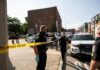
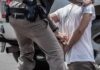
A federal judge declared a mistrial in the Palisades Fire case after jurors said they simply could not all agree on any of the three arson-related charges.[3] All twelve jurors confirmed the final split in open court: ten voted not guilty and two voted guilty.[4] Despite that strong lean toward doubt, Judge Anne Hwang immediately set a new trial date for October 19 and ordered Jonathan Rinderknecht jailed until then.[1] His lawyer says those ten votes show the government’s case “was not strong” and lacked enough evidence.[7]
This outcome alarms people across the political spectrum who feel the justice system is too quick to crush an individual to protect government agencies. Conservatives who already distrust federal overreach see another case where Washington refuses to admit weakness. Liberals suspicious of law enforcement power see a defendant kept behind bars after most jurors rejected the story prosecutors told. Both sides can look at this and ask: if ten jurors say you’re not guilty, why does the system still treat you like you are?
How The Government Tried To Prove Arson With Data, Motive, And AI
Prosecutors never produced direct proof that Rinderknecht lit the first Lachman Fire on January 1, 2025.[7] Instead, they built a circumstantial case around where he was, what his phone showed, and what he told an artificial intelligence system.[1] Location data and security video placed him in a small clearing near the suspected ignition spot just before midnight, shortly after dropping off his last Uber passenger nearby.[2] His phone records showed more than a dozen 911 calls as he reported the fire while walking down the trail.[2]
Investigators pulled thousands of entries from his phone, email, Uber account, social media, and OpenAI logs to paint a picture of his mind.[3] They say he used ChatGPT several times a week like a diary, writing about anger at the wealthy, inequality, and hypothetical fires in the Palisades out of frustration.[3] In one recording, he filmed firefighters battling the blaze while asking ChatGPT whether someone would be responsible for a fire accidentally started by a cigarette, and he screen-recorded both the 911 calls and that prompt.[1] Prosecutors argued these steps showed an effort to craft an “innocent” cover story ahead of time.[5]
Defense Pushback: No Accelerants, Flawed Scene, And Arson Science Doubts
Defense attorney Steve Haney hammered a simple theme: there is “no direct evidence at all” that his client maliciously started any fire.[6] He pointed out that investigators found no searches in Rinderknecht’s digital history about arson methods, best ways to start a fire, or buying fire-starting tools.[2] Expert witnesses for the defense testified that fireworks were the most likely cause of the first blaze, offering a specific alternative to the government’s “holdover fire” theory that the January 7 disaster was just underground embers from January 1.[4]
Defense experts also warned that the fire scene was left unsecured for thirteen days, meaning key soil, debris, and burn patterns could have been disturbed or contaminated.[2] That matters because good fire work depends on fast, careful collection of physical evidence and following strict standards for scene control and lab testing.[23] When a major wildfire’s origin site is left open for nearly two weeks, the chance of lost or altered evidence rises, and any strong claims about “exact cause” start to look shaky. For jurors, that was one more reason to doubt a case already built on behavior and motive.
A Jury’s Skepticism And A System On Trial
The 10–2 split against conviction is more than a procedural note; former prosecutors have called it a clear setback for the Department of Justice in a high-profile case.[3] Many arson prosecutions lean almost entirely on circumstantial evidence, especially expert opinions about where and how a fire started, plus proof that the defendant was nearby and had a reason to be angry.[18] When jurors see no accelerants, no ignition device, and no eyewitness, they may decide the science and story do not clear the high bar of “beyond a reasonable doubt.” That appears to be what most jurors did here.[4]
A mistrial was declared today in the trial of Palisades Fire arson suspect Jonathan Rinderknecht. After initially indicating it had reached a verdict, the jury announced Thursday it was unable to reach a unanimous decision, telling the judge the panel was at a “standstill".
— John Burtis (@burtis_john) June 27, 2026
This mistrial also plays into deeper anger many Americans feel toward what they call the “deep state.” Thousands of civil lawsuits target the City of Los Angeles and its fire department over how the Palisades Fire was handled, meaning huge money and reputations are at stake if the government itself is blamed.[2] A criminal conviction of a single man could shift that blame and cost away from public agencies. When the same system that may have failed in fire prevention and response now insists on trying the same weak case again, it reinforces the fear that protecting institutions matters more than finding the full truth.
Sources:
[1] YouTube – 10 of 12 jurors say Palisades Fire suspect isn’t guilty. Now he faces …
[2] Web – Palisades Fire suspect Jonathan Rinderknecht heads to trial – CNN
[3] Web – A deadlocked jury in the Palisades Fire trial leaves attorneys …
[4] Web – Judge declares mistrial in Palisades Fire suspect’s federal trial
[5] Web – Mistrial declared after jury deadlocks in arson trial over deadly 2025 …
[6] Web – United States v. Jonathan Rinderknecht – Department of Justice
[7] Web – Mistrial declared after jury deadlocks in arson trial over deadly 2025 …
[18] Web – [PDF] Circumstantial Evidence in Arson Cases – Scholarly Commons
[23] Web – ELI5:How do fire forensics know if a fire was from an arsonist vesus …