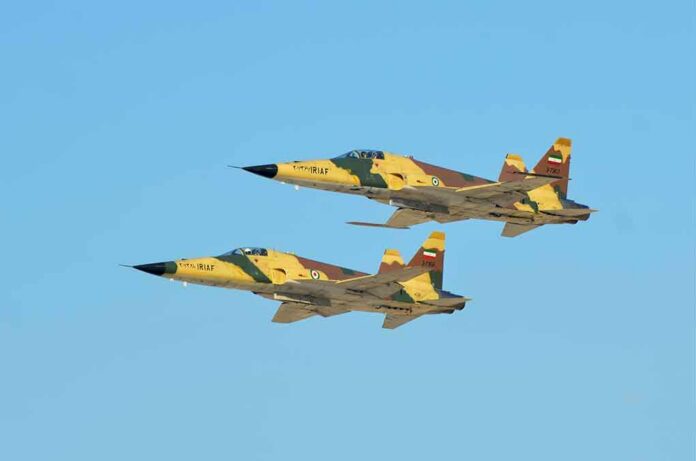
Iran says it struck U.S. defenses in Kuwait, while Kuwait says its air defenses knocked the drones down — a clash that raises the risk of a wider Gulf war without clear answers on what was actually hit.
Story Snapshot
- Iran claims combat drones targeted U.S. systems at Ali Al Salem Air Base in Kuwait.
- Kuwait confirms hostile drones and interceptions but reports no damage or casualties.
- Bahrain says it intercepted Iranian aerial attacks the same night, signaling a regional salvo.
- The dispute fits a pattern: real attacks, rapid denials, and little public proof of damage.
What Iran Claimed And Why It Matters
Iran’s army said on November 18 that its drones hit U.S. “Patriot defense systems and drone and missile launchers” at Kuwait’s Ali Al Salem Air Base. State-linked outlets carried the claim and framed it as retaliation after recent U.S. strikes on Iranian assets in the region. The base hosts U.S. forces, which makes the claimed target set plausible on its face, and marks Iran’s first reported strike reaching Kuwait in about two months, adding heat to an already tense Gulf theater.
Kuwait’s armed forces told residents that “hostile” drones were in its airspace and that explosions heard were from air-defense interceptions. Officials did not say where the drones came from, did not name Ali Al Salem, and reported no damage or casualties. Their statements focused on sovereignty and on a right to defend vital facilities, not on confirming Iran’s specific target list or any U.S. losses at the base.
Signals From Bahrain And The Regional Picture
Bahrain said its air defenses intercepted several Iranian aerial attacks the same night, which supported Iran’s broader claim of strikes against Gulf facilities tied to U.S. forces. Reports identified nearby U.S.-linked radar activity in Bahrain, though U.S. officials said personnel were safe and equipment was not damaged there. These mixed messages — real drones, claimed aims, and official denials of damage — match the playbook seen across this conflict phase.
Reporters described the Kuwait and Bahrain actions as part of a larger exchange after U.S. self-defense strikes. That backdrop explains Iran’s stated rationale, target choices, and timing. Yet, despite specific Iranian claims about hitting Patriot batteries and launch systems, open sources have not shown verified images of destroyed gear at Ali Al Salem. Military secrecy and ongoing operations limit what governments will reveal, leaving the public with partial truths on all sides.
What We Know, What We Don’t, And Why Americans Should Care
Confirmed facts are narrow. Drones entered Kuwaiti airspace. Air defenses fired. Officials in Kuwait and Bahrain reported interceptions. Iran named U.S. systems it says it targeted. Public evidence has not verified hits on those systems at Ali Al Salem. No agency has released debris analysis, radar tracks, or imagery to settle the dispute. This fog is common in modern drone conflict, where strikes double as information warfare meant to shape headlines as much as battlefields.
MIDDLE EAST | DARYAFT
Iran fires on US drone & missile sites in Kuwait overnight – first Iranian attack on Kuwait since September.
Bahrain intercepted Iranian attacks 3 times in a week.
Trump calls Iran MOU "waste of time" – vows to "finish it off, soon"#Iran #USA #Kuwait
— Daryaft دریافت (@DaryaftToday) November 19, 2026
For Americans, the stakes are clear. U.S. troops operate from Gulf bases that now face routine drone salvos. Each exchange risks a miscalculation that could drag the country deeper into a regional fight while taxpayers fund deployments, air defenses, and repairs. Leaders promise strength and deterrence. Critics on both left and right see mission creep, weak transparency, and a system that shields elites while asking working families to accept higher costs and growing danger far from home.
What To Watch Next
Watch for satellite images of Ali Al Salem in the days ahead. Look for official battle-damage assessments from Kuwait, the United States Department of Defense, or United States Central Command, even if limited. Verified debris photos, serial numbers, or intercept coordinates could confirm whether Iranian drones reached the base perimeter or were stopped earlier. Absent that, expect Iran to claim success, host nations to stress protection, and the truth to sit in the gap between them.
Sources:
sbs.com.au, cnbcafrica.com, edition.cnn.com, aljazeera.com, iranwire.com, business-standard.com, gulfnews.com, byteseu.com