

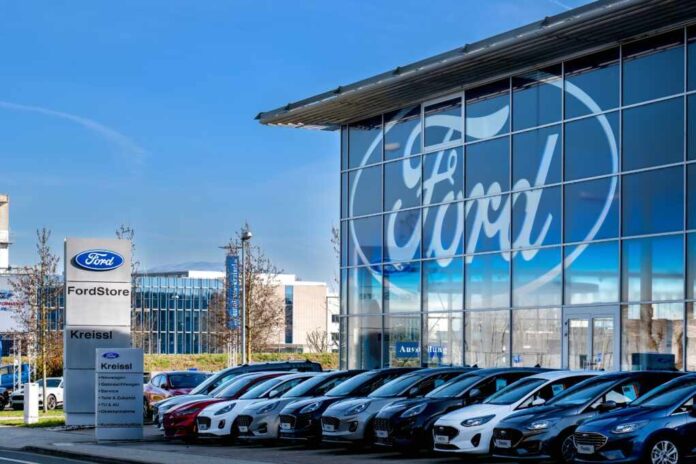
Ford’s supposed $19.5 billion loss over electric vehicles (EVs) is being touted as a direct fallout from the “Biden EV scam,” but the truth might not be as it seems.
Story Snapshot
- Claims of Ford’s $19.5 billion EV loss linked to Biden’s policies are unverified.
- Ford’s real EV losses are closer to $5 billion as of late 2024.
- The narrative of a “$19.5 billion scam” is rooted in opinion-based exaggeration.
- Industry-wide challenges, not just Biden’s policies, are driving EV struggles.
Ford’s Alleged $19.5 Billion Loss: Fact or Fiction?
The claim that Ford incurred a $19.5 billion loss due to a “Biden EV scam” has made headlines but lacks factual backing. PJ Media published this story in November 2024, presenting it as a consequence of Biden-era EV incentives. Yet, Ford’s actual reported EV-related losses up to Q3 2024 amount to approximately $5.1 billion, a stark contrast to the exaggerated figure.
In reality, the $19.5 billion figure appears to be an inflamed projection, not grounded in the financial disclosures or statements from Ford. The supposed “scam” narrative is part of a broader partisan critique of Biden’s Inflation Reduction Act (IRA), which aimed to bolster clean energy initiatives but faced backlash for perceived overspending and inefficiency.
The Role of the Inflation Reduction Act
Enacted in August 2022, the IRA provided substantial subsidies for U.S.-made EVs, including tax credits aimed at boosting domestic production. While these incentives were intended to support the transition to cleaner energy, critics argue they enticed automakers into premature and economically unsound investments. Ford’s ongoing EV strategy reflects these market dynamics, amid pressures from global competitors and regulatory shifts.
Despite the challenges, Ford remains committed to its EV ventures. The company’s strategic pivot towards hybrid vehicles amid the changing political landscape, especially with Trump’s return to power, highlights a recalibration rather than an abandonment of electric ambitions.
Industry-Wide Implications and Future Outlook
Ford’s struggles are not isolated. The entire auto industry faces similar hurdles as it navigates high production costs, fluctuating demand, and regulatory pressures. The narrative of a “scam” overlooks these systemic issues, which affect all major automakers. As Ford continues to refine its approach, focusing on profitable hybrids alongside EVs, it strives to balance innovation with fiscal responsibility.
Ford Pays a $19.5 Billion Price After Realizing it Fell for Biden's EV Scam via @WestJournalism https://t.co/EHButCDzni
— Buck Russell (@BuckRussell9) December 18, 2025
Going forward, the incoming Trump administration’s promises to roll back EV mandates might reshape the policy landscape. However, the long-term success of Ford’s EV strategy will likely depend on its ability to adapt to both market demands and evolving regulations.
Sources:
PJ Media (Nov 20, 2024)
Ford Q3 2024 Earnings (Oct 28, 2024)
Reuters (EV losses timeline, Oct 30, 2024)
Bloomberg (stakeholder analysis, Nov 5, 2024)