South Korea says Chinese and Russian warplanes crossed into its air defense zone again, and the pattern now looks more routine than reassuring.
Quick Take
- South Korea’s military said nine Chinese and Russian aircraft entered the Korea Air Defense Identification Zone without prior notice[2][3].
- The planes did not enter South Korea’s sovereign airspace, but Seoul still scrambled fighter jets[2][3].
- South Korea later lodged a protest with China and Russia over the flight[4][10].
- China and Russia say the patrol was lawful and part of regular military cooperation[4][9][10].
What South Korea Says Happened
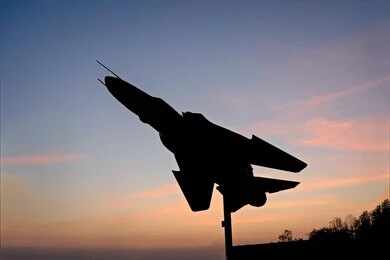
South Korea’s Joint Chiefs of Staff said two Chinese aircraft and seven Russian aircraft entered the Korea Air Defense Identification Zone on December 9, 2025, then left after about an hour[2][3]. The military said it detected the planes before they entered the zone and sent out fighter jets as a precaution[2][3]. Officials also said the aircraft did not violate South Korea’s sovereign airspace[2][3].
That distinction matters because an air defense identification zone is not the same as national airspace. Countries can ask foreign aircraft to identify themselves in that zone, but the zone itself does not carry the same legal status as sovereign airspace[1][10]. In plain terms, South Korea treated the flight as a security warning, not a full airspace breach. That still leaves room for dispute over whether the flight was a hostile act or a planned patrol.
Why Seoul Raised the Alarm
Seoul said the flights came without prior notice and forced it to react quickly[2][4]. South Korean officials also said they filed a formal complaint with China and Russia after the incident[4][10]. The defense ministry said it would respond actively to aerial activity in the Korea Air Defense Identification Zone under international law[4].
China and Russia offered a different version. Their defense ministries said the patrol followed international law and was not aimed at any third country[4][9][10]. China also said the flights were part of its annual defense cooperation plan with Russia[9]. That response weakens the idea that the move was an isolated surprise, but it does not erase Seoul’s concern that the warning was too late.
A Familiar Pattern in Northeast Asia
This incident fits a larger pattern that has bothered South Korea for years. Reports say Chinese and Russian military flights have repeatedly entered the same zone since 2019, often during joint exercises and often without advance notice[6][10]. Earlier cases in 2024 and 2025 were also met with fighter scrambles and diplomatic protests[2][4][6].
That history helps explain why this story drew attention even though no airspace violation occurred. For many readers, the deeper issue is not one flight on one day. It is the steady use of military pressure inside a buffer zone that sits below the threshold of war but above normal contact. That kind of move feeds public distrust on both sides of the Pacific, where many already believe governments are quick to protect power and slow to protect ordinary people.
NEW: South Korea scrambled fighter jets after nearly 10 Chinese and Russian military aircraft briefly entered its Air Defense Identification Zone (KADIZ). The aircraft did not violate South Korean airspace and later departed the zone.
— GeoInsider (@InsiderGeo) June 27, 2026
Media coverage has mostly treated the episode as another joint patrol, not a dramatic escalation[2][4][9]. That framing may be accurate on the narrow legal question, but it can also make repeated incursions feel harmless. South Korea’s complaint shows that officials in Seoul do not see it that way. They view the flights as part of a broader test of regional air defenses and political patience[4][10].
Sources:
[1] Web – South Korea says Chinese, Russian military aircraft enter its air …
[2] Web – South Korea scrambles fighter jets as Chinese, Russian … – Reuters
[3] YouTube – Chinese & Russian aircraft enter KADIZ; JCS say airspace not …
[4] Web – Russian, Chinese Bombers Do Joint Patrol Between South Korea …
[6] YouTube – 2 Chinese, 7 Russian Jets Enter South Korea’s Air Defense Zone
[9] Web – South Korea’s Air Force scrambled fighter jets after nine Chinese …
[10] Web – NUMBER OF CHINESE UNAUTHORIZED ADIZ INTRUSIONS … – jstor