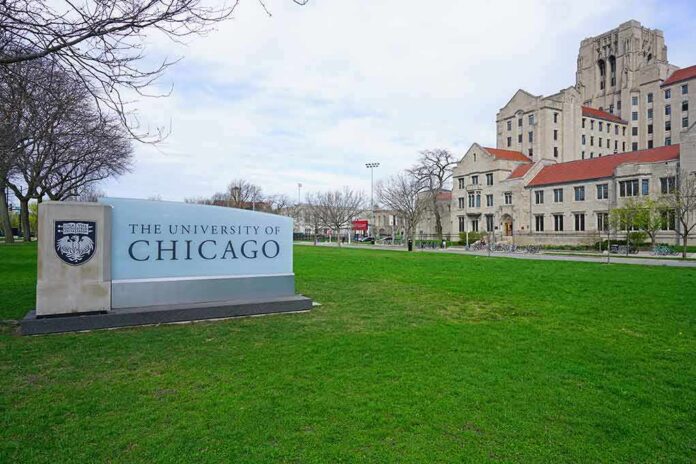
Two lawsuits in a week, a police report, and a banned person of interest now put University of Chicago fraternities under an intense spotlight.
Story Highlights
- A 21-year-old reported a bathroom assault at an Alpha Epsilon Pi party; police opened an investigation.
- Friends say they found her partially undressed with a man; several men allegedly cheered outside.
- The university says the person of interest is not affiliated and has been banned from campus.
- A separate lawsuit names Alpha Delta Phi and a member, alleging a February assault and prior warnings.
What Police And Witnesses Reported About The AEPi Party
Chicago police received a report around 2:10 a.m. from a 21-year-old who said she was assaulted in a bathroom during an Alpha Epsilon Pi party near campus. Reporting based on the police record says two friends entered the bathroom and found her and a man partially undressed. Coverage also describes several men outside the door who allegedly cheered during the incident. Police said no one had been charged as of the initial reports, and the case remained under investigation.
The Chicago Sun-Times summarized the police account and the friends’ role in stopping the incident. That reporting stated the friends confronted the man, while others blocked the door and allegedly encouraged what was happening. The paper’s coverage stressed the timing of the report and the woman’s transport for medical care after officers arrived. The outlet also echoed that no arrests had been made in the days that followed, which left the identity question open in the public record.
University And Fraternity Responses Draw A Line On Affiliation
The University of Chicago issued a community alert saying the party took place at a fraternity house off campus and that the identified person of interest was not a university student or affiliate. The university said it banned that individual from campus. It also noted that fraternities are not recognized student organizations at UChicago, even though students must follow university rules wherever they are. These points frame a distance between the school and private fraternity houses.
Alpha Epsilon Pi’s national organization and local chapter denied member involvement. The national spokesman said there was no evidence that members participated in or knew about the assault while it happened. The chapter said no affiliated person was involved or complicit, and members ended the party after being alerted, with one member staying with the woman until authorities arrived. The fraternity also suspended events while cooperating with investigators, according to multiple outlets.
A Second Lawsuit Targets Alpha Delta Phi And Cites Prior Warnings
A separate civil suit, filed days earlier, alleges a February 7, 2026 assault at an Alpha Delta Phi party. The plaintiff, identified as Jane Doe, says a named fraternity member gave her an alcoholic shot, led her upstairs, and assaulted her. The complaint claims the fraternity chapter and national group had prior assault allegations and failed to follow their own policies. Those allegations are now before the court and have not been proven. The case adds weight to claims of a pattern near campus.
These two cases raise recurring questions about control, notice, and duty. The AEPi report centers on an alleged attacker who, the university says, is not affiliated, which can complicate claims of direct responsibility. The Alpha Delta Phi suit names a member and describes specific conduct, which can focus scrutiny on the house and the national organization. Both matters remain allegations or investigations, and neither has produced criminal charges or a court finding at this stage.
Why This Matters Beyond One Campus
Parents, students, and neighbors want safe spaces and clear lines of duty. Off-campus fraternity houses operate near students yet sit outside formal university recognition in many places. That gap can leave victims caught between police, schools, and private groups. Federal guidance and court rulings say a school can be liable in some cases, but only when it has actual knowledge and responds with deliberate indifference in contexts it controls. The legal bar is high and uneven across cases.
Alpha Epsilon Pi at the University of Chicago supports RAPe Culture at its Fraternity!!!
Shut It DOWN!!!
— Macb (@mariecaseyburke) October 16, 2026
For readers across the political spectrum, the concern is simple: when harm happens, who acts, how fast, and with what power. Some see private groups and schools pointing fingers while victims wait. Others worry about due process and false blame when facts are still forming. Both views share a demand for timely facts, working cameras, fast bans, and transparent follow-up. Clear policies on guest control, alcohol, and security can close gaps that bad actors exploit.
What To Watch Next
Watch for police updates on the AEPi investigation, including whether the person of interest is named or charged. Look for court filings in the Alpha Delta Phi suit that detail alleged prior incidents and policy steps, if any. Track whether the university changes recognition or risk rules for near-campus houses. Real change, if it comes, will show up in tighter guest lists, event monitoring, faster alerts, and public data on outcomes that match the promises on paper.
Sources:
nbcnews.com, cbc.ca, chicago.suntimes.com, csl.uchicago.edu, bowditch.com