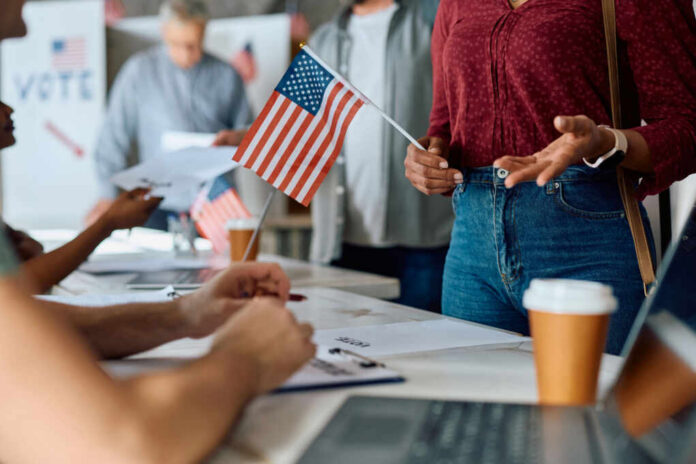
House Republicans advanced the SAVE America Act to require proof of citizenship and photo ID for federal voting, setting up a high-stakes Senate fight over access and security.
Story Snapshot
- House passed the SAVE America Act 218-213; Senate prospects remain uncertain.
- Bill requires documentary proof of U.S. citizenship to register for federal elections.
- New national photo ID rule added for casting a ballot, backed by GOP leaders.
- Civil rights groups warn the plan could burden eligible voters without passports or birth records.
What The House Passed And Why It Matters
On February 11, the House approved the SAVE America Act on a narrow 218-213 vote. The bill would require people to show documents that prove U.S. citizenship when registering to vote in federal elections. It would also require voters to present a valid photo ID at the polls nationwide. Supporters say these steps protect election integrity and align with public support for voter ID laws.
Republican leaders cite polling showing broad support for photo ID rules across parties and racial groups. They argue one national standard closes gaps across states and deters illegal voting. House backers frame the measure as a safeguard, not a barrier. They also stress that citizenship has long been required to vote in federal elections, and this bill enforces that rule with clear documents.
How The Senate Fight Shapes The Outcome
In the Senate, Republicans hold a majority but face a Democratic filibuster. Reports indicate about 50 Republican votes, short of the total needed to end debate and proceed. Leaders have signaled they do not yet have the votes to move forward. The timing of any new vote is unclear, and floor action has stalled as both sides rally their bases and outside groups weigh in.
Democrats oppose the bill as unnecessary and harmful. They argue that noncitizen voting is already illegal and rare, and that strict paperwork rules can block eligible citizens who lack ready access to passports, birth certificates, or naturalization papers. Advocacy groups warn the plan would disrupt registration and create new hurdles for low-income, elderly, rural, and young voters.
What Changes For Voters And Local Officials
The bill lists acceptable documents for registering to vote in federal elections, such as a U.S. passport or other proof of citizenship, and it bars states from processing federal registration without that proof. It also sets a nationwide photo ID requirement at the polls. County election offices would need to verify documents, adjust training, update systems, and manage more in-person checks ahead of federal elections.
Rep. Boebert’s criticism of John Thune reflects rising tensions over the stalled SAVE America Act, fueling "uniparty" accusations from conservatives frustrated by the Senate's procedural gridlock.
— sandym (@Sandy1Texas) July 13, 2026
Today, states run a patchwork of ID rules. Many already ask for identification, but not all require a photo ID, and most do not demand documentary proof of citizenship at registration. The SAVE America Act would replace that mix with federal standards for federal races. That shift could reduce confusion for some voters while raising new paperwork demands for others, depending on what records they can access.
Why This Debate Resonates Beyond 2026
Supporters say strong rules prevent even small-scale abuse and build trust in results. Opponents say the cure is worse than the disease and could keep lawful voters from the ballot. Both concerns tap a wider worry that those in power change rules to lock in advantage. The fight over the SAVE America Act reflects that broader struggle over who gets heard, how rules are set, and whether government serves voters first.
Sources:
redstate.com, politico.com, roy.house.gov, majorityleader.gov, naco.org, northjersey.com, michwomen.com, congress.gov, docs.house.gov, aclu.org, brennancenter.org, bipartisanpolicy.org, academic.oup.com