U.S. troops used a high‑energy laser on the Texas border to shoot down cartel‑linked drones, and officials say drone incursions then fell sharply.
Story Snapshot
- The Pentagon said an Army laser downed three cartel drones near the border in late August.
- Military officials later reported 11 drones destroyed and a steep drop in flights.
- Federal aviation leaders approved safety rules to allow laser use in U.S. airspace.
- The rollout marks the first confirmed directed‑energy takedowns of cartel aircraft.
Pentagon Confirms Laser Strikes On Border Drones
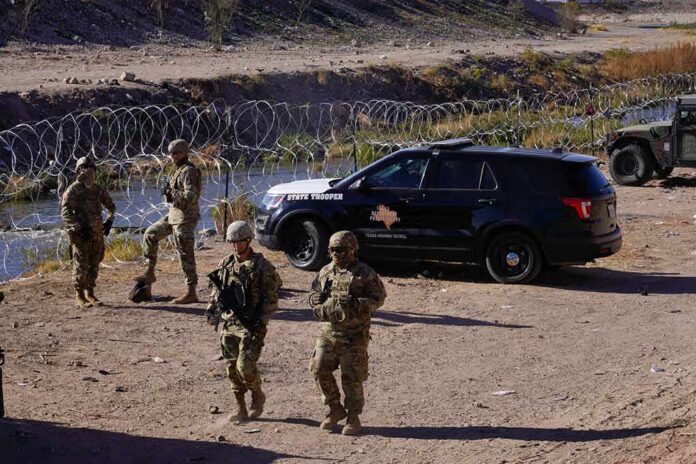
U.S. Northern Command said soldiers used the Army Multipurpose High Energy Laser to shoot down three unmanned aircraft along the Rio Grande Valley late Tuesday and early Wednesday in late August. Pentagon officials said the drones were allegedly run by drug cartels and posed a threat inside controlled military airspace. The engagements marked a rare public acknowledgment of directed‑energy use on U.S. soil against criminal aircraft and set the tone for a larger border security push.
Reuters later reported that U.S. forces had destroyed 11 cartel‑linked drones since the system began operations, reflecting an active campaign to stop aerial scouting and smuggling attempts. Officials tied the results to the laser’s speed and precision. The system disables key components with focused energy, which makes each shot low cost and reduces stray fire risks that come with bullets or missiles in crowded border areas, according to defense briefings and public statements.
Officials Cite Sharp Drop In Cartel Drone Flights
CBS News reported that military officials saw about a seventy‑five percent drop in cartel drone activity in the Rio Grande Valley after the laser went live. The decline followed the first shootdowns on August 25 and 26, after months of training and airspace coordination practice. The report said the new tool adds to the government’s wider set of sensors, cameras, and radio monitoring that guide fast responses to small drones along key river crossings and roads.
The U.S. Army said the operation marked the first confirmed use of this laser system to defeat cartel‑linked drones. The service placed the effort within Joint Task Force Southern Border, which links Defense Department units with border agents and other agencies. Leaders framed the move as part of a layered defense that blends detection, tracking, and defeat options so troops can pick the safest method for each flight path and threat level at the scene.
Airspace Rules And Safety Steps Enabled The Rollout
The Federal Aviation Administration and the Department of Defense reached an agreement in April that set safety rules for domestic laser operations against unauthorized drones near the southern border. That pact cleared the way for controlled use under strict procedures with air traffic leaders looped in. Officials described the agreement as a needed step to manage risk to civil aircraft and to prevent friendly drones from entering danger zones during live laser actions.
𝐀𝐑𝐌𝐘 𝐋𝐀𝐒𝐄𝐑𝐒 𝐁𝐔𝐑𝐍𝐄𝐃 𝟏𝟏 𝐂𝐀𝐑𝐓𝐄𝐋 𝐃𝐑𝐎𝐍𝐄𝐒 𝐎𝐔𝐓 𝐎𝐅 𝐓𝐇𝐄 𝐒𝐊𝐘 — 𝐁𝐎𝐑𝐃𝐄𝐑 𝐃𝐑𝐎𝐍𝐄 𝐅𝐋𝐈𝐆𝐇𝐓𝐒 𝐃𝐑𝐎𝐏𝐏𝐄𝐃 𝟕𝟓%
The cartels spent years flying surveillance drones over the U.S. border like they owned the sky. The U.S. Army just started… pic.twitter.com/fwrdkq8rp6
— M.A. Rothman (@MichaelARothman) October 7, 2026
Policy experts describe border drone defense as a network, not a single gadget. Systems mix radio‑frequency sensors, radar, and electro‑optical and infrared cameras to spot and identify targets. Defeat tools range from jamming to interceptors and now directed‑energy weapons. The laser’s debut on the border shows how the government is adding faster, cheaper shots to a stack of options. Supporters say that helps safeguard agents and communities while raising costs for cartels that probe weak spots.
Sources:
feedpress.me, nbcnews.com, reuters.com, ground.news, cbsnews.com, army.mil