Federal and state prosecutors say 19 people were charged in Pennsylvania over a Medicaid home-care fraud scheme that may have cost millions.
Quick Take
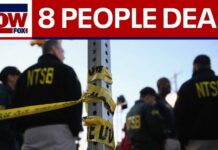
- Attorney General Dave Sunday said eight people were charged in Pennsylvania as part of a national health care fraud takedown, with more than $260,000 in losses tied to that case package.
- Other Pennsylvania fraud actions in the research show the state has a steady stream of Medicaid cases, not a one-off event.
- The public record here contains charges and sentencing announcements, but not a full case file for the specific 19-person framing.
- The pattern points to a system that is hard to police and easy to abuse when billing records are weak or hidden.
What Prosecutors Say Happened
Pennsylvania officials say Medicaid fraud charges were filed against multiple people in a statewide enforcement push. In one recent announcement, Attorney General Dave Sunday said eight people faced charges tied to Medicaid fraud and more than $260,000 in losses. Other Department of Justice and state releases in the research describe similar cases built around false billing, false time records, and claims for services that were not provided.
That matters because the same basic abuse pattern keeps showing up across Pennsylvania. Prosecutors have described home-care fraud, personal-care fraud, and billing schemes where workers claimed hours that never happened or services that were not delivered. The public has good reason to be skeptical when expensive programs are built on paperwork that outsiders cannot easily verify. That skepticism cuts across party lines because taxpayers, patients, and honest providers all pay the price.
Why Pennsylvania Keeps Producing These Cases
The research shows Pennsylvania has become a major enforcement state for Medicaid fraud. The Pennsylvania Attorney General’s Office said its Medicaid Fraud Control Section filed fraud charges against 113 people and secured 74 convictions during federal fiscal year 2024. The office also said it recovered more than $11.3 million in misused Medicaid funding that year. Those numbers help explain why big fraud announcements are common in the state.
The same record shows why the public often hears about large dollar amounts before it sees full proof. One case in the materials involved nine people and a reported $20 million scheme at a Philadelphia pharmacy. Another involved a years-long conspiracy case in western Pennsylvania. A separate Montgomery County case later ended with a prison sentence after a $1.76 million scheme. Taken together, the cases show a recurring problem, but each defendant still needs case-specific proof.
What Is Known, and What Is Not
The strongest facts in the research are the charging announcements themselves. Those filings and press releases allege fraud, not guilt, and they do not end the story for every defendant. The materials also do not provide the full billing ledgers, care notes, or forensic audits needed to test every claim line by line. That leaves room for later pleas, dismissals, or trials to narrow what actually happened in each case.
Assistant Attorney General Colin McDonald announces charges against 19 defendants in a $4 million Medicaid home health care fraud scheme targeting Pennsylvania#NYI pic.twitter.com/K1omqV2cAw
— NewYork-Insight (@NewYork_Insight) August 4, 2026
Even so, the broader signal is hard to miss. Pennsylvania keeps surfacing in Medicaid fraud sweeps because the program is large, complex, and vulnerable to abuse when oversight lags. The public anger around this issue also makes sense on both sides of the aisle. Many conservatives see waste and runaway spending. Many liberals see vulnerable patients getting shortchanged. In both views, the core complaint is the same: the system keeps failing the people it is supposed to serve.
Sources:
facebook.com, attorneygeneral.gov, yahoo.com, oig.hhs.gov, justice.gov, pa.gov